October 21, 2026
What Do You Need to Know About GRP Tanks in the Philippines?
Discover what you need to know about GRP tanks in the Philippines, from their key
Overview
- Selecting the right FRP tank for Philippine construction projects requires careful evaluation of material quality, storage needs, site conditions, and installation requirements.
- Key considerations include verifying resin suitability, matching tank capacity to demand, assessing environmental exposure, and confirming foundation support and compliance with relevant standards.
- Choosing a reliable, well-engineered FRP modular tank from Aqua Cube supports corrosion resistance, simplifies installation in space-constrained sites, and promotes long-term water storage reliability.
An unreliable water storage system can cause supply interruptions and costly maintenance for Philippine construction projects. Choosing a suitable tank requires more than comparing prices. Material quality and site conditions also affect durability and long-term performance. Aqua Cube offers FRP modular tanks for residential, commercial, and industrial applications.
Before purchasing, project engineers, contractors, and property developers must determine which system meets their requirements. Understanding the FRP tank selection criteria for Philippine construction projects helps buyers compare options and assess their suitability. This guide covers the key factors to evaluate before making a decision.
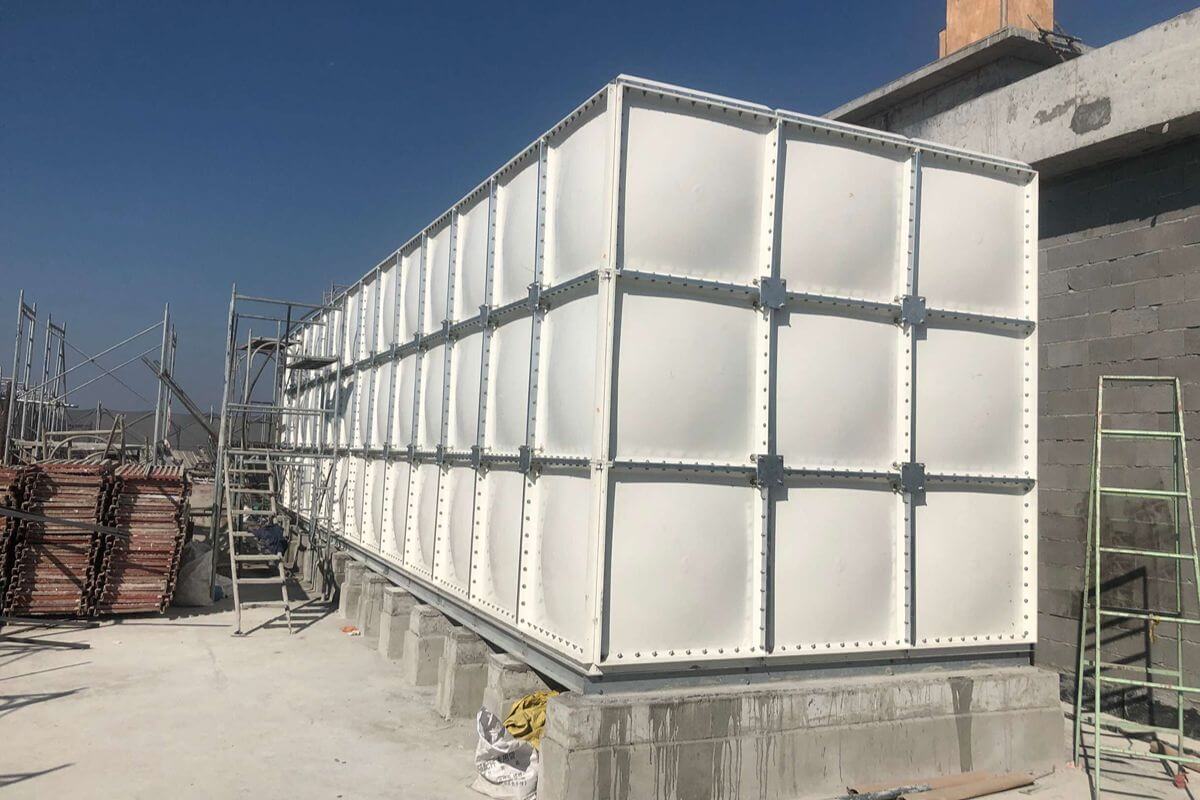
A tank’s durability depends on its materials and construction. Review the manufacturer’s specifications and Aqua Cube’s FRP tank buying guide to understand the features that influence performance.
SMC is a composite material used in molded components. Ask the supplier whether the proposed tank uses SMC panels and request technical documents that confirm their suitability for your project’s requirements.
For potable water storage, verify that the tank materials meet applicable drinking-water safety requirements. Request supporting documentation before approving a tank for residential or commercial use.
Ask the supplier to explain the tank’s material layers and their respective functions. Confirm that the construction provides suitable structural support and protection for the intended application.
Your intended use determines the tank’s capacity and material requirements. Our team’s guide to preparing for an FRP storage tank can help you identify operational and site requirements before selecting a model.
Determine whether the tank will hold potable water, process water, wastewater, or chemicals. Industrial facilities should verify that the tank materials can withstand the stored liquid’s chemical properties.
Estimate storage needs based on daily consumption and peak demand. For a condominium, consider resident occupancy and shared facilities, then consult our FRP tank capacity guide to help determine a suitable volume.
Check the liquid’s acidity or alkalinity and its operating temperature. Confirm that the selected resin can withstand these conditions within the manufacturer’s stated limits.
Local weather and site conditions can affect tank performance over time. Aqua Cube’s guide to FRP tank applications across Philippine industries offers further context for different operating environments.
Salt-laden air and moisture can accelerate corrosion in conventional metal tanks. For coastal properties in Batangas or Cebu, assess the tank’s fittings, supports, and panels. Our team explains how FRP performs in corrosive environments compared with traditional steel.
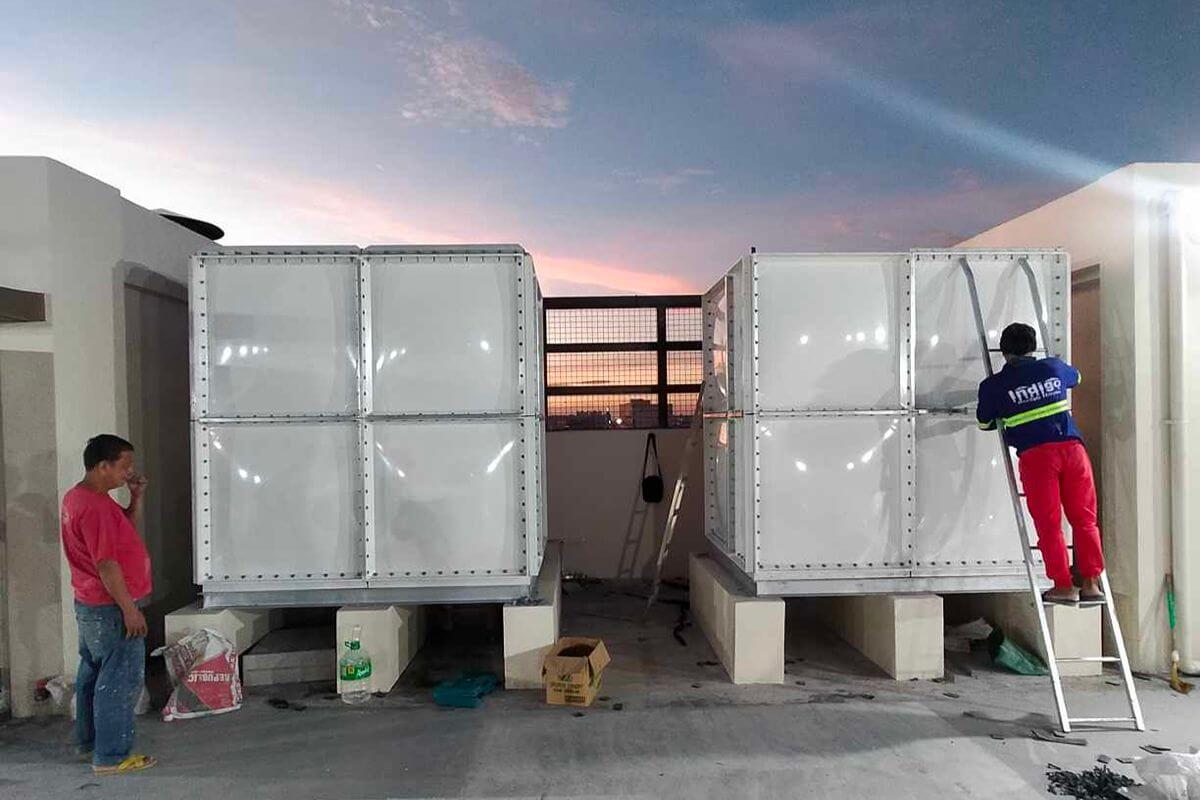
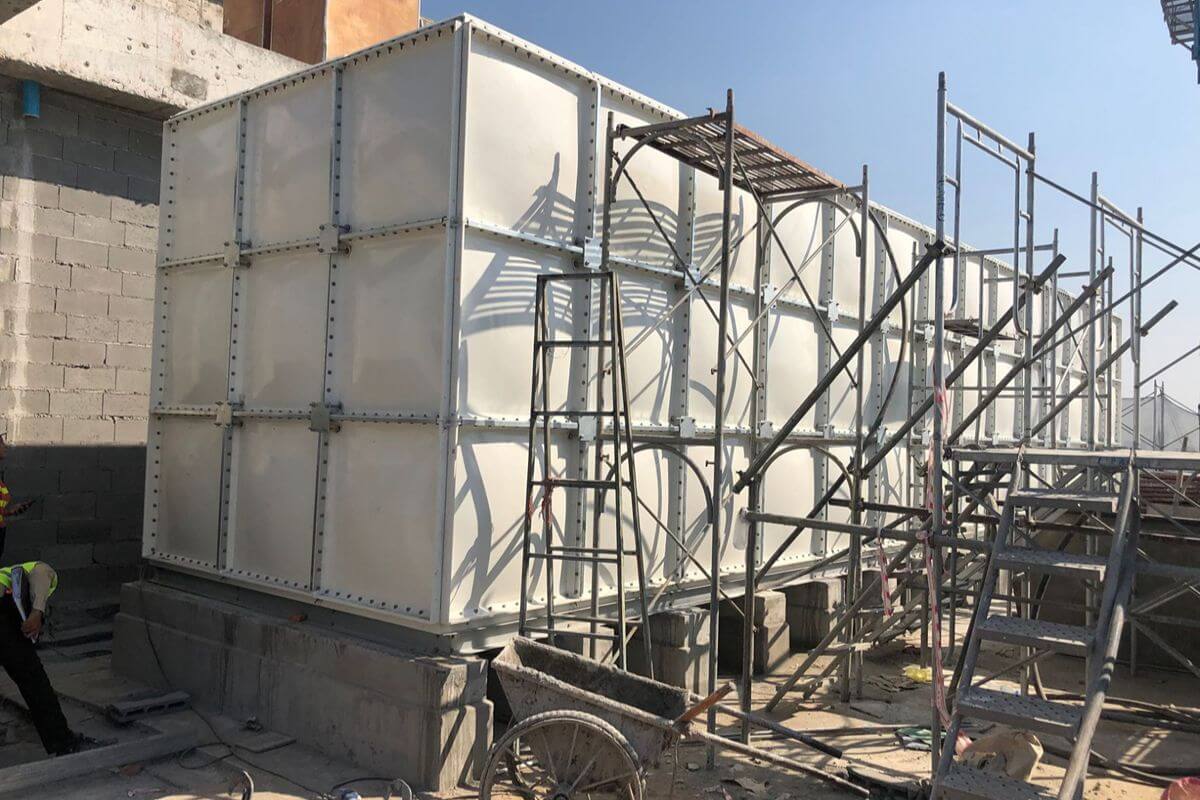
Measure the installation area and access routes before choosing a tank. In buildings with narrow service entrances or limited rooftop access, modular panels can simplify delivery and on-site assembly.
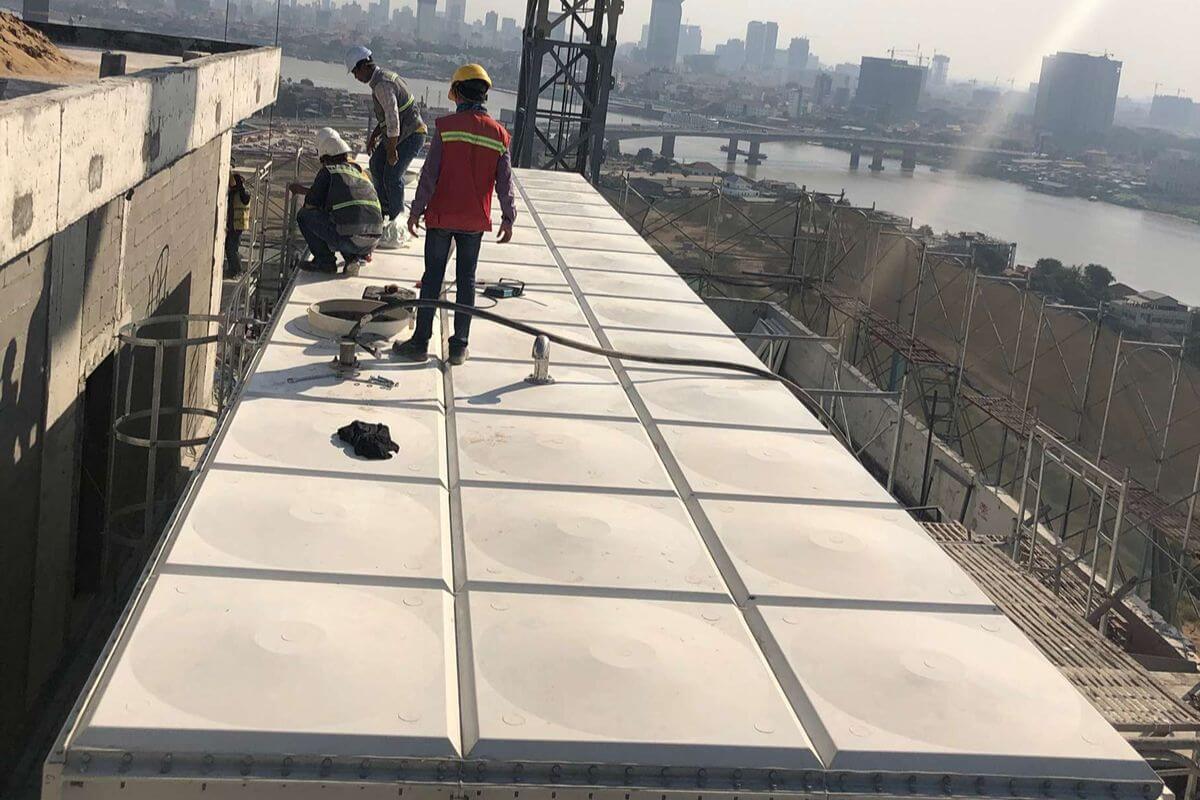
Elevated tanks require careful assessment of wind loads and seismic forces. Have a qualified project engineer check the building’s structural capacity and the tank’s anchorage based on site-specific requirements.
A suitable foundation helps prevent uneven loads and structural stress. Confirm the required base specifications and installation procedures with the supplier before assembly.
Check the manufacturer’s foundation-levelness requirements before installation. Ensure that the base meets the specified tolerances to support the tank evenly.
Allow sufficient room for assembly and piping connections. Include access for inspections and future maintenance.
The foundation must support the tank’s full operating weight, including its stored liquid. Have a qualified engineer verify the support structure before installation.
Technical documents help verify a tank’s safety and suitability for its intended use. Ask the supplier for relevant records and confirm which requirements apply to your project.
For potable water storage, request relevant material certifications and evidence of compliance with applicable drinking-water requirements. Industrial projects may also require documentation for chemical compatibility.
Request engineering calculations and structural drawings from the supplier. Have the project engineer confirm compliance with applicable building and structural requirements.
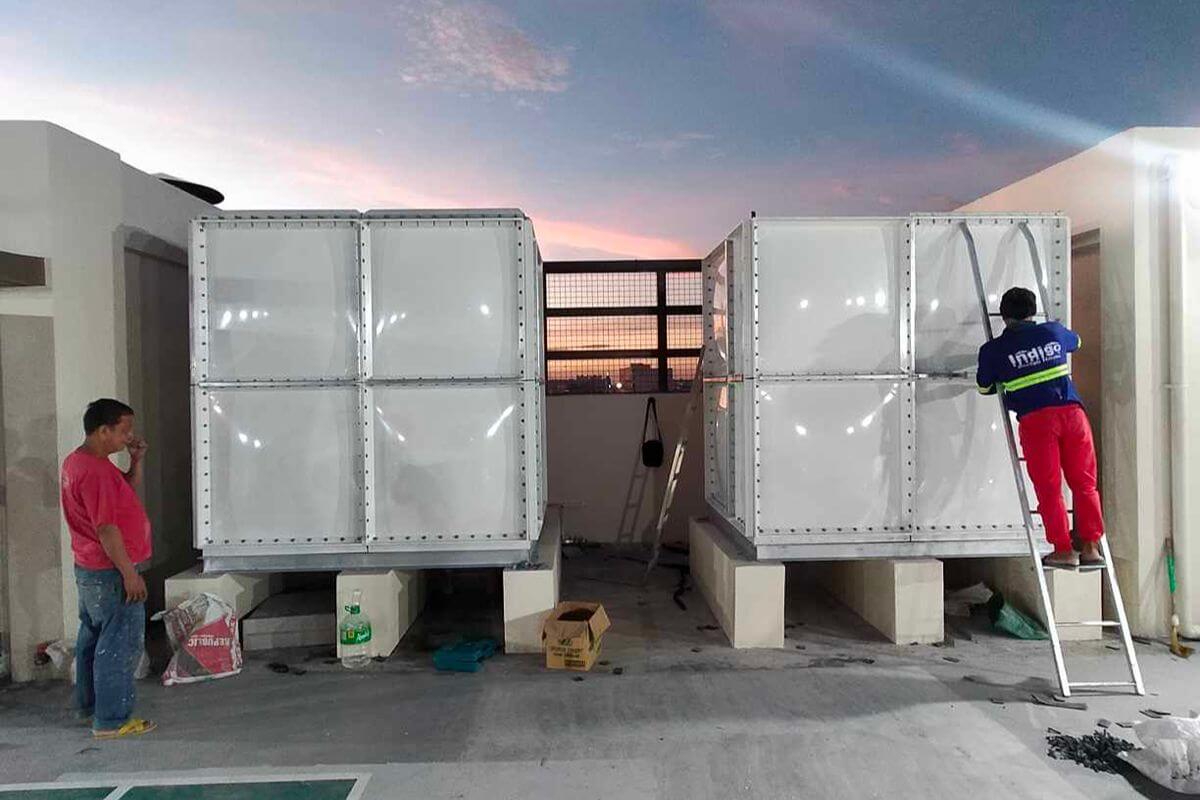
Aqua Cube supplies and installs modular water storage systems for residential, commercial, and industrial projects. Its commercial FRP tank applications guide explains how these systems serve different facility needs, while its modular designs support flexible capacity planning and installation in space-constrained locations.
The FRP tank selection criteria for Philippine construction projects depend on the intended application and site requirements. Evaluate material quality and liquid compatibility first, then confirm the tank’s capacity, installation conditions, and compliance with relevant standards to support reliable long-term performance.
At Aqua Cube, we help you identify water storage solutions that suit your project’s needs. Contact us today to discuss your FRP tank requirements.
Discover what you need to know about GRP tanks in the Philippines, from their key
Learn how engineers evaluate FRP tanks before project approval to select a storage
Evaluate FRP tank selection criteria for Philippine construction projects to choose a