September 24, 2026
The Right Approach to Planning Water Storage for Multi-Building Developments
Learn the right approach to planning water storage for multi-building developments:
Overview
- Choosing the right FRP tank capacity is essential for ensuring reliable and cost-efficient water storage across different business operations. It requires assessing daily consumption, peak demand, emergency reserves, water type, site constraints, and future expansion needs.
- Proper sizing prevents supply disruptions, avoids unnecessary costs, and supports operational continuity.
- A well-planned system ensures long-term efficiency, flexibility, and performance in commercial, industrial, and institutional facilities.
Determining the right storage capacity is essential for ensuring reliable and cost-efficient operations in any business that depends on water or liquid storage systems.
If the capacity is too small, it may lead to supply interruptions during peak demand, while an oversized system can result in unnecessary costs and inefficient use of space.
A clear understanding of how to choose FRP tank capacity for your business helps align system design with operational needs, ensuring both efficiency and long-term performance.
Proper capacity planning ensures storage systems perform efficiently without creating operational or cost issues. Modular tank systems allow flexible sizing based on required volume, available space, and site access, making them adaptable to different facility conditions.
The system only delivers full value when capacity aligns with actual demand. Undersized tanks can lead to supply interruptions, while oversized units may result in unnecessary cost and inefficient use of space and structural resources.
To determine the right capacity, it is important to assess daily demand and evaluate the impact of water loss on operations. If supply is interrupted, critical functions such as production, sanitation, or fire protection may be affected—making accurate sizing essential for reliable water storage performance.
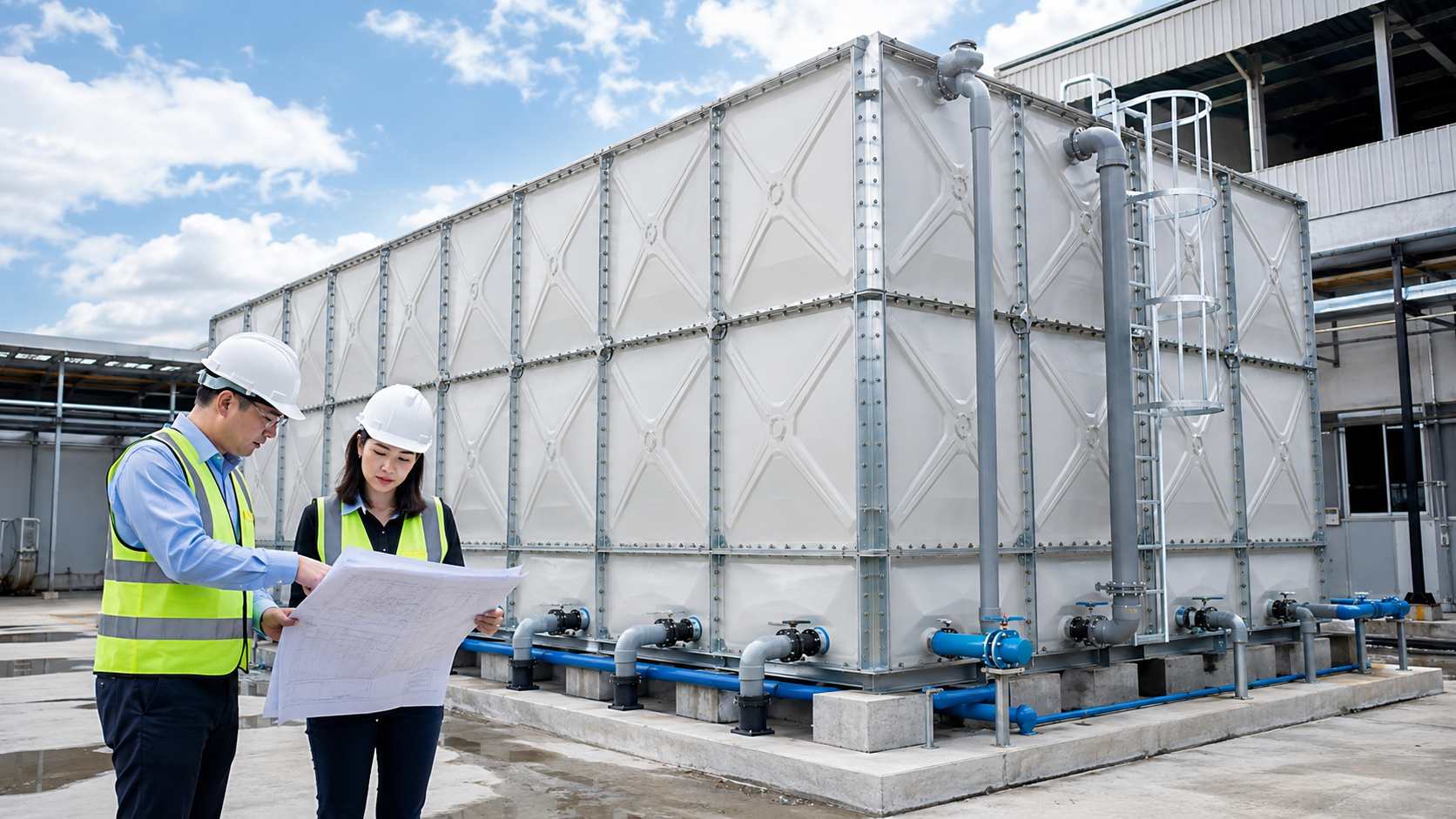
Proper capacity selection depends on understanding demand, operational conditions, and long-term growth requirements to ensure efficient and reliable water storage.
Accurate capacity planning begins with understanding total daily water usage across all facility operations. This includes restrooms, cleaning activities, production processes, cooling systems, kitchen operations, equipment washdown, and other site-specific requirements.
Where data is available, actual consumption records should guide sizing decisions. For new facilities, projections should be based on occupancy levels, equipment schedules, operating shifts, and expected production output. Relying on rough estimates alone can lead to underperformance in operations where water is mission-critical.
Average daily usage often fails to reflect real operating conditions. Many facilities experience short-term spikes in demand during shift changes, cleaning cycles, production peaks, or early operating hours.
Storage capacity must be sufficient to absorb these fluctuations without disrupting system pressure or supply stability. For instance, sanitation processes in food production may require more water than regular operations, while commercial buildings often see peak demand during opening hours. Proper sizing ensures these surges are adequately supported.
Beyond daily use, facilities must account for water availability during unexpected interruptions, maintenance shutdowns, or supply failures. The required reserve volume depends on how long operations must continue without external replenishment.
In commercial and industrial settings, reserves may need to support sanitation, cooling systems, production continuity, and fire protection. Fire safety requirements should always be aligned with project engineers, fire protection designers, and applicable local regulations, with reference to recognized standards such as NFPA guidelines for water-based fire protection systems.
Water usage classification directly influences storage design and capacity planning. Different applications—such as potable water, process water, cooling water, rainwater harvesting, or general utility use—may require separation, specific handling, or dedicated tanks.
For drinking or hygiene-sensitive applications, water safety considerations should form part of the specification process. International frameworks such as the World Health Organization’s Water Safety Plan Manual provide structured guidance for managing risks within water supply systems.
Even when demand is high, installation feasibility is ultimately shaped by site conditions. Available floor space, structural load capacity, access routes, foundation design, and maintenance clearance must all be evaluated before finalizing tank size.
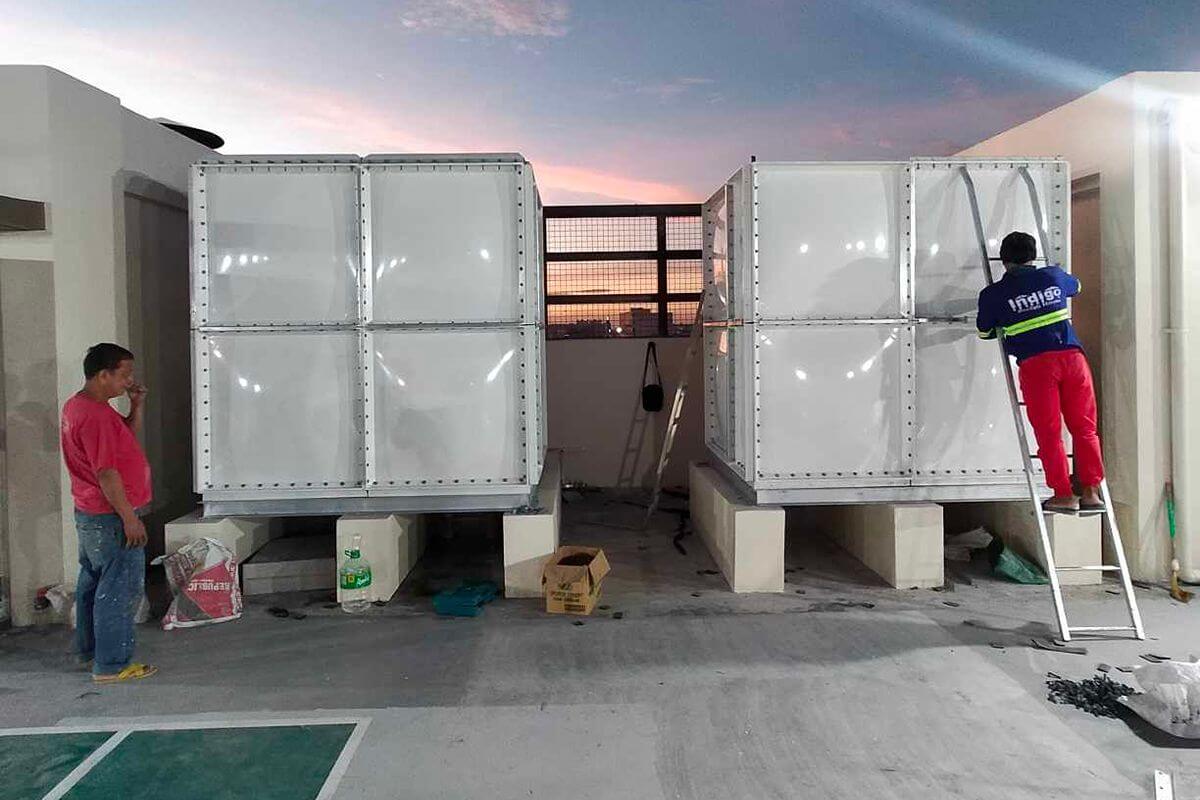
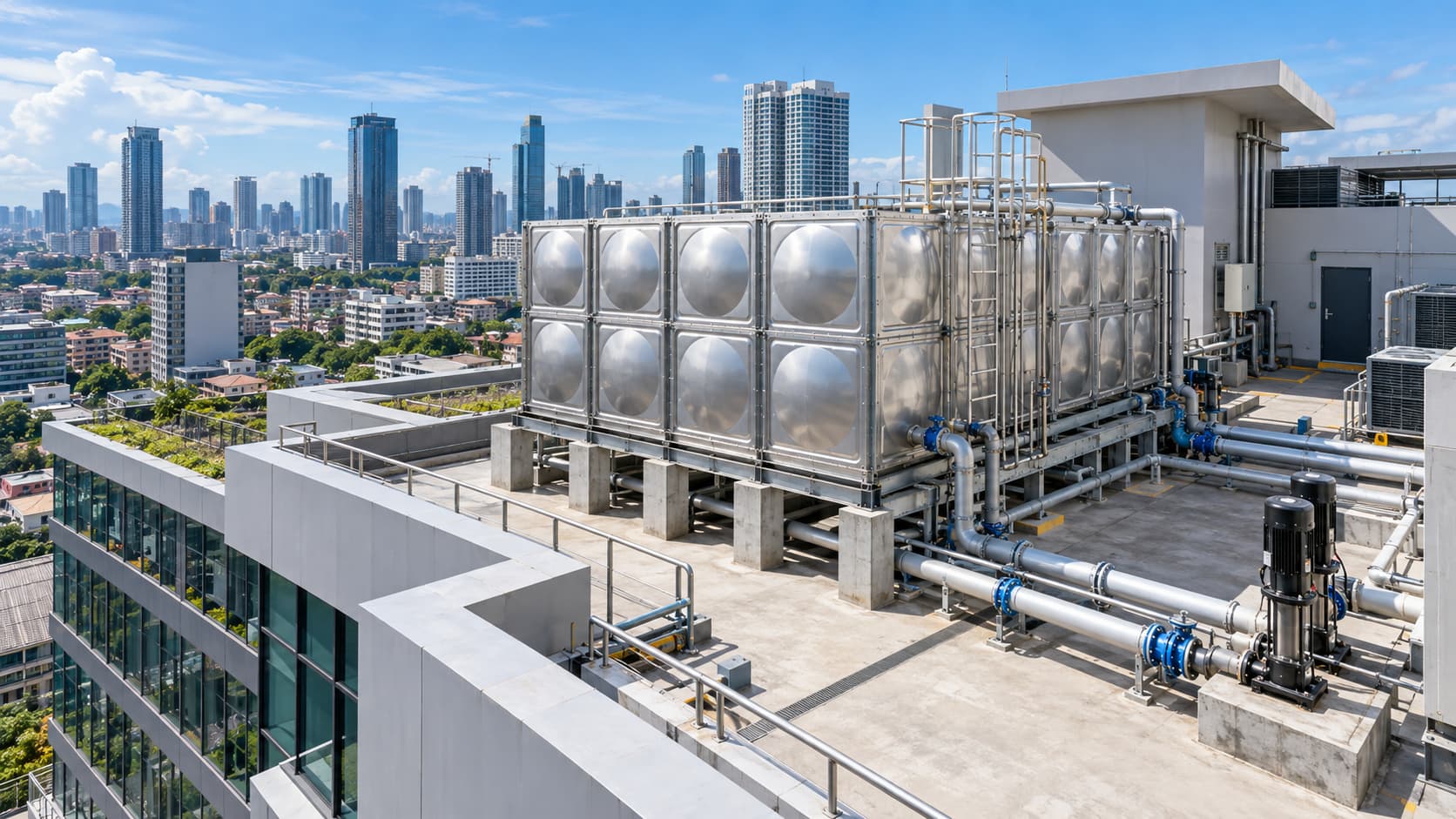
FRP tanks offer an advantage because modular panels can be transported and assembled on-site. This makes them suitable for rooftops, basements, mechanical rooms, and restricted industrial areas where one-piece tanks may be difficult to position. Businesses evaluating broader storage options can compare Aqua Cube Tank’s modular water tanks in the Philippines for different project conditions.
Capacity planning should also consider long-term operational growth. Increased production output, additional tenants, higher occupancy, or expanded service hours can significantly raise future water demand.
Designing with scalability in mind helps avoid premature system replacement. Modular configurations allow capacity to be expanded incrementally, supporting business growth while maintaining operational continuity and cost efficiency over time.
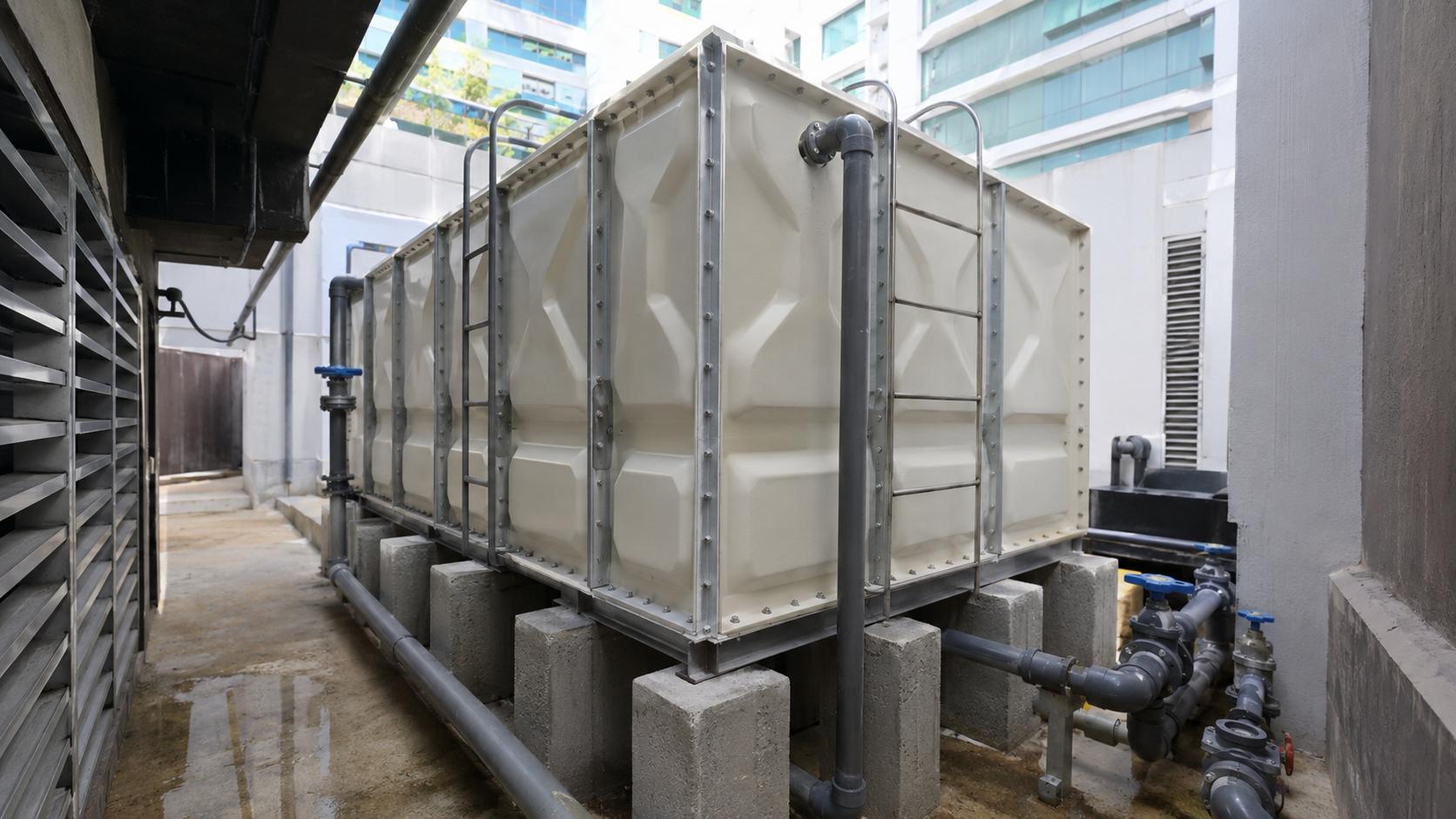
A common mistake is sizing tanks based only on upfront budget, which can result in undersizing and higher long-term costs from disruptions or system changes. Another is not separating daily demand from emergency reserves, leading to insufficient backup capacity. Installation feasibility is also often overlooked, causing costly redesigns when site constraints are not considered.
Selecting the appropriate FRP tank capacity goes beyond simple water volume estimation. It requires evaluating operational demand, peak usage, emergency reserves, water type, site constraints, and future growth plans.
For procurement teams, the right decision balances reliability, continuity of operations, and long-term cost efficiency. With their modular design, FRP tanks can be tailored to specific project needs while delivering corrosion resistance, structural strength, and flexible installation options.
The most effective way to determine how to choose FRP tank capacity for your business is to match storage volume with real operational demand, reserve requirements, and site constraints. A properly sized FRP tank helps maintain water availability, reduce downtime risk, and support long-term facility performance.
Secure a water storage system specified for capacity accuracy, structural reliability, and long-term operational value. Contact Aqua Cube Tank to evaluate the right FRP tank configuration for your business requirements.
Learn the right approach to planning water storage for multi-building developments:
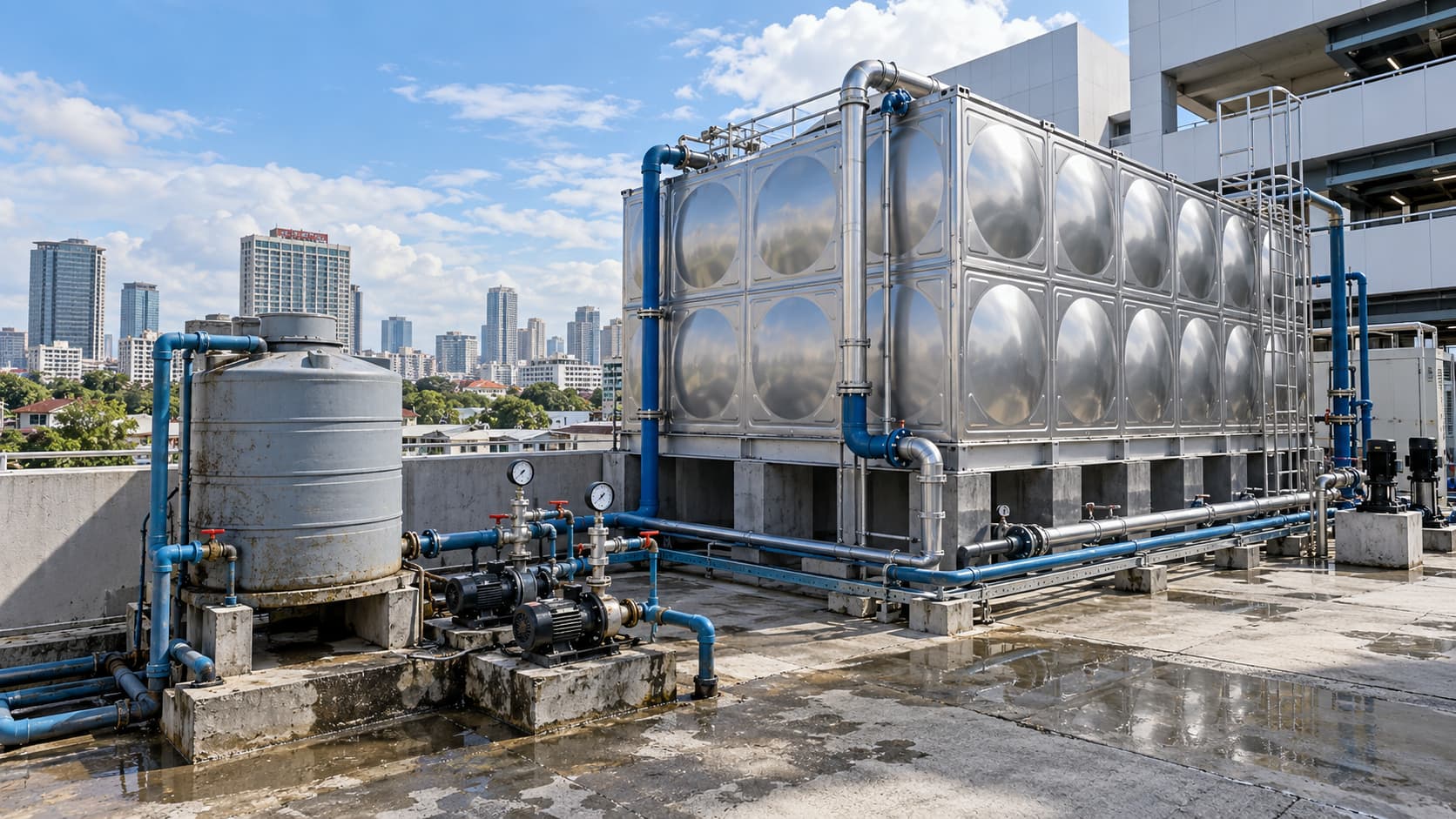
Find out what happens when your water storage capacity is insufficient and how Aqua
Find out why modular water tanks are becoming standard for new commercial properties