September 24, 2026
The Right Approach to Planning Water Storage for Multi-Building Developments
Learn the right approach to planning water storage for multi-building developments:
Overview
- Businesses in the Philippines are increasingly comparing fiberglass composite tanks and traditional water tanks based on durability, maintenance, installation ease, and lifecycle cost.
- While both serve industrial water storage needs, fiberglass systems offer better corrosion resistance, lighter structure, and lower upkeep, making them a preferred option for modern commercial applications.
When comparing Fiberglass Reinforced Plastic (FRP) vs traditional water tanks, businesses in the Philippines are placing greater focus on durability, maintenance, installation efficiency, and long-term reliability. These considerations have become increasingly important for commercial and industrial facilities operating under demanding conditions.
Although concrete, steel, galvanized, and plastic tanks are still widely used, FRP water tanks are becoming a preferred option for many modern projects due to their practical advantages and adaptability across a range of applications.
In this article, we will examine the key differences between FRP and traditional water tanks and why these distinctions are increasingly important for businesses and industrial facilities today.
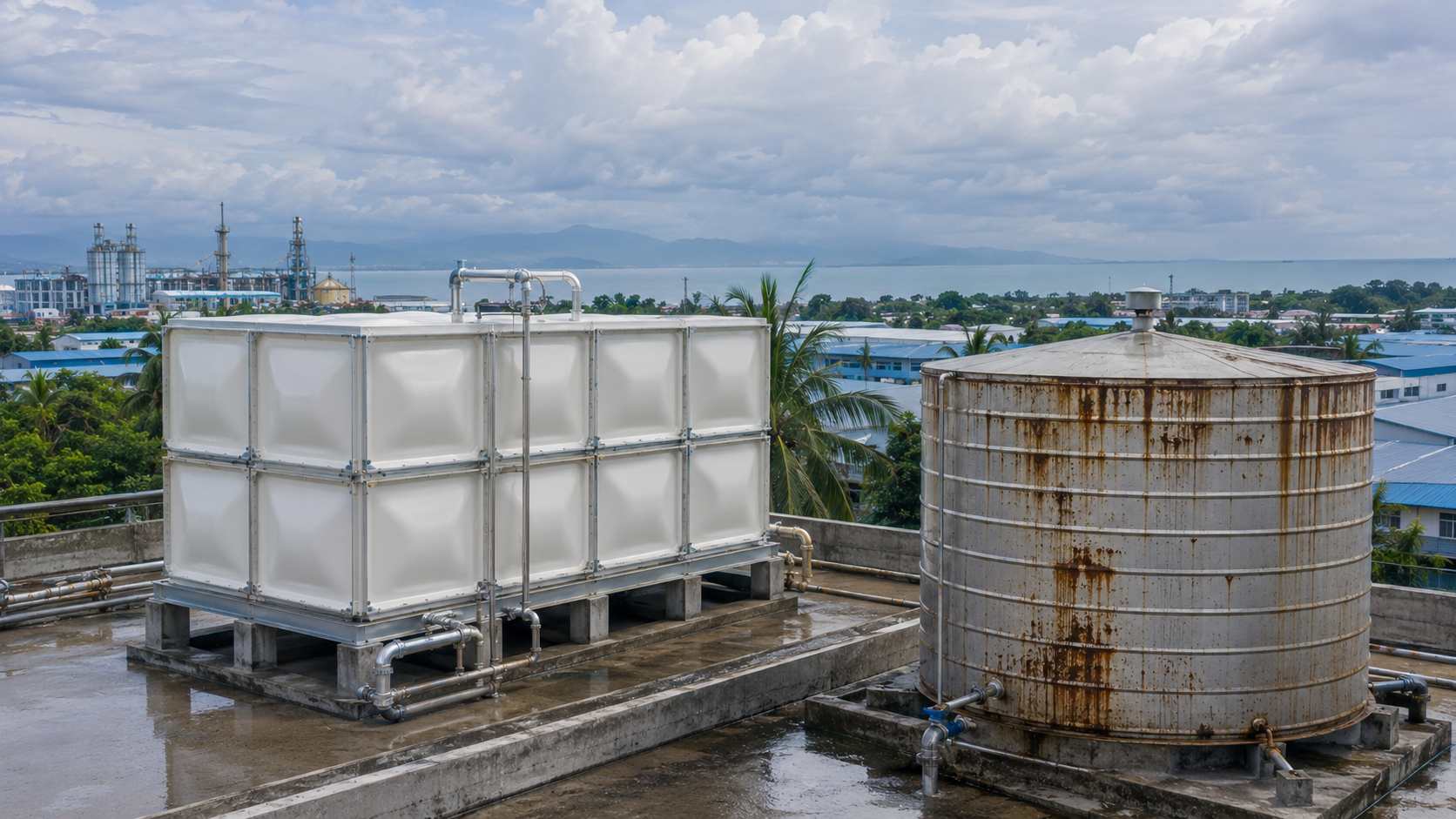
Fiberglass-reinforced composite tanks offer strong resistance to rust and corrosion, making them well-suited for environments exposed to moisture, chemicals, or salt-laden air. Because they do not rely on exposed metal components, they maintain structural stability even under prolonged humid or corrosive conditions.
For instance, coastal facilities in areas such as Batangas or Cebu often use fiberglass composite tanks for process water storage, where salt air can quickly accelerate corrosion in conventional metal systems. Steel and galvanized tanks can still be used in these settings, but they typically require protective coatings, regular repainting, and routine inspections to manage long-term corrosion. In controlled industrial environments, steel tanks remain a practical option when proper maintenance programs are consistently implemented.
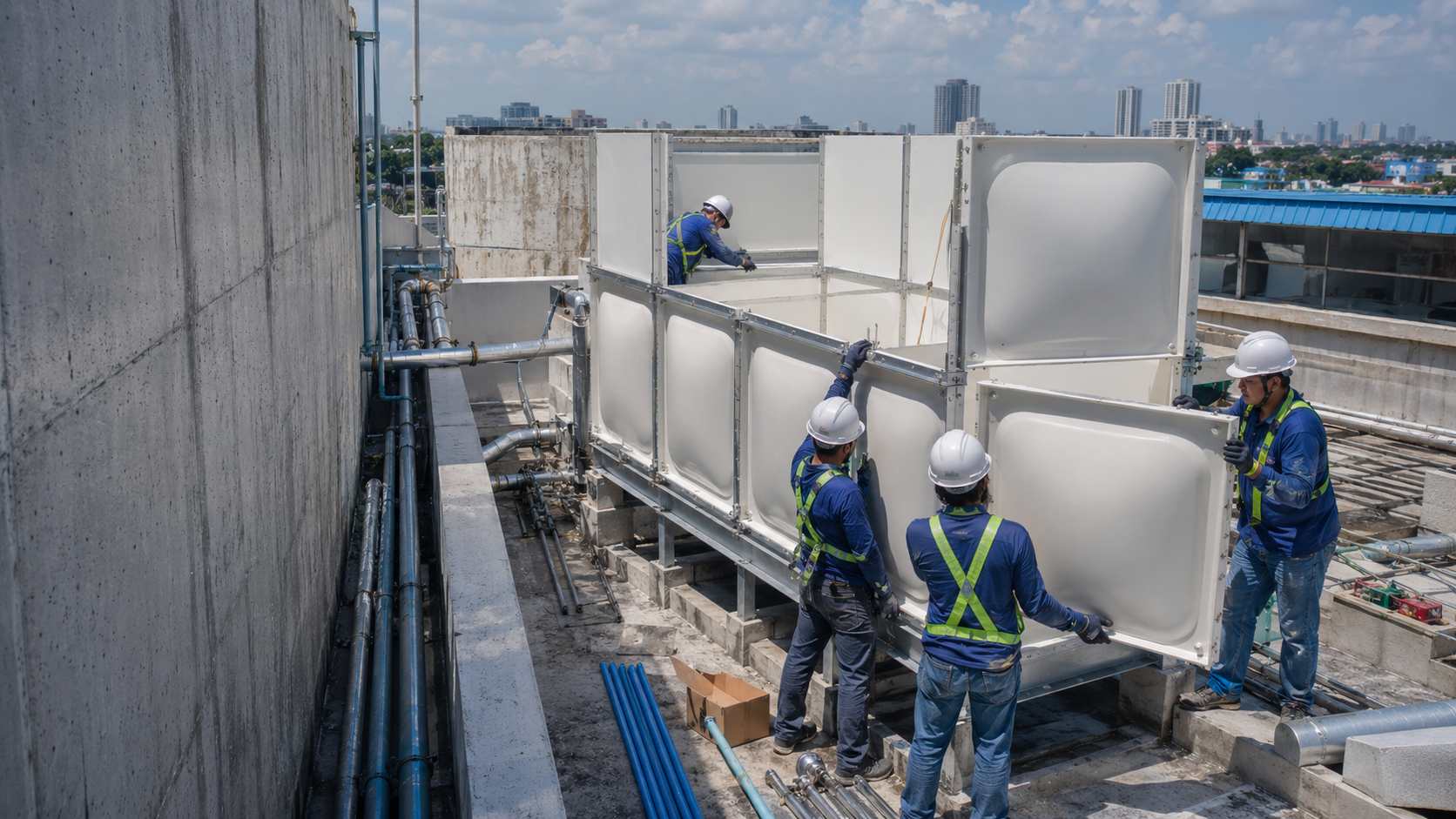
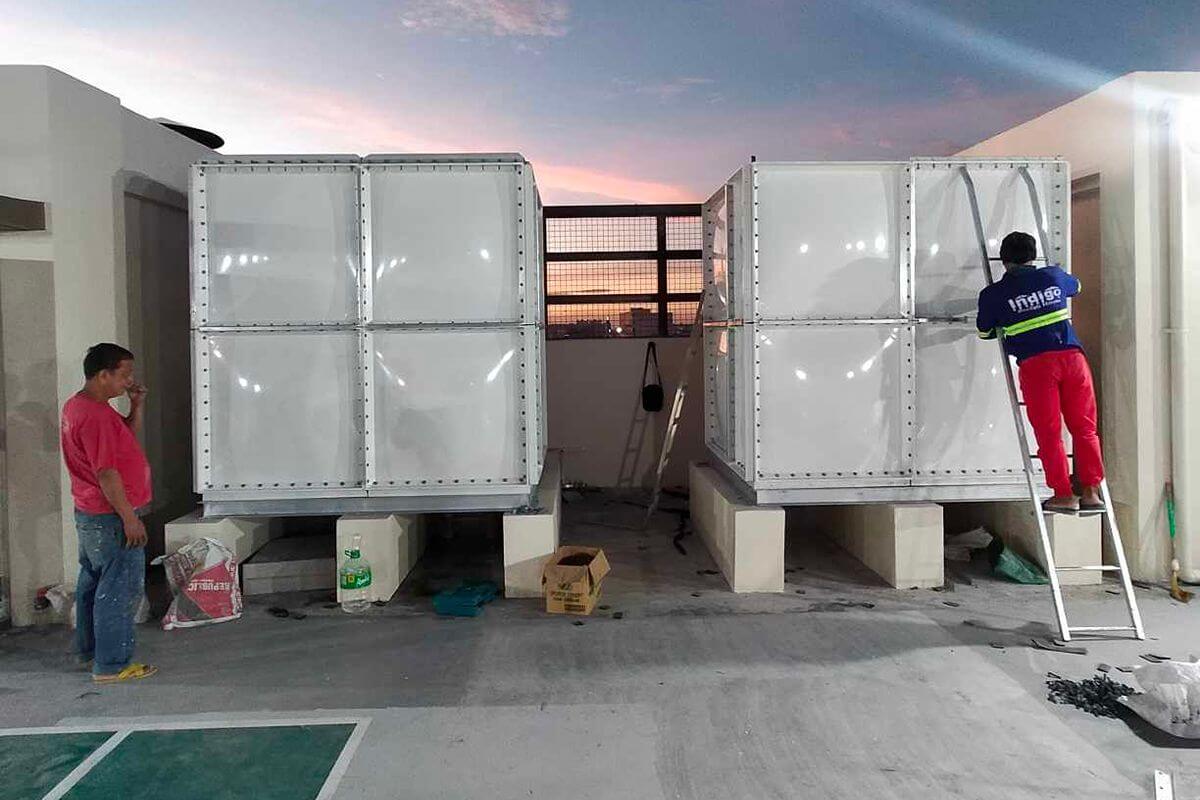
Fiberglass panel tanks offer a modular design that allows components to be transported in sections and assembled on-site. This makes them especially useful in locations where access is limited or where heavy lifting equipment is restricted.
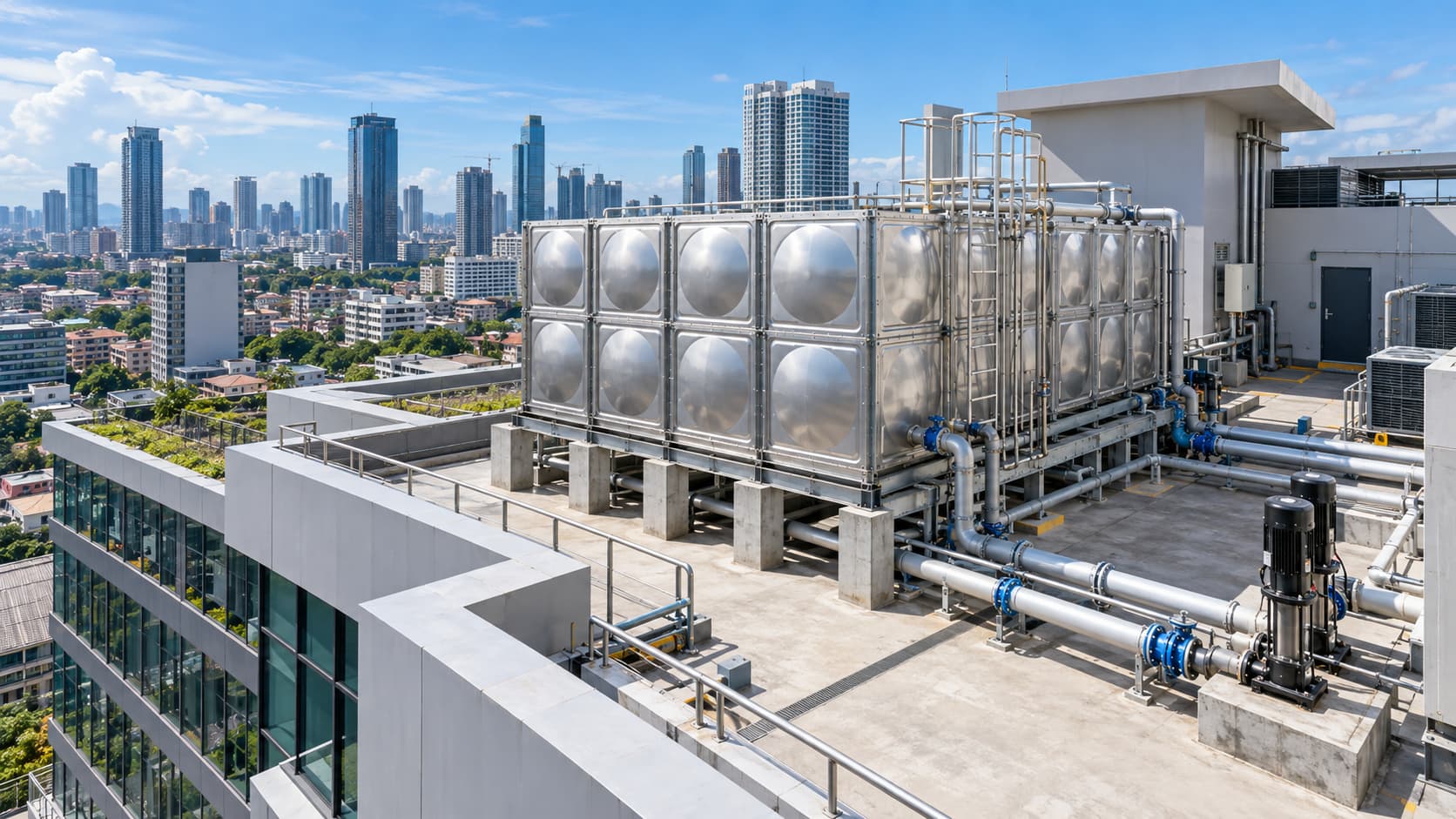
In high-rise commercial buildings in Metro Manila, fiberglass composite tanks are commonly installed on rooftops and in basements because individual panels can be carried through service elevators or narrow access points. Meanwhile, traditional precast concrete tanks or large steel tanks are more suitable in open industrial sites such as warehouses in Laguna or Cavite, where cranes and heavy machinery can easily position larger prefabricated systems without spatial limitations.
Tank weight plays a key role in structural design, particularly for elevated installations or buildings with strict load limitations. Fiberglass composite tanks are considerably lighter than concrete and many steel alternatives, helping reduce structural stress and simplifying engineering requirements.
In practice, high-rise buildings such as condominiums or hospitals in Quezon City often use fiberglass tanks to avoid overloading rooftop structures. Conversely, concrete tanks are more commonly installed in ground-level facilities like water treatment plants and industrial sites, where weight is less of a constraint and added mass can contribute to overall stability and long-term durability.
Fiberglass composite tanks typically require less maintenance due to their corrosion-resistant surfaces and smooth interior, which minimizes sediment buildup and makes cleaning easier.
In food processing facilities in Pampanga, these tanks are often preferred because they help reduce downtime linked to routine cleaning and inspections. In contrast, traditional tanks are still widely used in municipal water systems and older industrial facilities, where maintenance programs include waterproofing, coating repairs, crack sealing, and corrosion checks. Although they generally require more ongoing upkeep, they can remain a practical and cost-effective option when regular maintenance teams are in place.
Both fiberglass composite and traditional water tanks can support safe water storage when properly designed and maintained. Fiberglass systems are often preferred for hygienic applications due to their sealed, non-corrosive surfaces, which help reduce the risk of contamination.
For example, in pharmaceutical or electronics manufacturing plants in Laguna Technopark, fiberglass composite tanks are commonly used to maintain higher water purity standards. Traditional tanks, on the other hand, are still widely used in municipal or agricultural irrigation systems, where water is not always intended for strict purity-sensitive processes but still requires consistent quality control through regular cleaning and monitoring.
As emphasized in the World Health Organization’s drinking-water quality guidelines, proper storage design and maintenance practices remain essential regardless of tank type.
Fiberglass composite tanks are increasingly preferred over traditional water tanks due to their durability, flexibility, and lower maintenance requirements.
| Factor | Fiberglass Composite Tanks | Traditional Water Tanks |
|---|---|---|
| Corrosion Resistance | High resistance to rust and chemical corrosion; suitable for humid and coastal environments | Susceptible to corrosion or material degradation; often requires coatings or protective treatment |
| Installation | Modular and lightweight; easier on-site assembly and ideal for tight or restricted spaces | Heavier systems typically require more space and lifting equipment for installation |
| Structural Load | Lightweight design reduces load on foundations and building structures | Heavier materials increase structural and foundation load requirements |
| Maintenance | Low maintenance due to smooth, non-corrosive surfaces and reduced buildup | Higher maintenance needs, including inspections, repairs, and protective recoating |
| Lifecycle Cost | More cost-efficient over time due to reduced maintenance and longer service life performance | Potentially higher long-term costs due to recurring maintenance and repairs |
| Water Quality | Supports hygienic storage with stable, non-reactive surfaces | Water quality depends heavily on consistent maintenance and tank condition |
FRP tanks are becoming a preferred choice because they help reduce common water storage risks: corrosion, difficult installation, excessive structural load, and recurring maintenance. For commercial and industrial projects, FRP delivers durable, scalable, and efficient water storage.
Secure a water storage system engineered for structural reliability, installation efficiency, and long-term performance. Contact Aqua Cube Tank to evaluate the right FRP or modular water tank configuration for your project.
Learn the right approach to planning water storage for multi-building developments:
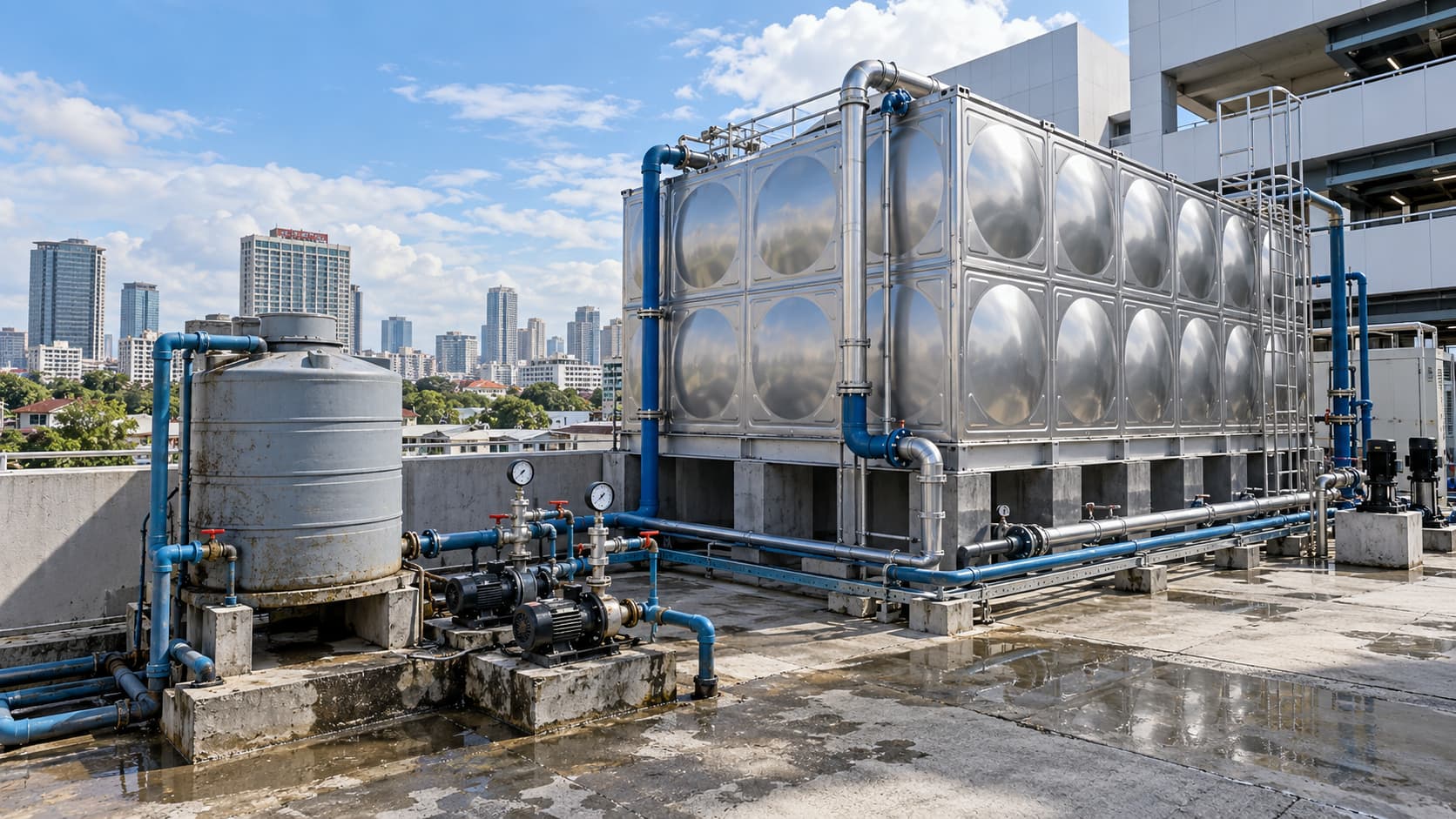
Find out what happens when your water storage capacity is insufficient and how Aqua
Find out why modular water tanks are becoming standard for new commercial properties