September 24, 2026
The Right Approach to Planning Water Storage for Multi-Building Developments
Learn the right approach to planning water storage for multi-building developments:
Overview
- Fixed-capacity water tanks struggle to meet growing demand due to limited scalability, infrastructure inflexibility, climate variability, physical degradation, reduced emergency buffers, and increased runoff from development.
- These constraints can lead to supply issues, compliance risks, and higher costs. Modular systems offer a scalable, adaptable solution for long-term, reliable water storage performance.
Recognizing why fixed-capacity water tanks struggle to keep up with growing developments is essential for making informed infrastructure and procurement decisions. These systems are designed with a predetermined storage volume, which limits their ability to accommodate increasing water demand as occupancy levels rise and facilities expand.
As developments scale, these limitations introduce operational risks, potential regulatory concerns, and long-term planning challenges that can affect project timelines and overall infrastructure performance. When capacity is exceeded, properties may experience water shortages, inconsistent pressure, and the need for costly system upgrades or replacements.
When a tank is designed with a fixed capacity, increasing occupancy and the addition of amenities such as gyms, pools, and residential units lead to higher overall water consumption in commercial areas. As demand grows, the limitation becomes the system’s inability to expand beyond its predetermined volume.
Once the storage threshold is reached, the tank operates at maximum capacity, leaving minimal buffer for peak usage, emergencies, or fire reserve requirements. This highlights a key constraint of fixed systems—they are engineered for initial demand conditions rather than for continuous growth over time.
Once installed, whether on rooftops, basements, or utility spaces, the size and configuration of a water tank cannot be modified without significant structural alterations. As properties evolve, infrastructure should adapt accordingly; however, fixed tanks lack this flexibility and typically require extensive demolition, reinforcement, and redesign to increase capacity.
This inherent limitation means the system is not designed for scalability, making expansion more complex, disruptive, and difficult to achieve.
Climate variability, including longer wet seasons and irregular rainfall patterns, has reduced the predictability of natural water supply. In developing facilities, reliance on fixed-capacity tanks provides a limited buffer against distribution interruptions or fluctuations in municipal supply.
These tanks are typically designed based on historical demand data and often lack sufficient reserves to handle extended dry periods or sudden increases in usage. This mismatch between environmental conditions and static infrastructure contributes to supply uncertainty, ultimately affecting operational efficiency.
Corrosion, joint deterioration, coating failure, and structural fatigue reduce storage efficiency and overall reliability. As materials age, low-capacity tanks may no longer perform at their originally rated capacity, even when demand remains constant.
This degradation further compounds the limitations of restricted storage, as property owners must manage declining performance in aging systems. The combined effects of increasing consumption and reduced structural integrity are not designed to accommodate expansion or long-term material fatigue.
The original buffer intended for fire protection, maintenance shutdowns, and unexpected supply interruptions diminishes over time. What was once an adequate reserve capacity becomes insufficient as consistent demand gradually consumes the margin of safety.
During peak usage or emergencies, limited reserve capacity can compromise operational continuity and compliance with fire safety requirements. Without built-in scalability, the system cannot restore or expand its emergency buffer as demand increases.
As developments expand, more land is converted into impervious surfaces such as parking areas and paved walkways, which limit natural water absorption and change stormwater flow within the site. This increase in runoff places additional pressure on drainage systems and raises reliance on controlled water storage.
Since fixed-capacity tanks are typically sized for earlier stages of development, they may no longer be sufficient to support higher consumption and evolving water management requirements.
Addressing the limitations of fixed-capacity systems requires adaptable solutions that maintain optimal performance. Aqua Cube Tank offers modular water storage systems designed for durability, scalability, and evolving facility needs, with precision-fabricated components and technical support for seamless integration across residential, commercial, and mixed-use developments in the Philippines.
Our modular water tanks include:
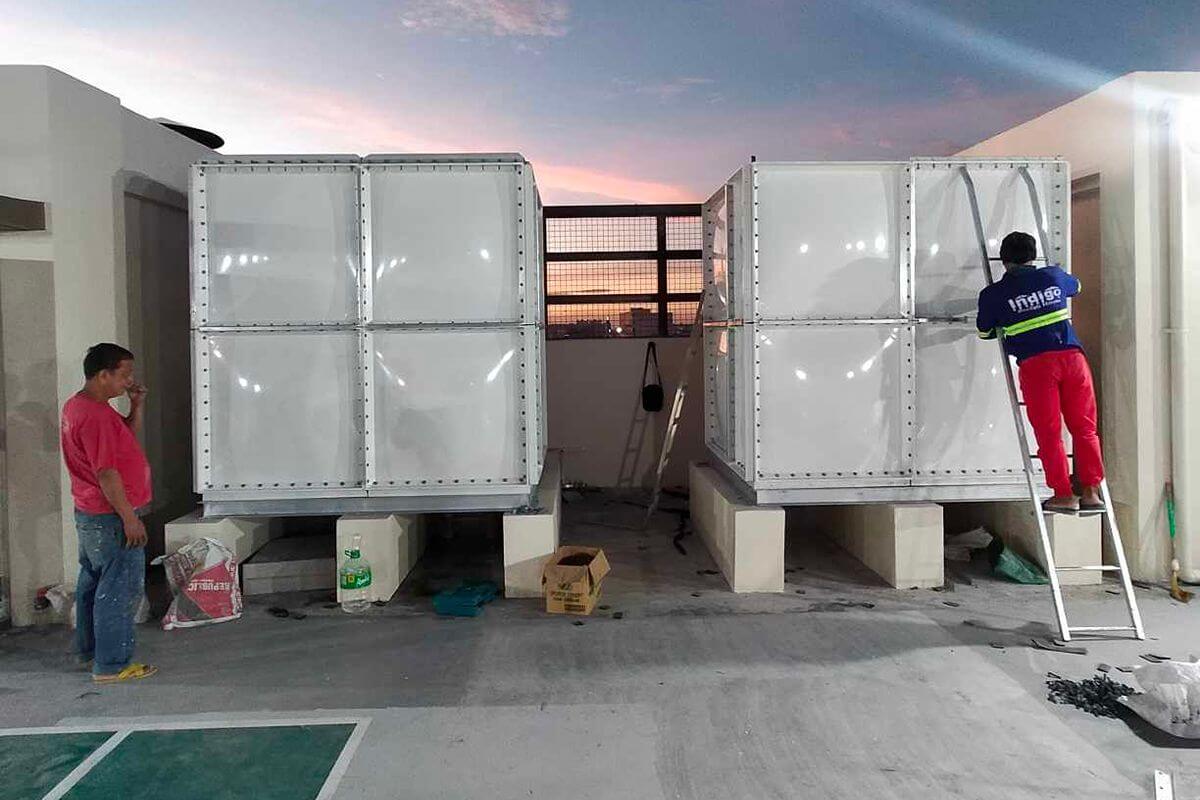
These tanks are made from fiber-reinforced plastic or glass-reinforced plastic, a composite material formed by combining glass fibers with durable polymer resins. The panels are lightweight yet structurally robust, offering strong resistance to corrosion, leaks, and environmental wear.
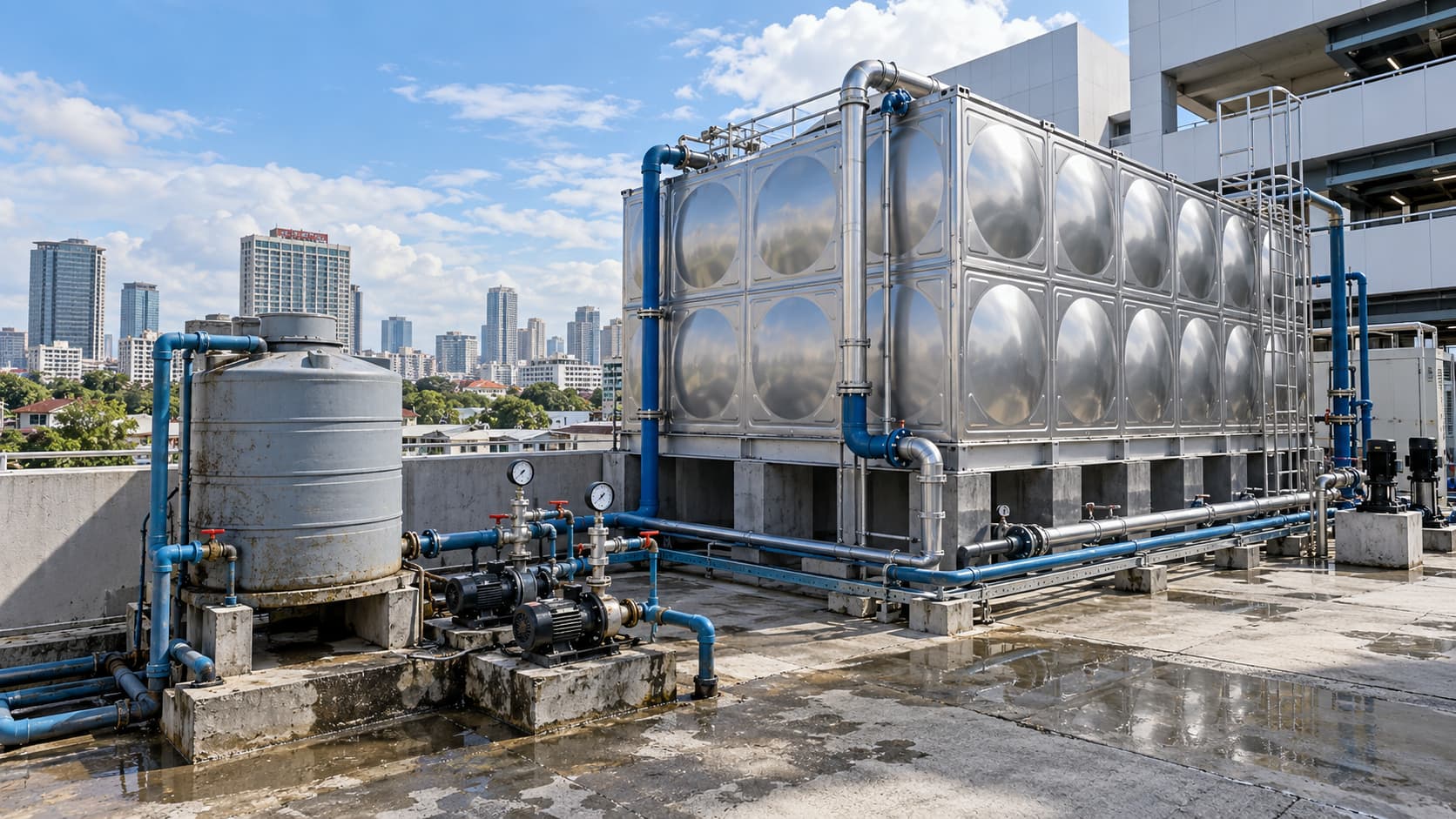
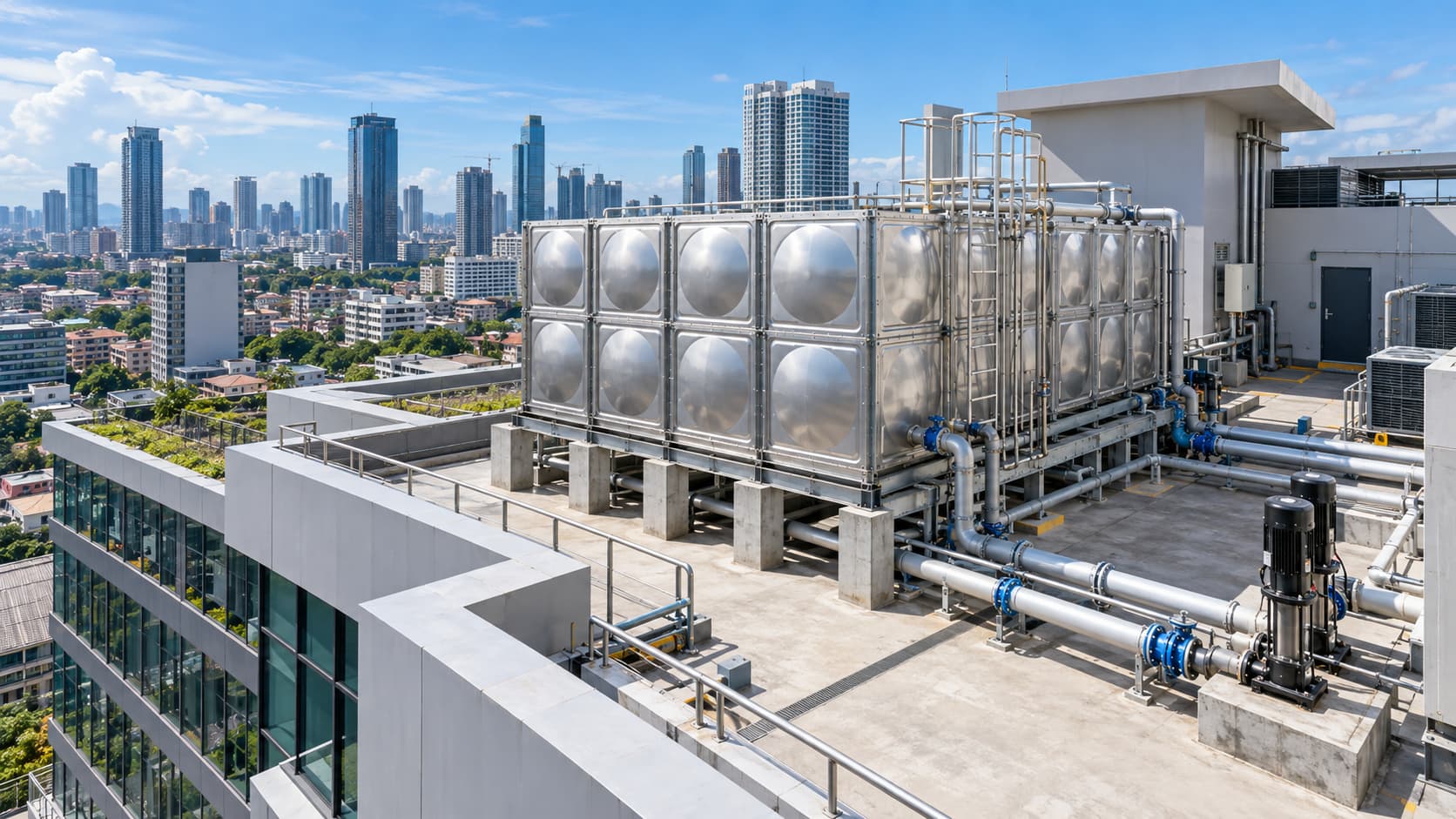
At Aqua Cube Tank, stainless steel tanks are constructed from prefabricated stainless steel panels that are assembled on-site to form a durable and high-quality structure. We use high-grade stainless steel known for its natural corrosion resistance and hygienic surface, making it suitable for potable water and sensitive industrial applications.
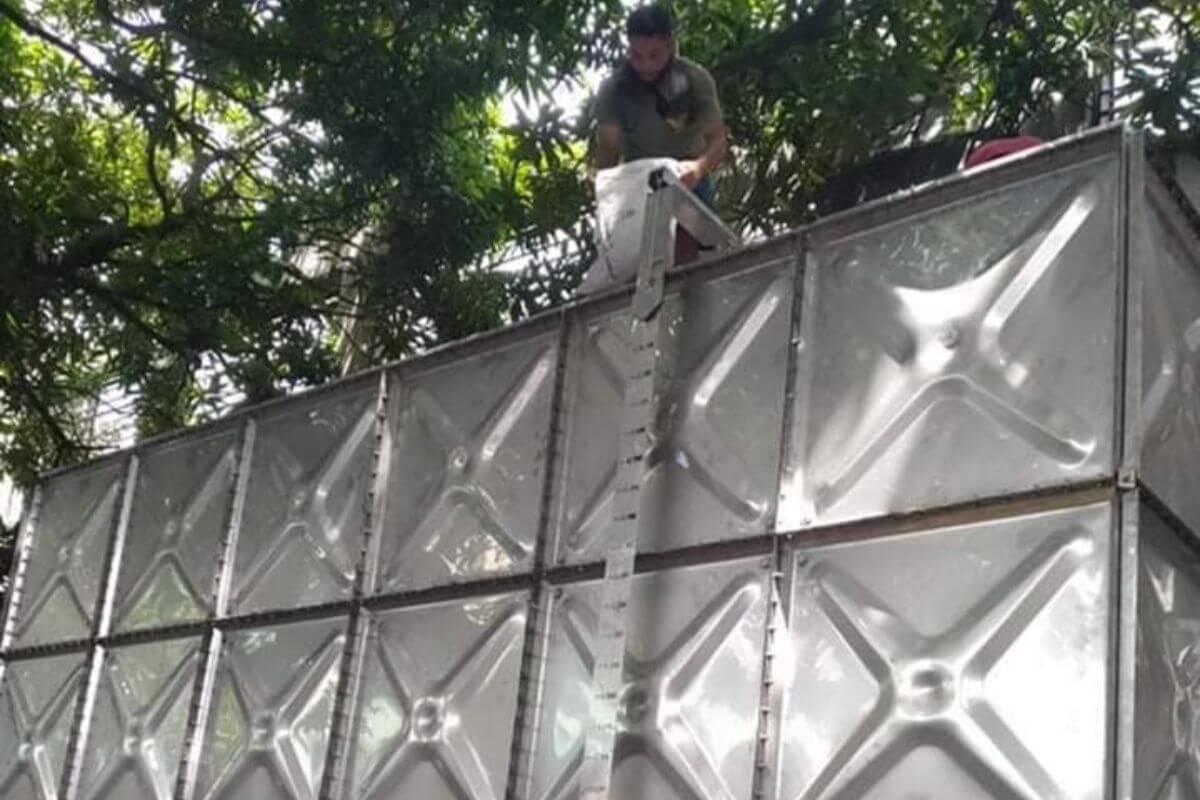
Engineered from steel panels coated with a protective zinc layer, our galvanized steel tanks are designed to resist rust and corrosion. These panels are fabricated for strength and durability, then assembled on-site to create a reliable, heavy-duty storage structure.
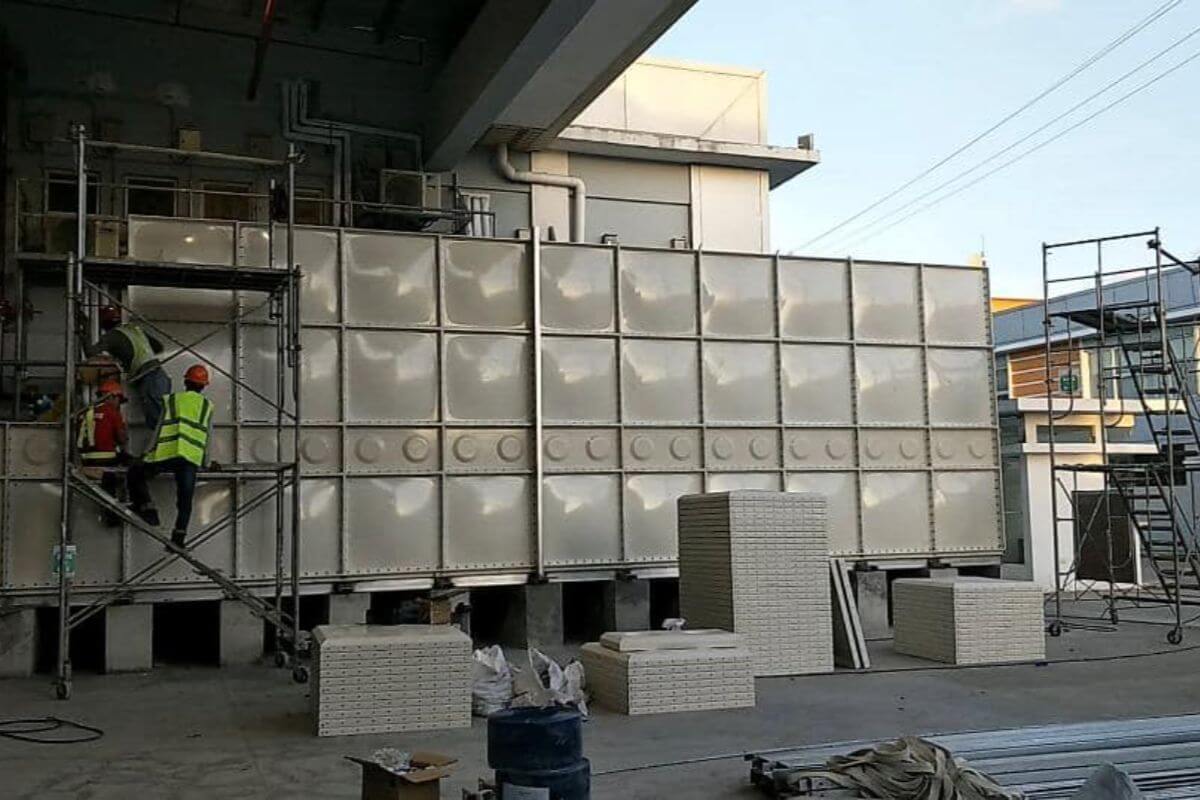
Made from pre-formed corrugated steel panels, Aqua Cube Tank’s corrugated steel water storage systems are designed to provide enhanced structural strength and rigidity. Built for large-volume storage and quick installation, these tanks offer a cost-effective and dependable solution for developments with growing water demands.
Understanding why fixed-capacity water tanks struggle to keep up with growing developments highlights key operational, spatial, and planning limitations. Increasing occupancy, added amenities, and changing site conditions can exceed original storage capacity, leading to supply shortages, compliance risks, and costly retrofits when growth is not anticipated.
Aqua Cube Tank provides modular water storage systems designed for scalability and long-term use. With precision-fabricated panels, on-site assembly, and reliable technical support, these solutions adapt to evolving facility requirements. Contact us today to find the right system for your facility.
Learn the right approach to planning water storage for multi-building developments:
Find out what happens when your water storage capacity is insufficient and how Aqua
Find out why modular water tanks are becoming standard for new commercial properties