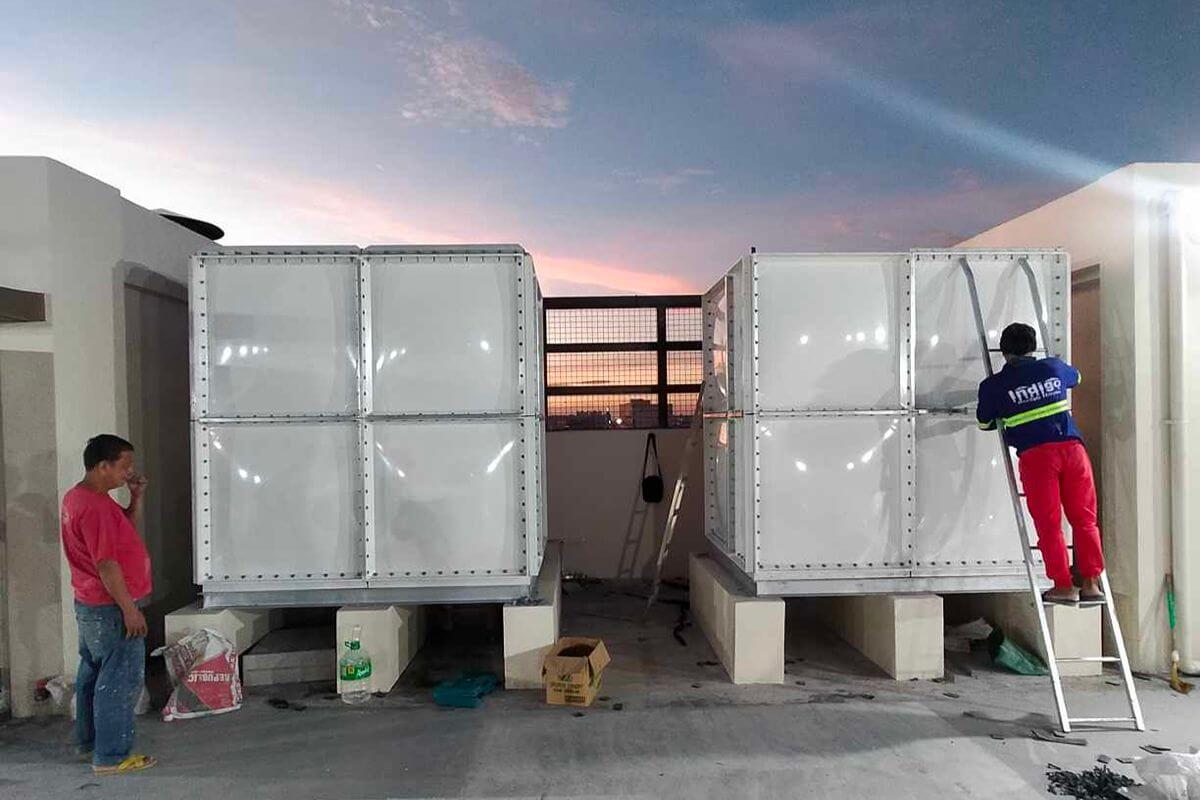
October 21, 2026
What Do You Need to Know About GRP Tanks in the Philippines?
Discover what you need to know about GRP tanks in the Philippines, from their key
Overview
- Evaluating FRP tanks before project approval requires engineers to check material compatibility, design specifications, laminate quality, and structural requirements.
- Key considerations include assessing chemical exposure, verifying resin suitability, reviewing tank connections, checking foundation support, and examining factory inspection records.
- Choosing a reliable FRP modular tank from Aqua Cube supports corrosion resistance, simplifies installation, and promotes dependable water storage performance.
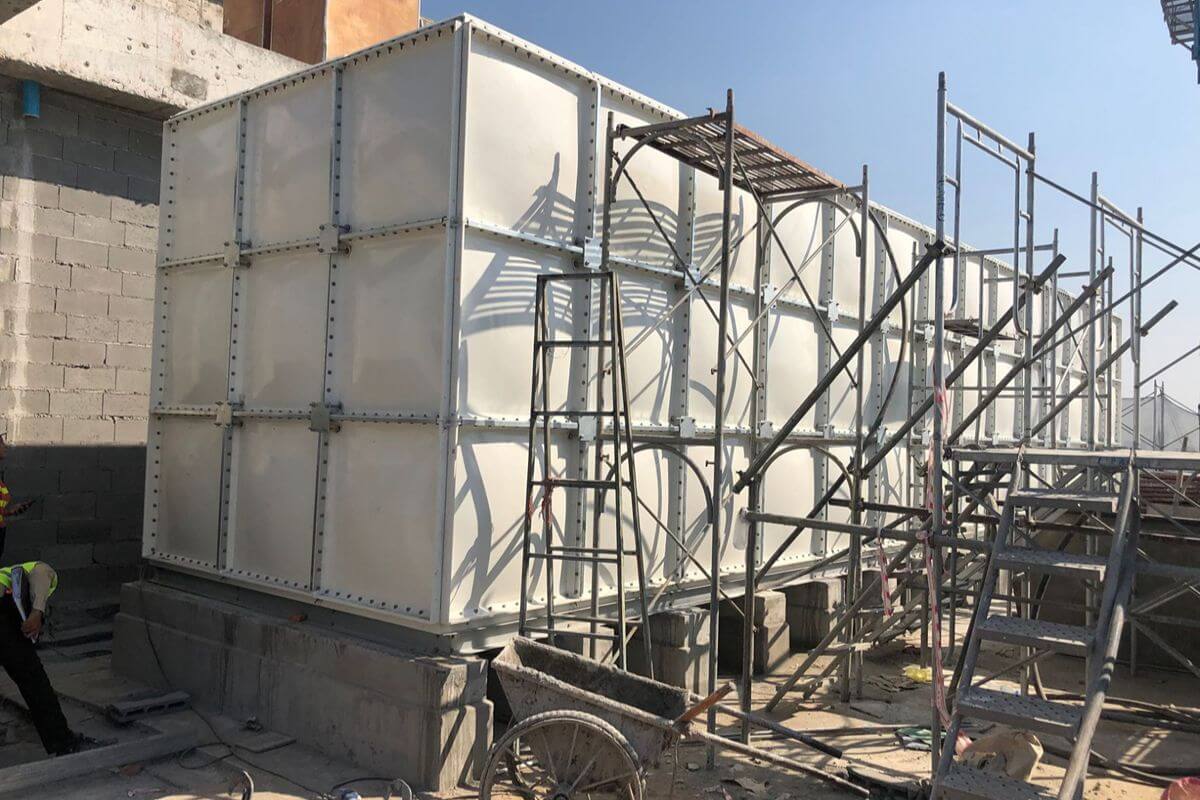
Not all Fiberglass Reinforced Plastic (FRP) tanks meet the same quality standards. Differences in material composition and laminate construction can affect how a tank performs under specific operating conditions. Aqua Cube offers FRP modular storage tanks for a range of storage applications. However, engineers must follow a clear evaluation process before approving a unit for a project.
Understanding how engineers evaluate FRP tanks before project approval helps project teams identify potential issues and confirm whether a proposed unit meets their requirements. In this article, we discuss the main factors engineers should examine before approving an FRP storage system.
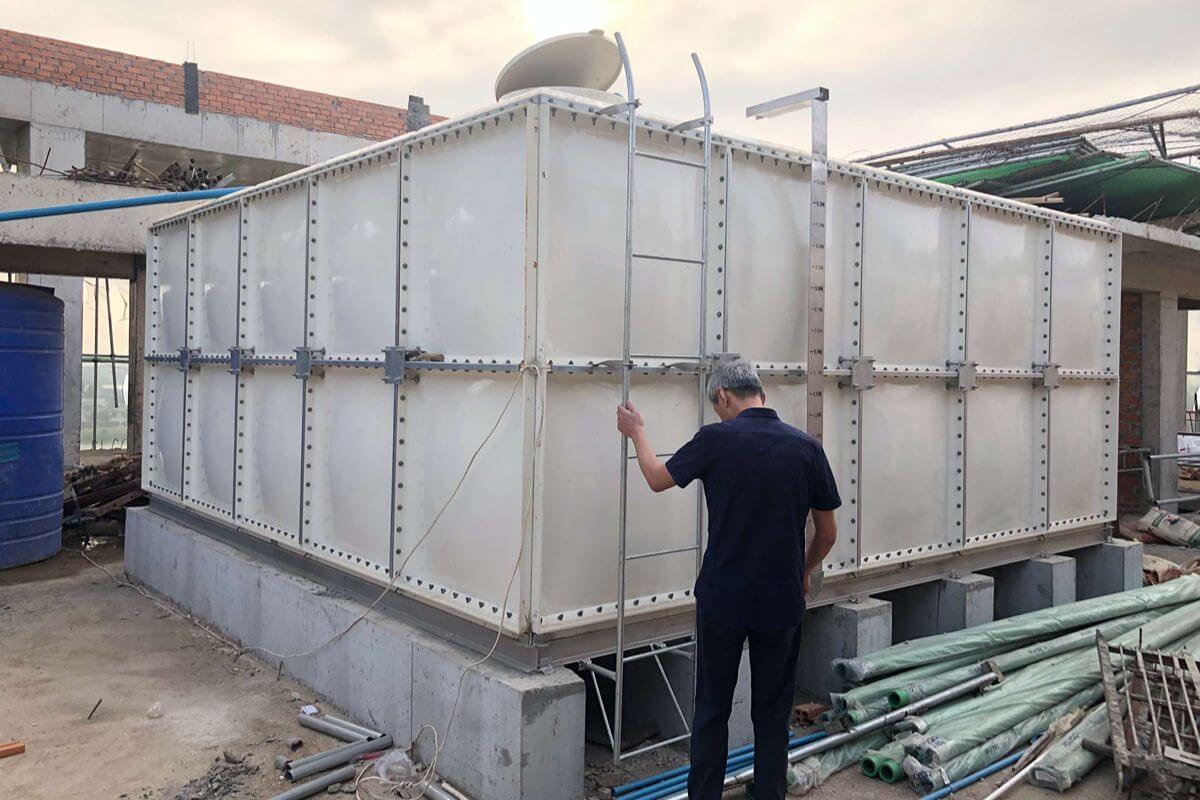
The tank’s materials must withstand the stored liquid and its operating conditions throughout its intended service life. Engineers should assess the following factors before selecting a suitable resin system.
To ensure proper material compatibility, verify the stored liquid’s chemical makeup, concentration levels, and any additives before choosing a resin system. For example, a tank for acidic wastewater may require a different resin formulation from one for alkaline cleaning solutions. Our guide on what to prepare before choosing FRP storage tanks covers other important selection considerations.
Engineers should compare normal and maximum operating temperatures against the resin system’s heat distortion temperature (HDT). HDT indicates the temperature at which a material begins to soften under a specified load. This assessment is particularly important for facilities that store heated process water or industrial liquids.
Specific gravity indicates the stored liquid’s density and helps engineers calculate the pressure exerted on tank walls. Meanwhile, pH provides insight into potential chemical effects on the resin and inner liner.
The proposed tank must comply with applicable project specifications and engineering requirements. Engineers should review the design documentation before confirming whether it suits the intended application.
Assess proposed designs and project alignment by evaluating technical drawings, structural calculations, and compliance documentation. For example, a water treatment facility may require a tank with a specific capacity and sufficient structural support. Our FRP tank buying guide provides further guidance on evaluating tank specifications and suppliers.
Prescriptive specifications define the required materials and construction methods. Performance specifications focus on what the tank must withstand during operation. A project may specify a particular material grade or require resistance to certain chemical concentrations and operating temperatures. Engineers should determine which approach applies to the project.
The laminate structure affects the tank’s ability to withstand chemical exposure and mechanical stress. Engineers should examine the resin formulation and fiberglass reinforcement to assess overall material quality.
The inner liner shields the structural laminate from direct contact with stored liquids. Engineers should verify its thickness and resin compatibility, particularly for tanks that hold corrosive chemicals or industrial wastewater, to ensure long-term durability and chemical resistance.
The structural layer combines fiberglass reinforcement with resin to provide mechanical strength. For large-capacity tanks, engineers must confirm that the laminate can withstand the pressure created by the stored liquid. The design should also account for the tank’s intended operating conditions.
Surface hardness can help engineers assess resin curing and laminate quality. They can request test results to identify potential defects and check whether the finished surface meets the manufacturer’s specifications.
Tank dimensions and connection details must align with the facility’s layout. Engineers should also assess the installation site to confirm that the foundation can support the filled tank.
Ensure nozzle placements match facility piping and drainage requirements. Utilizing features like side connections for process flows and bottom outlets for drainage helps prevent installation delays and optimizes operational efficiency.
The foundation must support the tank’s total filled weight and applicable structural loads. For rooftop installations, engineers should verify the building’s load capacity before approving the proposed location. They should also check the anchorage requirements to support tank stability.
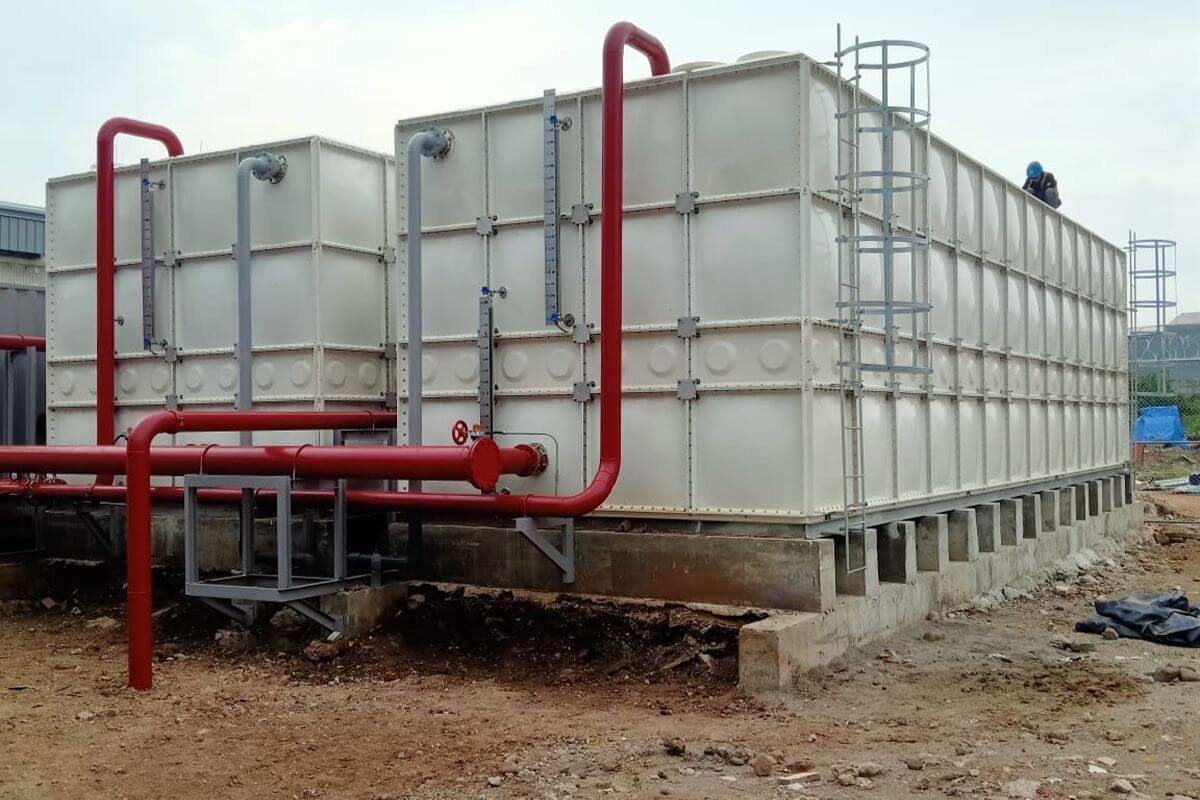
Factory inspections help confirm whether the finished tank meets the approved design and project specifications. Engineers should review the applicable test results and quality records before accepting the unit.
Hydrostatic testing checks the tank for leaks under specified test conditions. For example, a water storage tank may undergo this test before delivery to verify the integrity of its joints and connections. Engineers should review the results against the manufacturer’s acceptance criteria.
Non-destructive testing (NDT) helps identify potential material or structural defects without damaging the tank. Engineers should confirm which inspection methods apply to the design and review the corresponding results before acceptance.
Engineers should request material certificates and documentation for the resin and fiberglass used in production. They should also review inspection reports to confirm that the materials match the approved project specifications. These records provide a basis for verifying manufacturing quality.
Selecting a tank supplier involves more than comparing prices and dimensions. At Aqua Cube, we draw on over 15 years of experience supplying and installing water storage solutions for residential, commercial, and industrial applications. We offer modular FRP/GRP tanks made with corrosion-resistant materials and provide technical guidance on material selection and installation.
Explore the commercial applications of FRP tanks to learn how these storage systems serve different facilities.
Understanding how engineers evaluate FRP tanks before project approval helps project teams determine whether a proposed tank can meet their operational and structural requirements. Engineers should verify material compatibility, review design specifications, assess laminate quality, and examine factory inspection records before approving an FRP storage system.
At Aqua Cube, we are happy to help you find an FRP tank solution that suits your project. Contact us today to discuss your storage requirements.
Discover what you need to know about GRP tanks in the Philippines, from their key
Learn how engineers evaluate FRP tanks before project approval to select a storage
Evaluate FRP tank selection criteria for Philippine construction projects to choose a