September 24, 2026
The Right Approach to Planning Water Storage for Multi-Building Developments
Learn the right approach to planning water storage for multi-building developments:
Overview
- Common water storage planning mistakes that raise commercial costs include incorrect sizing, ignoring peak demand, choosing unsuitable materials, and poor MEP integration.
- Neglecting level monitoring and relying on reactive maintenance lead to emergency repairs.
- Addressing these issues early with custom FRP/GRP modular tanks ensures optimal performance and lower long-term expenses.
Water tanks in the Philippines may seem like a straightforward infrastructure requirement, but proper planning involves several key decisions that can affect a facility long after installation. A system that appears efficient at first may eventually lead to insufficient water supply, frequent repairs, and higher energy consumption.
Understanding the most common water storage planning mistakes that increase commercial operational costs helps your teams look beyond the upfront price. A system must support how a structure operates—not force daily operations to adjust around its limitations.
Capacity planning is a crucial stage in designing a water storage solution, yet it’s one of the easiest aspects to miscalculate. Relying on a rough estimate can create challenges at either end of the scale.
An undersized tank cannot hold enough water to support the facility during peak periods or supply interruptions. When reserves deplete too quickly, workflow can suffer, especially in establishments that rely heavily on water for sanitation, food service, or cooling.
This issue can also strain pumps and refill components as they work harder to restore depleted reserves. In some cases, the building may need emergency upgrades, creating costs that more accurate capacity planning could have avoided.
An extremely large water storage tank can create quality issues when water sits too long. Low turnover can also reduce chlorine residuals and encourage bacterial growth, including Legionella, while warmer upper layers may promote algae growth through thermal stratification.
Over time, this buildup can affect water quality and require more frequent cleaning and upkeep, especially in the food and beverage sector, where clean water is pivotal.
Commercial structures experience concentrated periods when several activities draw water from the tank at the same time, such as morning occupancy, sanitation, food preparation, or housekeeping. Planning around averages without evaluating these peak times can leave insufficient reserves when you need them most.
Assessing peak-demand periods helps project teams determine whether the system and its supporting infrastructure can handle short periods of intensive use.
The material and location of a water storage tank can impact its longevity, accessibility, and integration with the rest of the establishment. A tank that works in one environment may perform poorly in another, and an unsuitable location can make maintenance and future modifications difficult.
Choosing tank materials based on initial cost can lead to higher expenses over time. Factors such as humidity, corrosion exposure, water quality, required capacity, and upkeep conditions should all influence material selection. A tank that doesn’t suit its environment may require more repairs or reach the end of its lifespan sooner.
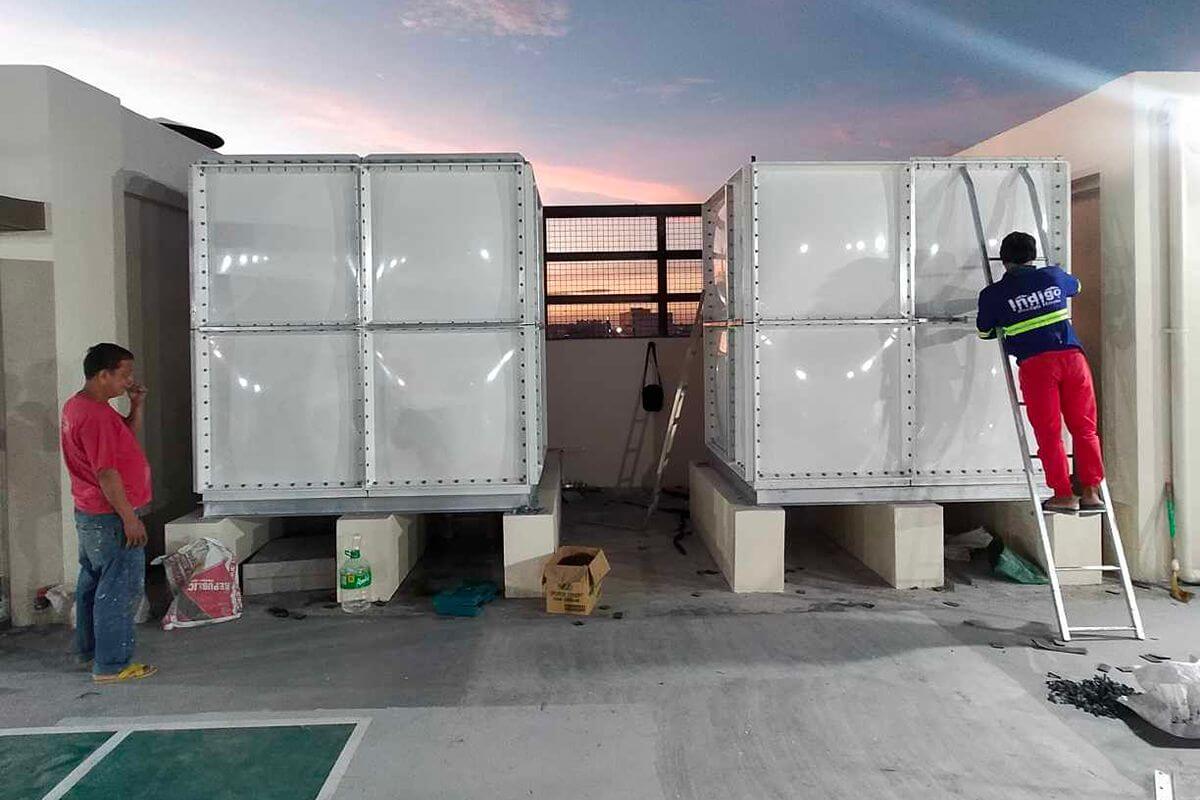
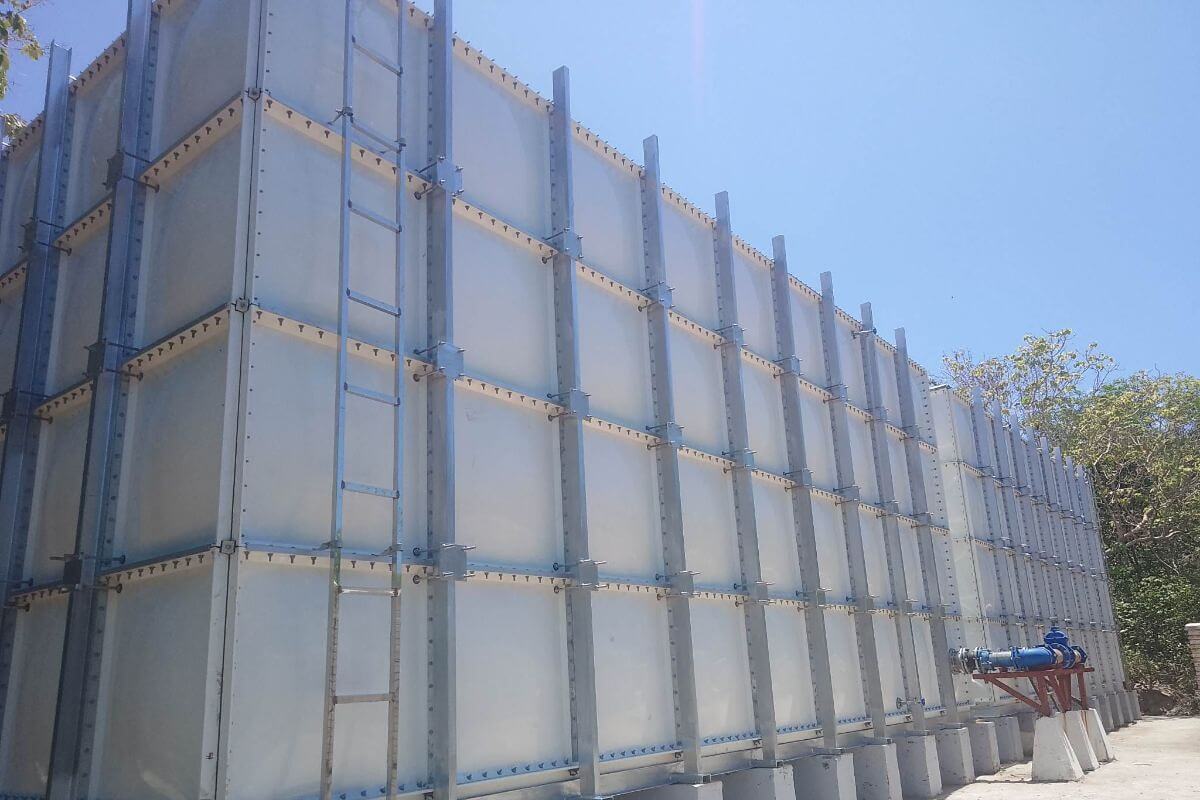
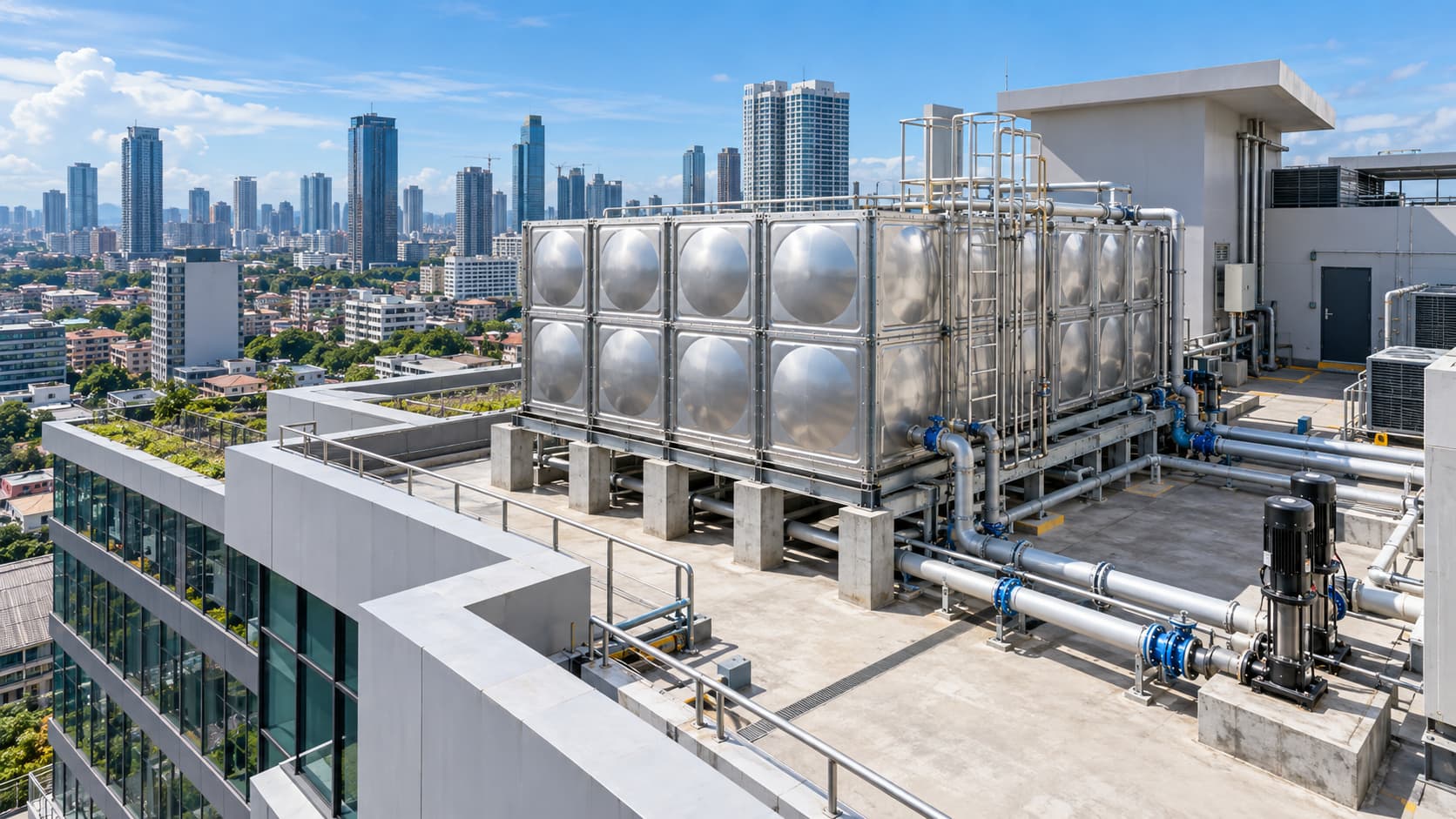
At Aqua Cube Tank, we offer FRP/GRP water tanks in the Philippines engineered to meet the needs of commercial and industrial buildings. Made from corrosion-resistant, fiberglass-reinforced materials, these modular solutions can be configured to match the required capacity, available footprint, and site conditions.
Their panel-based layout also provides greater flexibility during preparation and installation, making them a great choice for projects that must meet operational standards and support future development.
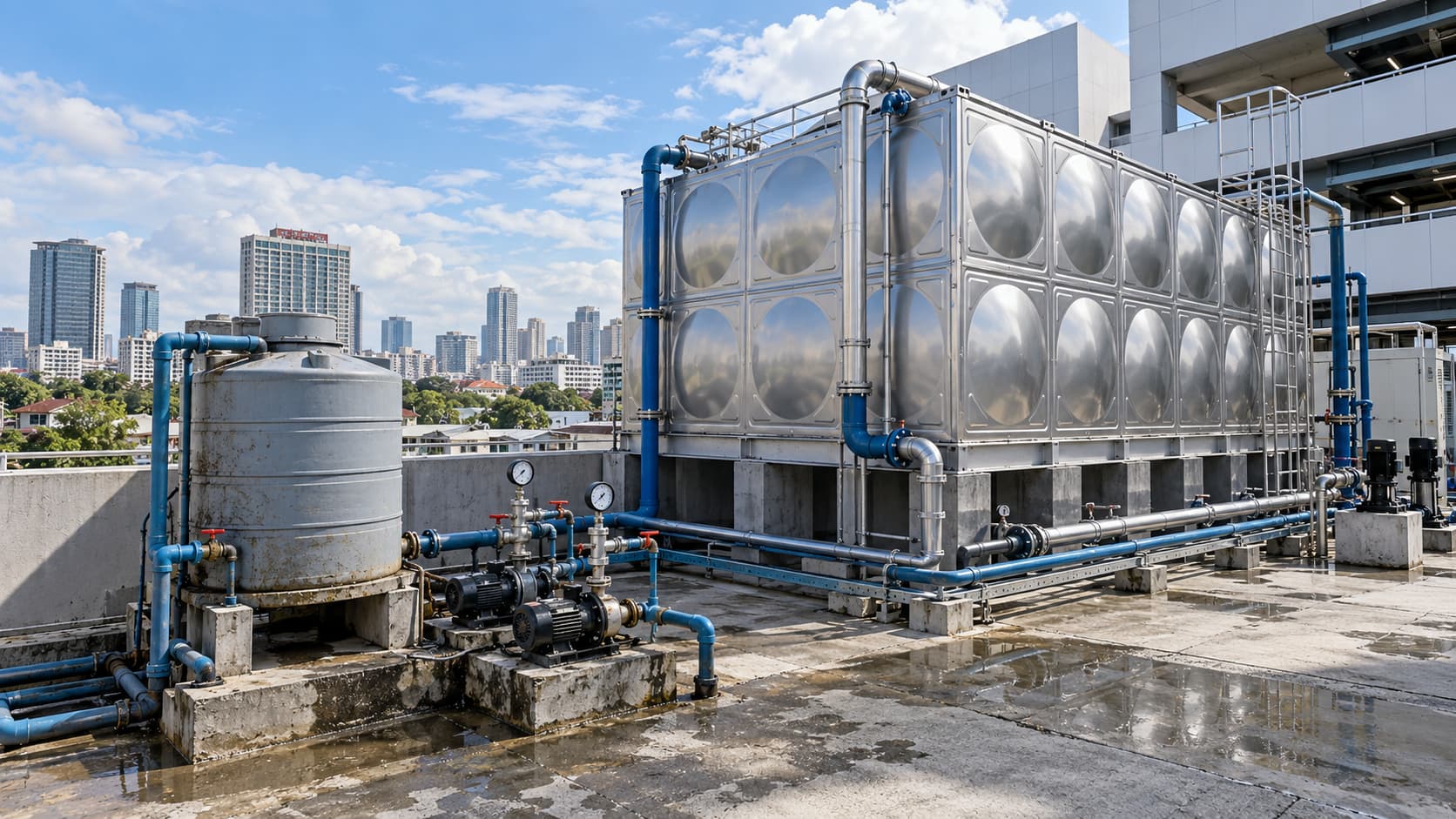
A water tank does not operate in isolation. Instead, its functionality relies on how it works with pumps, piping, valves, controls, and other mechanical, electrical, and plumbing (MEP) systems.
Inadequate coordination can lead to pressure issues, inefficient pumping, reduced water flow, or equipment operating beyond its intended capacity. Reviewing the whole system during planning ensures the storage and its supporting infrastructure operate as one coordinated network.
Without visibility into a structured maintenance plan, small concerns can go unnoticed until they affect workflow. The goal is to give project managers enough information to identify possible problems early and maintain the system before they become more serious.
Unreliable level indicators can cause limited visibility into how much water remains in storage. It can also be difficult to respond to unusually high consumption, distribution interruptions, or replenishment concerns.
Monitoring water measurements helps operators determine unusual patterns and make informed decisions before reserves become critically low. Ultimately, it also supports better coordination across storage, pumping, and water-supply solutions.
Waiting until a component fails before performing maintenance can appear cost-effective in the short term, but it often leads to more expensive repairs. Leaks, damaged fittings, malfunctioning pumps, and other issues become harder to address.
A preventive maintenance approach focuses on routine inspections, cleaning, testing, and timely repairs. Addressing emerging issues early extends the lifespan of water storage infrastructure and minimizes costly emergency work.
Water storage planning mistakes that increase commercial operational costs include incorrect capacity sizing, unsuitable materials, poor MEP coordination, limited monitoring, and reactive maintenance. Resolving these issues early lets teams assess the total lifecycle impact of their decisions.
Aqua Cube Tank provides durable FRP/GRP modular water tanks designed around the specific needs of commercial spaces. From selecting the right tank configuration and capacity to accommodating site space and installation requirements, our professional team delivers reliable storage solutions. Contact us today to learn more.
Learn the right approach to planning water storage for multi-building developments:
Find out what happens when your water storage capacity is insufficient and how Aqua
Find out why modular water tanks are becoming standard for new commercial properties