September 24, 2026
The Right Approach to Planning Water Storage for Multi-Building Developments
Learn the right approach to planning water storage for multi-building developments:
Overview
- This article explores what happens when water storage capacity falls short of a facility’s actual demand, from frequent shortages and pressure drops to equipment strain and safety concerns.
- Aqua Cube Tank provides modular water storage solutions configured to fit facility requirements, space, and operational needs.
Water tanks in the Philippines need to match how an establishment uses water—not simply how much it consumes on an average day. When storage is too small for peak demand, the available supply can be depleted faster than the system can replenish it.
Understanding what happens when your water storage capacity is insufficient makes it easier to determine when to reevaluate current storage and whether you need extra or bigger capacity.
When water demand surpasses available storage, difficulties usually show up first in daily workflows. A tank that repeatedly reaches critically low levels can place additional stress on connected equipment and make the overall distribution system less dependable.
When a tank does not hold enough water to cover periods of high demand, the supply can be depleted before the next refill. Once that reserve is exhausted, water-dependent tasks may stop altogether. Toilets may become unusable, cleaning can be delayed, and production processes may have to pause, leading to an unreliable distribution precisely when the facility needs it most.
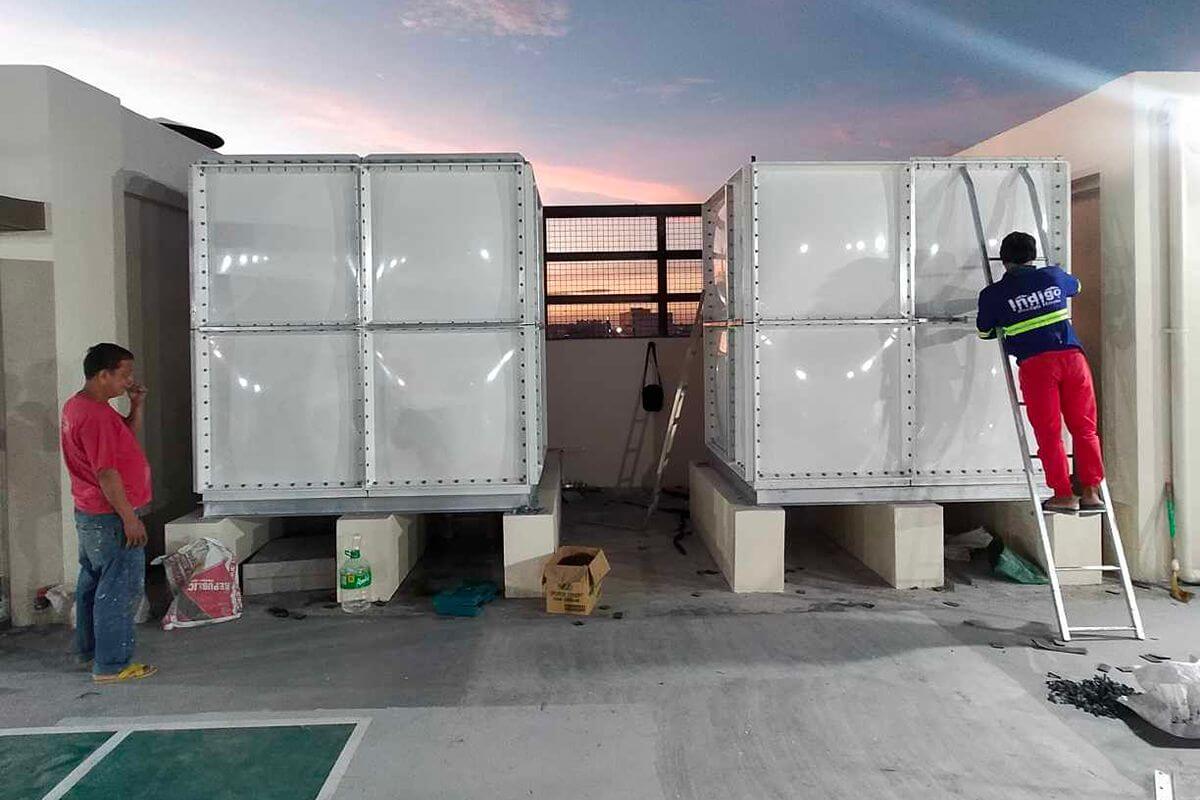
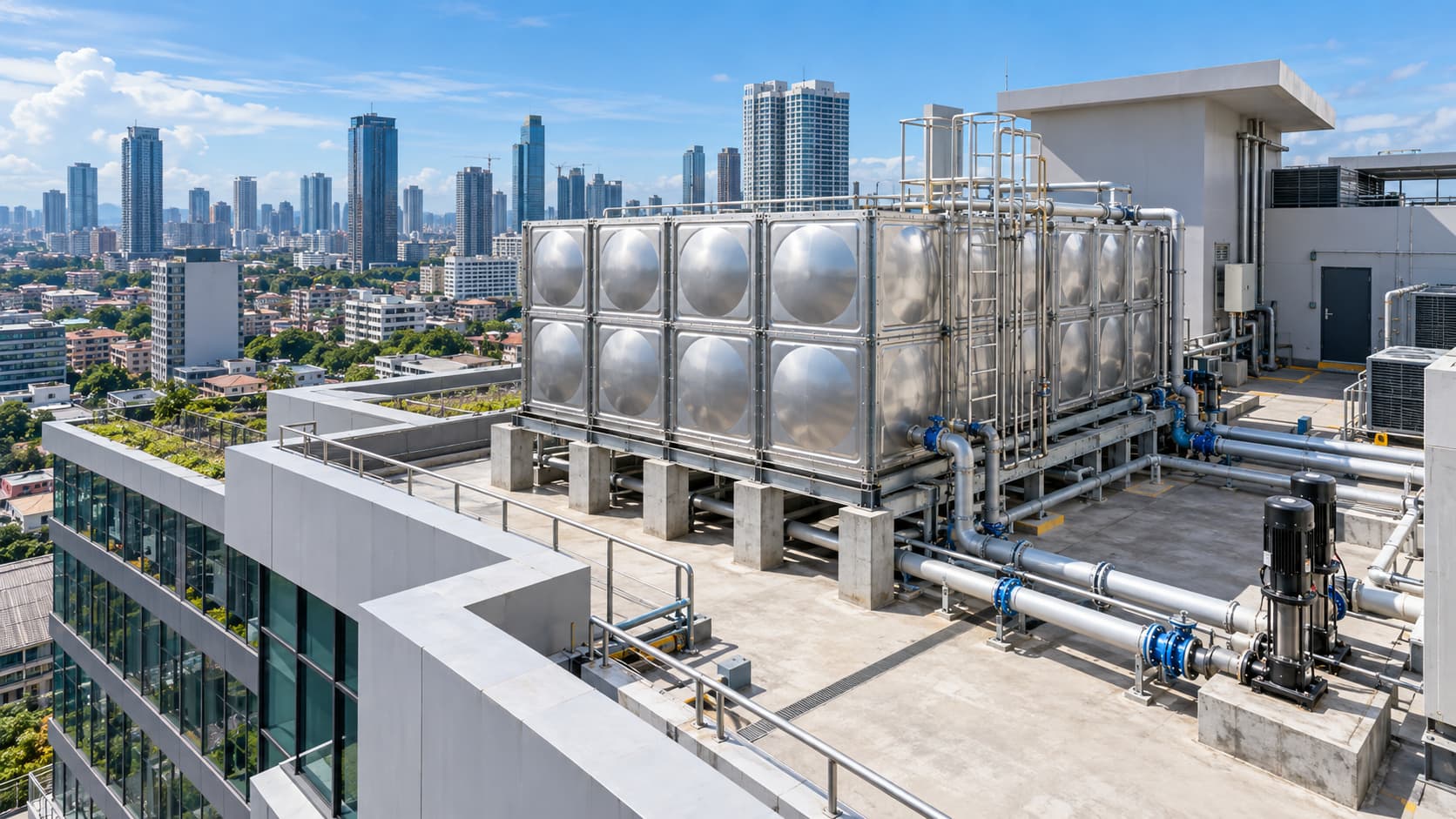
At Aqua Cube Tank, we offer modular water tanks in the Philippines that can be configured to a building’s requirements, rather than being limited to standard tank dimensions. Clients and organizations can request tank dimensions and customization based on capacity, available space, site conditions, and how the facility uses water. We can also manage installation, helping ensure the water storage is appropriately positioned, assembled, and integrated to meet the site’s requirements.
This approach gives commercial and industrial businesses better flexibility when current storage is not enough or when a new project has particular space and capacity constraints.
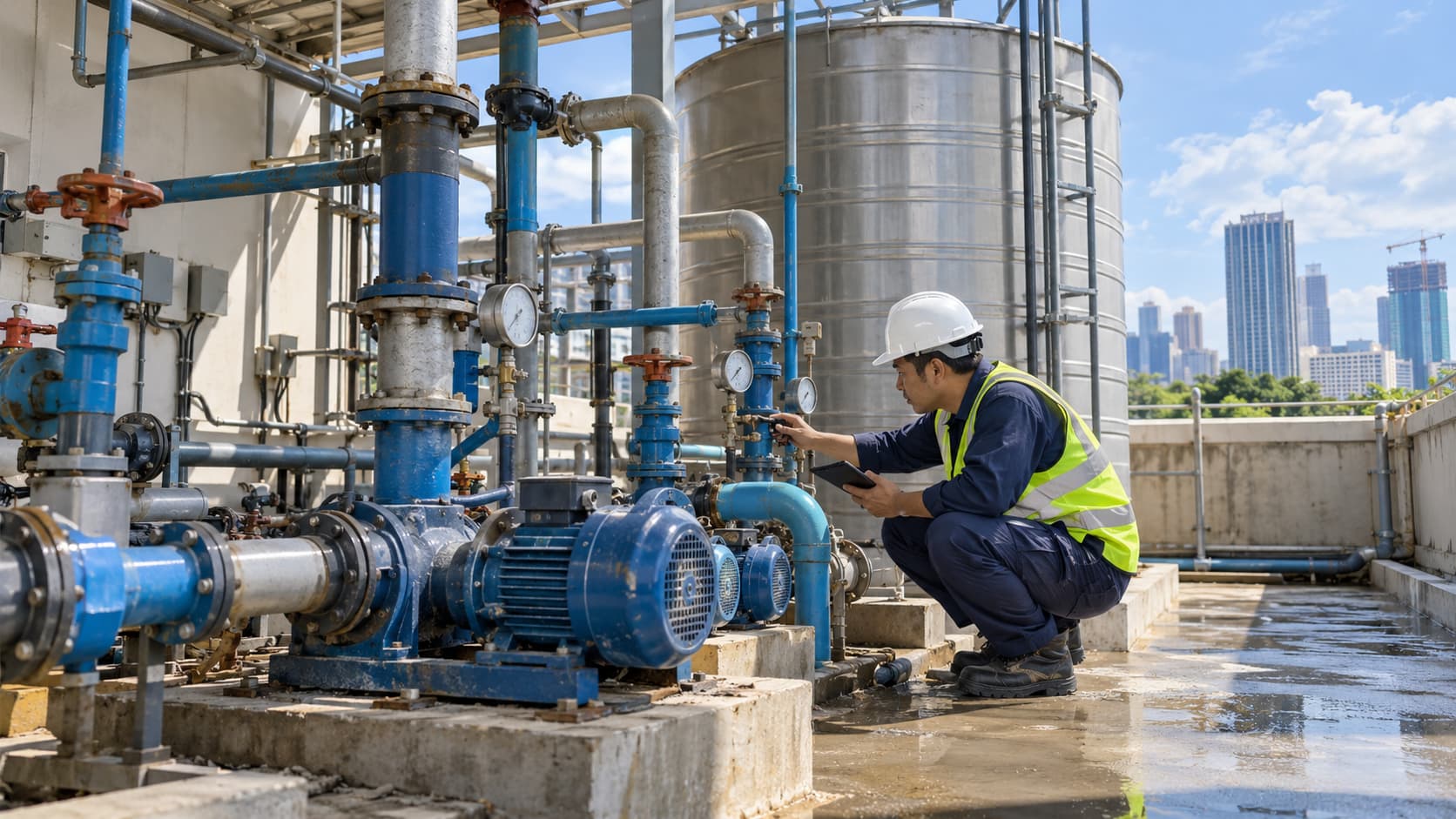
A low tank level can put the pumping system under greater stress because the pump may need to start more frequently to keep water available. Repeated starts and stops increase mechanical and electrical wear, while a pump that continues operating without sufficient water can overheat or run dry.
Eventually, the equipment may show problems such as unusual noise, overheating, poor performance, or repeated breakdowns. A failed pump can leave the building without enough water until the equipment is restored or replaced.
When many outlets or pieces of equipment draw water at once, an undersized storage distribution may not provide enough volume to maintain continuous flow. The immediate outcome can be weak taps, slow showers, poor flow at upper floors, or equipment that fails to receive the water pressure it needs.
The issue becomes apparent during peak-use times, when many areas compete for the same supply. Instead of reaching each point of use as expected, pressure fluctuates as demand rises and falls.
The consequences become more severe when inadequate storage impacts systems that protect occupants or maintain sanitary conditions. Running short on water is no longer just an operational inconvenience when the same reserve is expected to support firefighting, cleaning, or key services during an emergency.
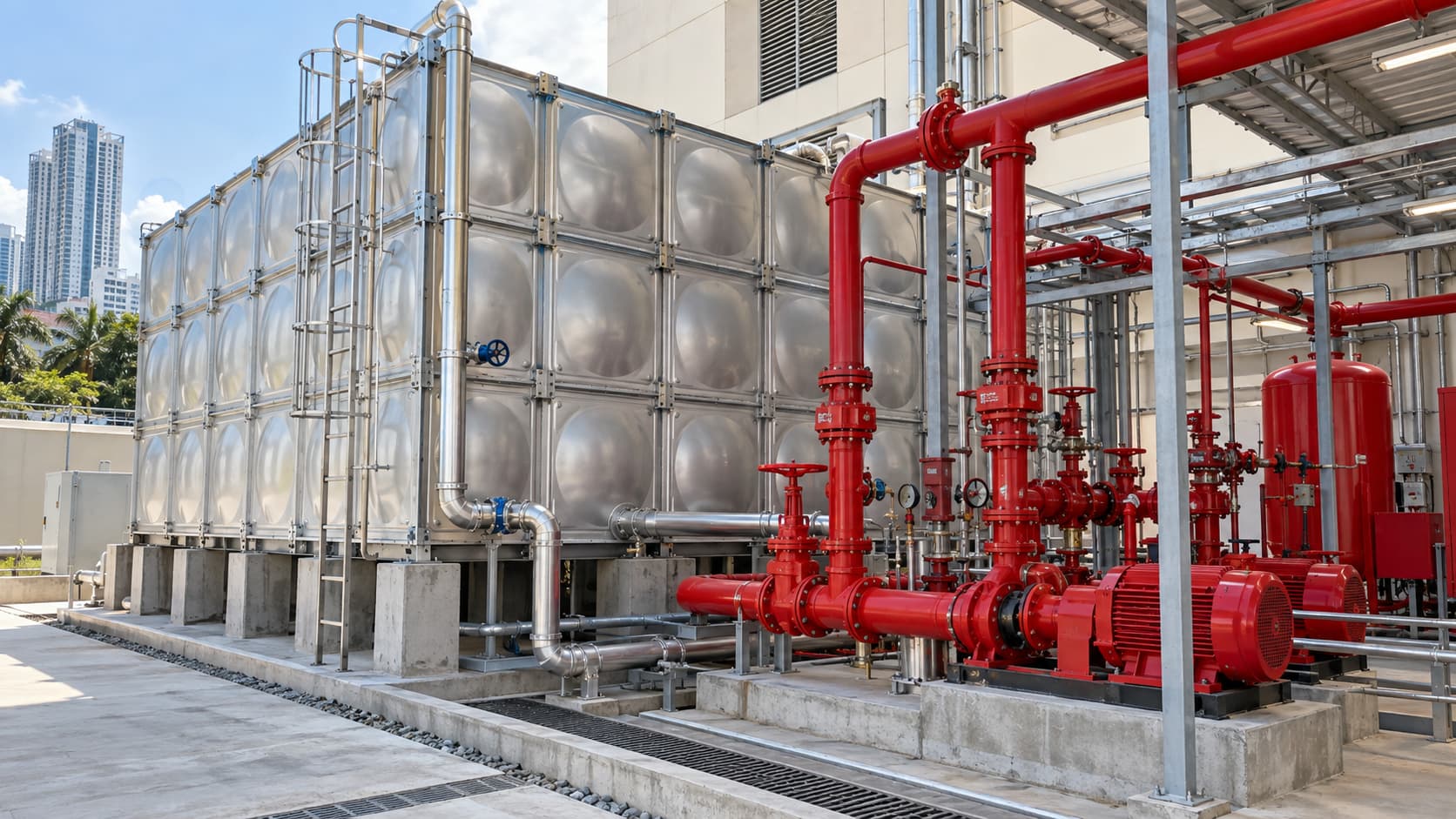
If the storage reserve is not enough for the establishment’s fire protection demands, a fire event can consume the available supply before emergency workflows are complete. This leaves less water available when it’s most necessary and can undermine the reliability of the facility’s fire safeguards.
For this reason, extinguishing water should be accounted for separately, instead of treating the entire tank capacity as conventional water available for everyday use.
An inappropriately sized tank can create water quality issues when the relationship between storage volume, demand, and turnover is not properly considered. If water remains in parts of the tank or supply system for too long, disinfectant levels can decline, and sediment can accumulate.
At the other extreme, repeatedly drawing the tank down to critically low levels can disturb settled material and carry sediment into the tank. The issue is that the storage arrangement should support the right turnover and maintain the water quality required for every facility.
The repercussions of inadequate tanks vary depending on how water is distributed and what the system supports. A residential development may experience prompt household inconvenience, while an industrial one may face equipment challenges and operational downtime.
| System Type | Primary Consequence of Low Storage |
|---|---|
| Residential (Well/Tank) | Spluttering taps, interrupted showers, and expensive pump replacements. |
| Agricultural/Farming | Inability to irrigate crops during dry spells, leading to reduced yields or livestock distress. |
| Commercial / Industrial | Forced operational shutdowns, failed health checks, and inability to run cooling towers. |
| Municipal (City) | Widespread boil-water advisories, inadequate fire hydrant pressure, and infrastructure strain. |
Recognizing what happens when your water storage capacity is insufficient allows you to address critical vulnerabilities before they disrupt key workflows. Persistent shortages, excessive pump stress, pressure fluctuations, and inadequate emergency reserves are clear indicators that your existing storage system can no longer support your business demands.
Aqua Cube Tank provides modular water tanks that can be configured around a facility’s specific capacity, dimensions, and available space. We also support the installation process to ensure the tank is properly assembled and positioned on site. Contact us today to learn more.
Learn the right approach to planning water storage for multi-building developments:
Find out what happens when your water storage capacity is insufficient and how Aqua
Find out why modular water tanks are becoming standard for new commercial properties