June 18, 2026
The Role of Supplier Support When Choosing a Water Tank for Sale
Understand the role of supplier support when choosing a water tank for sale to ensure
Overview
- Modular water tanks provide a flexible, durable, and cost-efficient solution for modern commercial, industrial, and large residential projects.
- Their customizable panels allow for adaptable layouts and scalable capacity, while prefabricated components simplify transport and on-site installation.
- Constructed from corrosion-resistant materials, these tanks offer long-term performance with minimal maintenance, ensuring a reliable water supply for daily operations.
- Its hygienic design and food-grade materials safeguard water quality, making modular systems a practical, efficient, and future-ready choice for facilities seeking both operational continuity and long-term value.
Efficient water storage is a growing challenge for commercial, industrial, and large residential projects. Limited space, evolving facility requirements, and complex installation sites often make traditional tanks impractical or costly.
In this article, we’ll delve into the benefits of modular water tanks, exploring why modern facilities are turning to solutions that adapt to real-world constraints.
By examining how these systems respond to today’s operational demands, facility managers and project planners can better understand the innovations shaping water infrastructure and how modular approaches are changing the way organizations plan, expand, and maintain critical water supply systems.
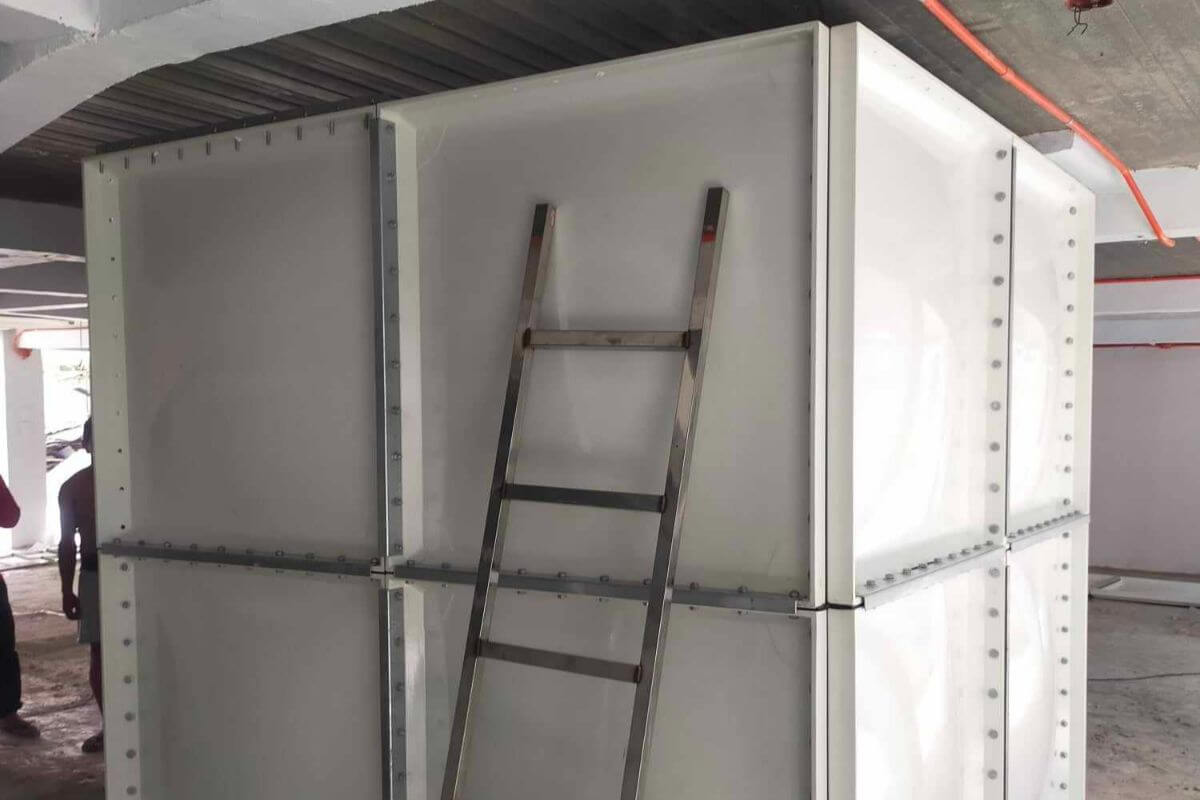
Modular tanks are designed to adapt to the unique requirements of each facility. Unlike traditional rigid tanks, these prefabricated systems can be configured in various shapes—square, rectangular, or irregular—allowing operators to maximize available space without compromising structural stability. This adaptability is particularly beneficial for sites with limited footprints or unconventional layouts.
In addition to spatial flexibility, capacity can be scaled according to operational needs. Additional panels can be added to increase storage or removed when demand decreases, eliminating the need for complete tank replacement. This approach enables facilities to expand storage in line with growth while optimizing capital investment.
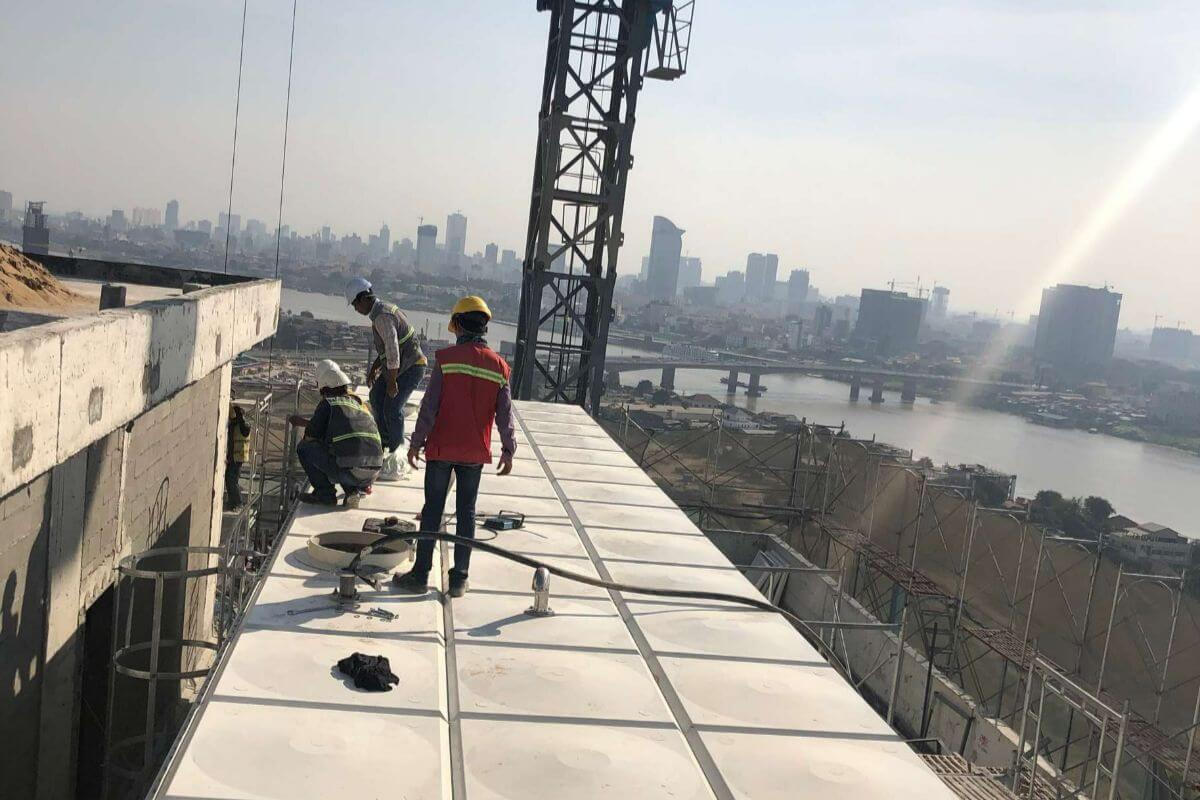
Modular water tanks simplify logistics and installation, especially in confined or hard-to-reach locations. Lightweight, prefabricated panels can be transported easily and assembled on-site, reducing the reliance on cranes and heavy machinery. This is particularly advantageous for high-rise rooftops, basements, or remote facilities.
On-site assembly minimizes operational downtime, allowing facilities to maintain productivity while installation is in progress. With a panelized system, full operational readiness can be achieved more quickly, ensuring water storage is available without disrupting ongoing processes.
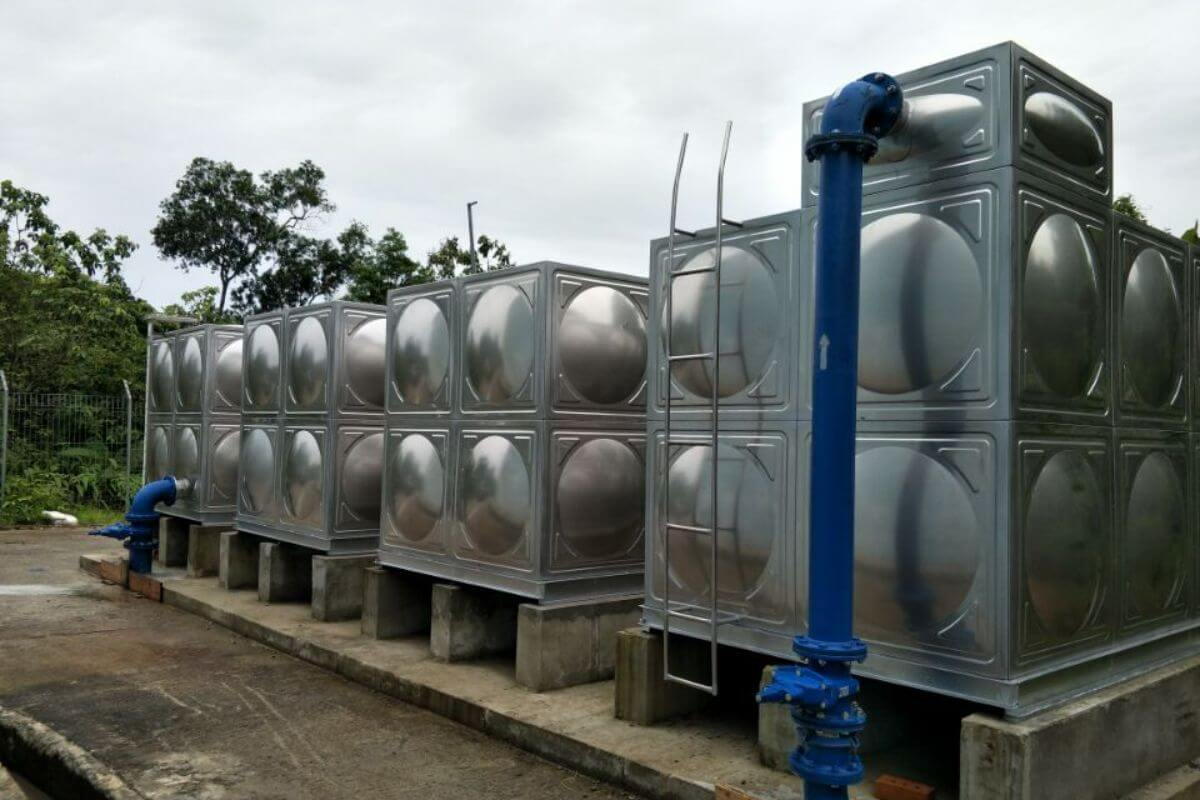
Constructed from high-performance materials such as FRP, stainless steel, or galvanized steel, modular tanks are built to resist corrosion, UV exposure, and mechanical stress. The panel-based design distributes water weight evenly, reducing strain on individual components and enhancing structural integrity.
For industrial, coastal, or high-traffic environments, these systems provide long-lasting reliability. The durable construction ensures that tanks maintain performance over years of continuous operation, with reduced risk of leaks, warping, or structural failure compared to conventional storage solutions.
While initial investment is a consideration, the main advantage of modular tanks lies in long-term cost savings. Faster installation reduces labor expenses, while corrosion-resistant materials minimize maintenance and repairs over the system’s lifespan.
Scalable storage also prevents over-investment in oversized tanks. Facilities can add capacity only when needed, optimizing both financial and operational efficiency. Over time, the combination of durability, adaptability, and reduced maintenance results in a lower total cost of ownership compared to traditional rigid tanks.
The smooth interior surfaces of modular tanks reduce sediment accumulation and inhibit algae growth, simplifying cleaning and inspection. Unlike conventional tanks, maintenance can be performed on individual panels without dismantling the entire system.
This modularity minimizes service interruptions and ensures continuous water availability. For industrial operations or large commercial facilities, the reduced maintenance burden translates into significant time and cost savings while maintaining reliable performance.
Modular tanks provide a dependable water reserve that supports daily operations, emergency supply, and fire protection needs. Properly designed panel systems ensure predictable storage performance tailored to the site’s requirements.
By offering both flexibility and precision, modular storage solutions prevent overcapacity or undersupply issues. Facility managers can rely on consistent water availability, maintaining operational continuity even under variable demand conditions.
Sealed modular tanks use food-grade materials to protect water from contamination. The design prevents debris, insects, and pollutants from entering the system, preserving potable water standards for industrial or human consumption.
These tanks combine structural integrity with hygienic design, simplifying cleaning and inspection while ensuring compliance with safety regulations. By integrating hygiene and safety into the storage system, facilities can confidently provide clean water for both operational and emergency needs.
Aqua Cube Tank provides scalable, precision-engineered water storage for commercial, industrial, and large residential projects. Panel-by-panel assembly allows installation in confined spaces, rooftops, or other challenging sites where traditional tanks struggle.
Built with FRP, stainless steel, or galvanized steel, each system is customized for capacity, environment, and operational needs. Low maintenance, durable, and adaptable, Aqua Cube tanks ensure a reliable water supply while supporting evolving demands—backed by decades of research and proven performance.
The benefits of modular water tanks lie in their ability to adapt to evolving operational needs, optimize space, and provide reliable water access without the constraints of traditional systems.
By embracing flexible, scalable storage solutions, facilities can streamline maintenance, reduce downtime, and plan for future growth with confidence.
Ready to elevate your water infrastructure? Contact us at Aqua Cube Tank today to explore how our systems can support your facility’s every water need.
Understand the role of supplier support when choosing a water tank for sale to ensure
Identify the differences between water tank for sale vs modular systems to choose the
Consider whether to rehabilitate or replace a commercial water tank by evaluating key