September 24, 2026
The Right Approach to Planning Water Storage for Multi-Building Developments
Learn the right approach to planning water storage for multi-building developments:
Overview
- Water storage for multi-building developments requires careful capacity planning, structural load considerations, and separate fire and domestic reserves.
- Planners need to assess demand per building, choose tank materials based on site requirements, and distribute storage across rooftop, ground-level, or underground systems.
- Aqua Cube offers modular stainless steel, galvanized steel, and FRP (Fiberglass Reinforced Plastic) storage solutions for commercial and industrial developments.
Multi-building developments need more than a single water tank in the Philippines. Different building heights, peak demand periods, and separate fire and domestic reserves all need to work as one connected system. The right approach to planning water storage for multi-building developments starts with looking at the entire site instead of deciding on tank placement one building at a time.
This article covers the main factors behind that approach, including demand profiling, structural load, fire and domestic storage, and long-term maintenance.
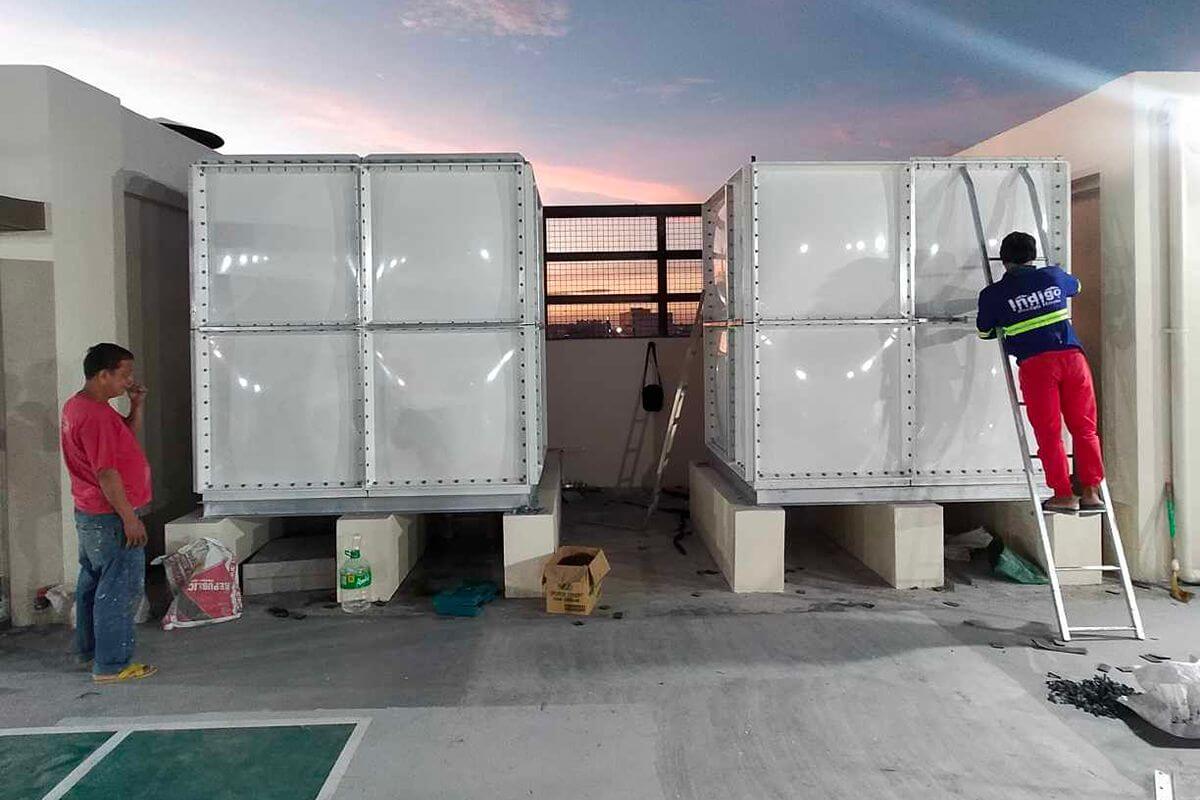
Multi-building sites can’t be sized the same way as a single structure. Each building can have a different occupancy pattern and water demand, so planning these differences early can help avoid shortages and unnecessary storage capacity.
Forecasting starts with looking at occupancy and expected water use for each building. The guide to water storage tank dimensions can help planners compare tank capacities based on the requirements of different sites. Towers may also reach peak demand at different times. Checking when each building is likely to use the most water can give planners a more realistic picture of the site’s overall storage needs.
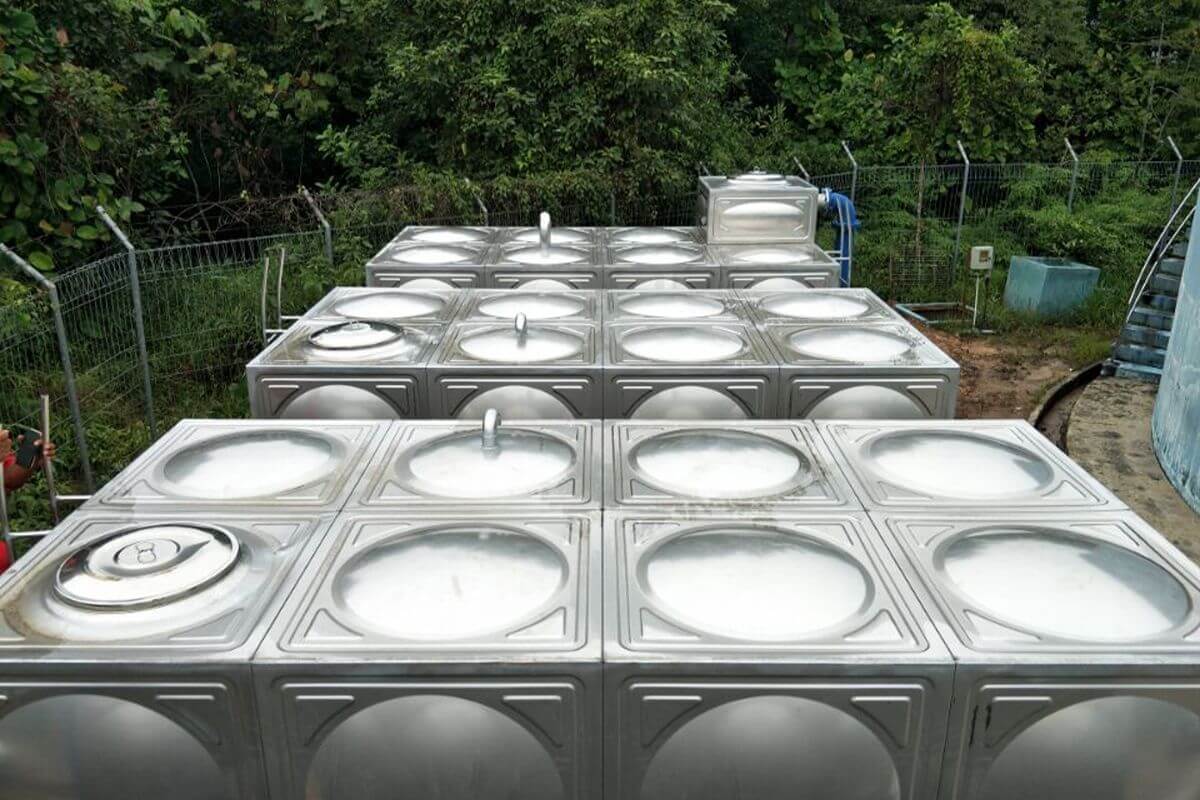
Tank material and structural load should be considered together. Stainless steel can be a practical choice where hygiene and material performance are priorities, while galvanized steel can provide a strong option for applications with different budget and installation requirements. The comparison of which water tank material is best explains the main differences between common tank materials.
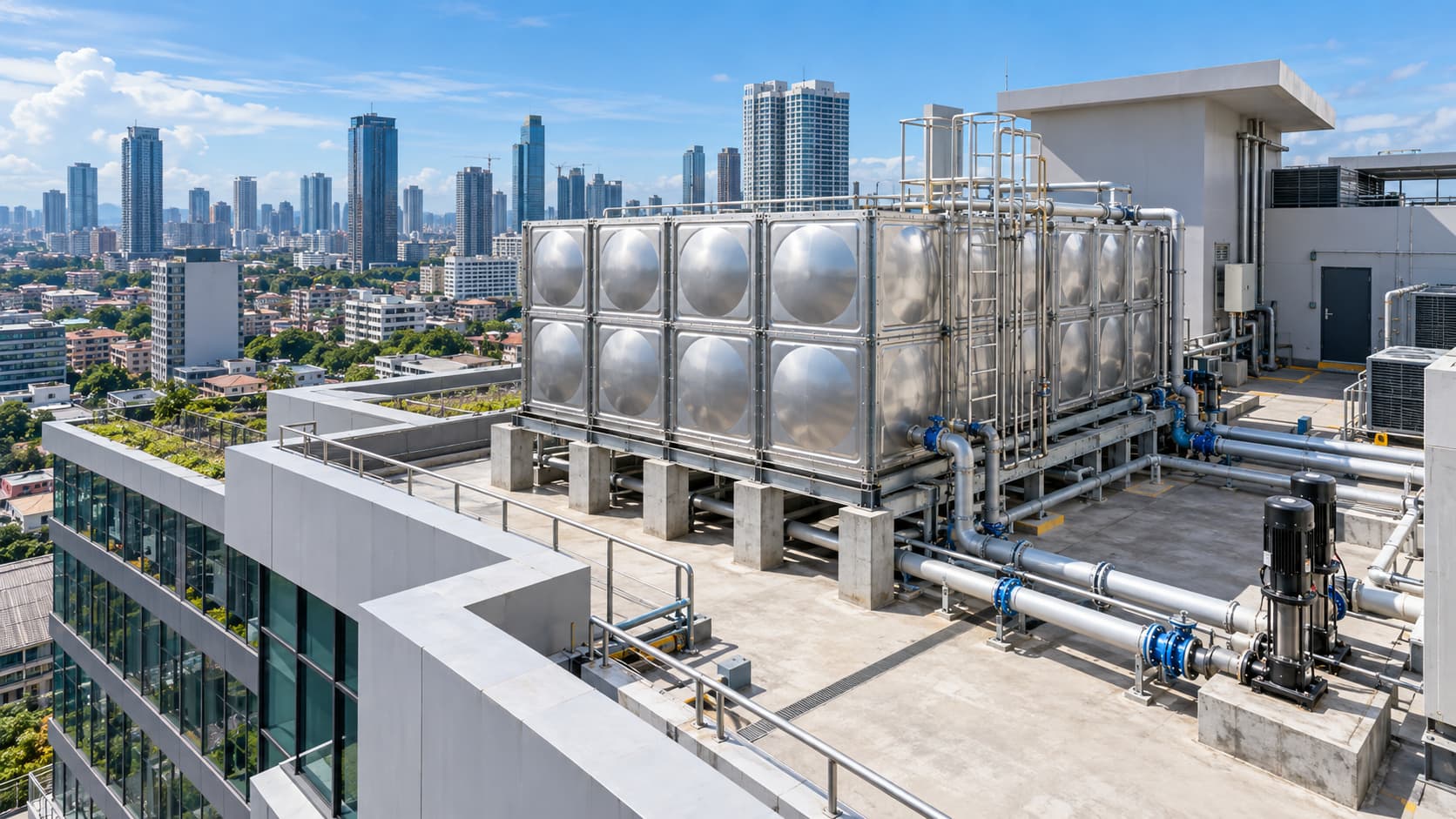
One oversized central tank may not always be the best approach. A combination of storage locations can make more sense depending on the site’s layout. Elevated tanks can support gravity-fed systems, while ground-level or underground storage can provide additional capacity where rooftop space or structural limitations are a concern.
| System Architecture | Primary Application | Key Advantages | Primary Disadvantages |
|---|---|---|---|
| Rooftop / Elevated Modular Tanks | Gravity-fed pressure for upper floors of high-rise towers | Supports gravity-fed distribution and makes use of available rooftop space | Adds structural load and requires proper framing and installation planning |
| Ground-Level Modular Systems | Centralized domestic and fire reserve for low- to mid-rise clusters | Allows on-site assembly and provides flexible storage for larger developments | Requires adequate ground space and careful installation planning |
| Underground / Concealed Tanks | High-capacity reserve for space-conscious sites | Keeps storage below grade and frees up surface space for other uses | Requires more extensive construction work and can be harder to modify later |
Aqua Cube’s modular stainless steel, galvanized steel, and FRP systems can be installed in different locations based on the requirements of the development. Their modular design also allows storage capacity to be adjusted as project needs change.
Domestic and fire water should be planned as separate reserves on a multi-building site. During emergencies, municipal water pressure may become unreliable, so maintaining a dedicated fire reserve helps protect the water supply needed for firefighting.
A dedicated fire-water reserve helps keep sprinklers and firefighting systems supplied when the main water network becomes unavailable or unreliable. How water storage tanks improve disaster preparedness explains how proper water storage can help during typhoons, power interruptions, and other emergencies.
Separation can involve dedicated storage compartments, piping, and valves that help prevent domestic use from reducing the available fire reserve. The exact setup should follow the requirements of the development and its fire protection system.
Water storage can play a bigger role than simply serving as a backup supply. Reusing water where appropriate and sizing storage based on actual demand can help reduce pressure on the main supply and improve how the system is managed over time.
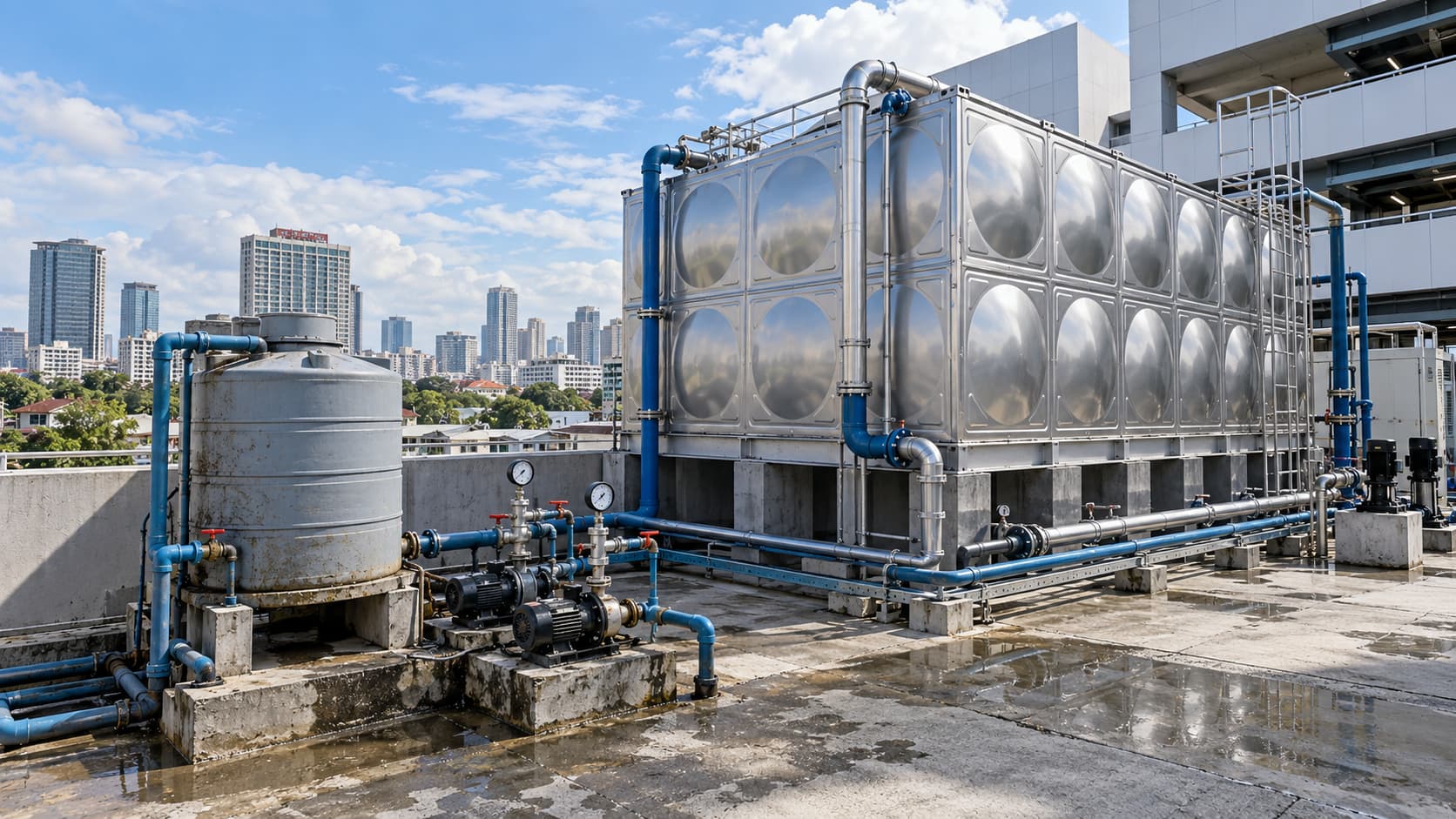
A dual-pipe setup uses separate lines for potable water and non-potable applications such as irrigation, cooling, or harvested rainwater. This can reduce demand on the main potable water supply and support more efficient water use across the development. It also connects with the broader considerations discussed in why safe and efficient water storage matters.
Storage should be planned around the entire development rather than calculated separately for each tank. Cylindrical tank volume depends on diameter and height, while modular tank volume is based on length, width, and height. Looking at expected daily consumption across the site and accounting for required reserves can help prevent both insufficient capacity and unnecessary storage space.
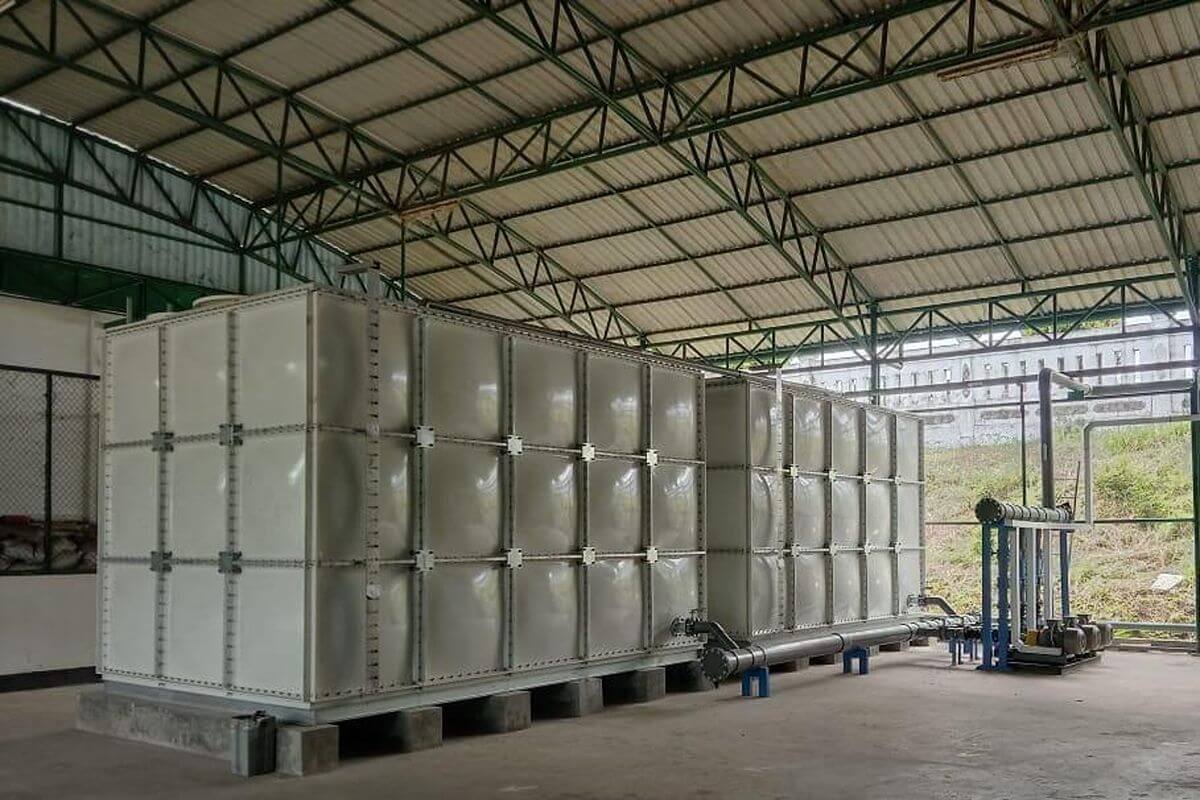
A system designed for the first phase of a development may need changes as the site expands. Planning for inspection access and future capacity from the start can make later upgrades easier and reduce the need for major modifications.
Dividing a tank into two isolated cells allows one section to be drained and inspected while the other remains available for use. This can be useful for developments where taking the entire water reserve offline would cause disruption.
On-site storage gives facility teams greater visibility into water levels and usage. Digital level sensors and automated valves can help teams monitor the system, identify unusual changes in water levels, and respond to possible leaks or other issues sooner.
The right approach to planning water storage for multi-building developments starts with treating the site as one connected system. Assess demand for each building, consider structural requirements when choosing tank locations, separate fire and domestic reserves, and plan for future maintenance and expansion.
Aqua Cube offers modular stainless steel, galvanized steel, and FRP storage systems that can be adapted to different site layouts and capacity requirements.
Contact us today to discuss the right water storage setup for your next development.
Learn the right approach to planning water storage for multi-building developments:
Find out what happens when your water storage capacity is insufficient and how Aqua
Find out why modular water tanks are becoming standard for new commercial properties