September 24, 2026
The Right Approach to Planning Water Storage for Multi-Building Developments
Learn the right approach to planning water storage for multi-building developments:
Overview
- Choosing a water tank requires balancing consumption demand with physical space constraints.
- Planners must calculate daily usage, future growth, and material benefits—like lightweight polyethylene or durable, modular stainless steel—to determine the ideal footprint.
- Aqua Cube Tank provides scalable, high-quality modular storage solutions tailored for residential, commercial, and industrial needs.
Having a water tank is not simply a matter of choosing the biggest available option. A storage tank that’s too small can lead to shortages during peak usage, while an oversized tank may occupy valuable space and increase expenses.
This is why understanding the guide to water storage tank dimensions and their relationship to capacity allows project engineers and contractors to make decisions that support present needs and future growth.
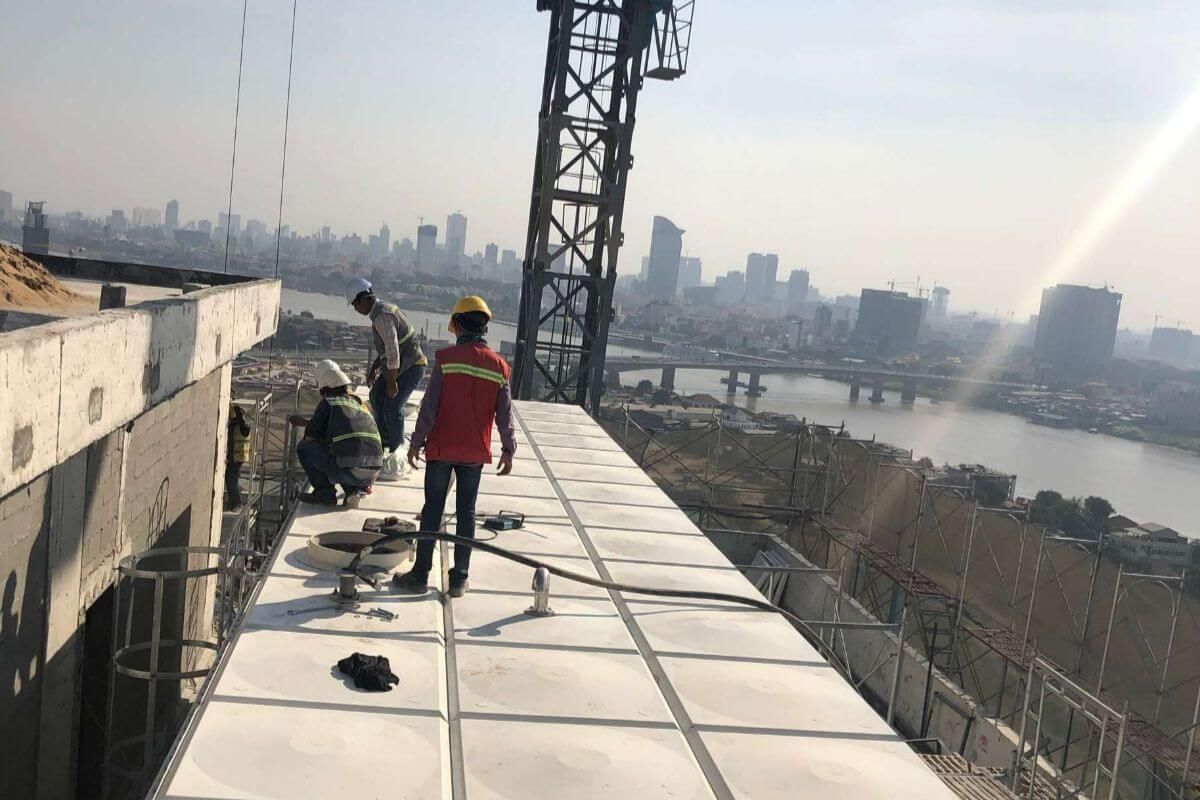
Identifying the precise capacity begins with understanding how much water a facility consumes daily. Occupancy levels, operational demands, and reserve needs all influence the amount of storage needed. Planning for future expansion is equally important, specifically for properties expected to accommodate more occupants or facilities.
| Number of Occupants | Recommended Capacity (Liters) | Purpose |
|---|---|---|
| 1-2 people | 500–1,000 L | Basic household consumption and short-term reserves, such as drinking and other light uses. |
| 3-4 people | 1,000–2,000 L | Daily residential use with additional storage buffers, such as bathing, cooking, laundry, and more. |
| 5-6 people | 2,000–3,000 L | Bigger households with higher water consumption, like frequent washing. |
| 7+ people commercial | 5,000 L and above | Multi-family residences, commercial spaces, and facilities with higher needs. |
Reminder: The following figures serve as general planning standards. Actual requirements should account for peak usage periods, local water supply reliability, emergency reserves, and facility-specific operational activities.
Once the necessary capacity has been determined, the next consideration is the physical footprint of the water storage. Available installation space impacts tank options as much as storage requirements do. Rooftop installations, utility rooms, basements, and outdoor service areas each present diverse dimensional constraints.
| Capacity (Liters) | Approximate Dimensions (Diameter × Height) | Ideal for |
|---|---|---|
| 500 L | 0.8 m × 1.1 m | Tight spaces, rooftop or wall-mounted |
| 1000 L | 1.0 m × 1.4 m | Small condominium units and apartments |
| 2000 L | 1.3 m × 1.7 m | Larger households and small businesses |
| 5000 L | 1.8 m × 2.2 m | Commercial facilities and multi-unit properties |
| 10000 L | 2.4 m × 2.6 m | Large-scale commercial and industrial facilities |
Reminder: Actual dimensions vary depending on the tank design, manufacturer, and material.
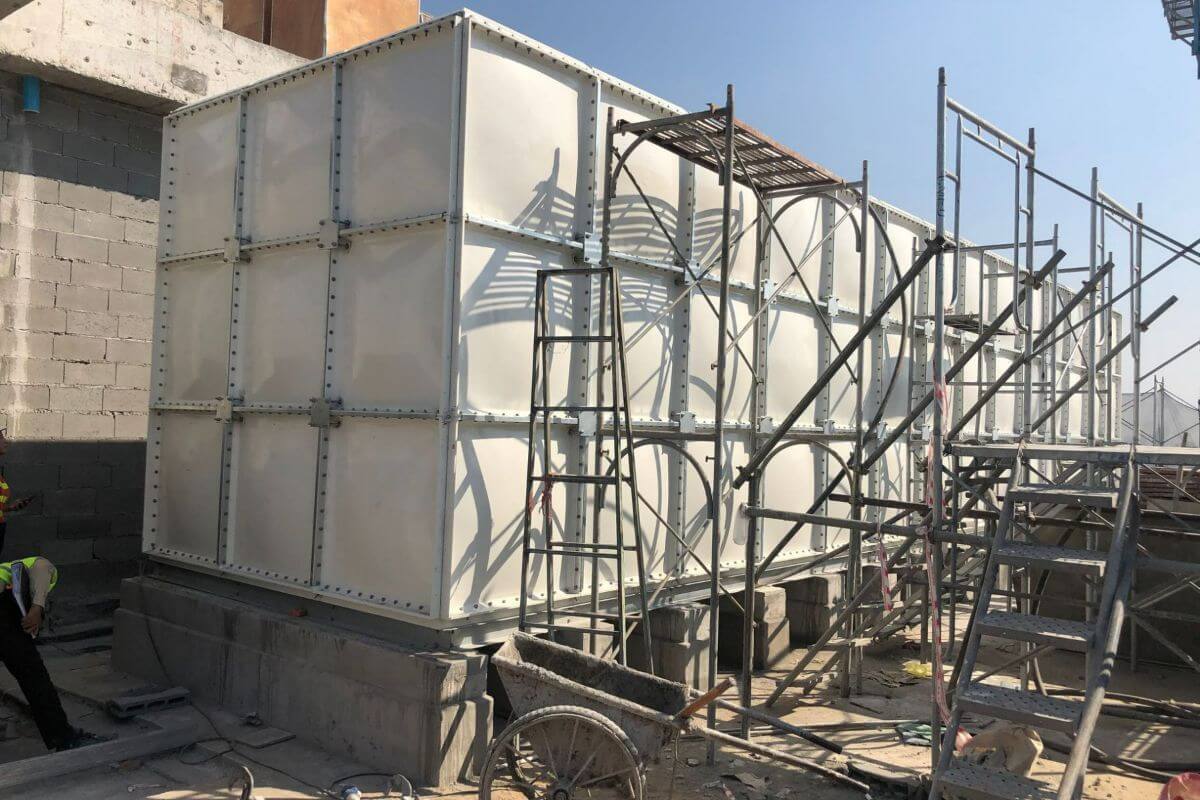
A water storage tank’s material directly impacts its durability, maintenance schedule, installation process, and ideal use case. Choosing the right material ensures the system aligns perfectly with operational demands.
These lightweight, affordable systems are highly popular for residential and light-commercial setups due to their ease of installation. Because they inherently resist rust and require minimal upkeep, they work perfectly for standalone retail shops, small multi-family apartments, or off-grid farming projects needing a cost-effective backup supply for irrigation. However, they have distinct limitations in overall size, long-term structural performance, and scalability in heavy industrial environments.
Exceptional durability and advanced hygienic properties make this option the industry standard where strict cleanliness and longevity are non-negotiable. The smooth, non-porous surfaces preserve water quality and drastically minimize contamination risks, which is crucial for hospitals requiring sterile potable water reserves or food processing plants that must prevent bacterial growth.
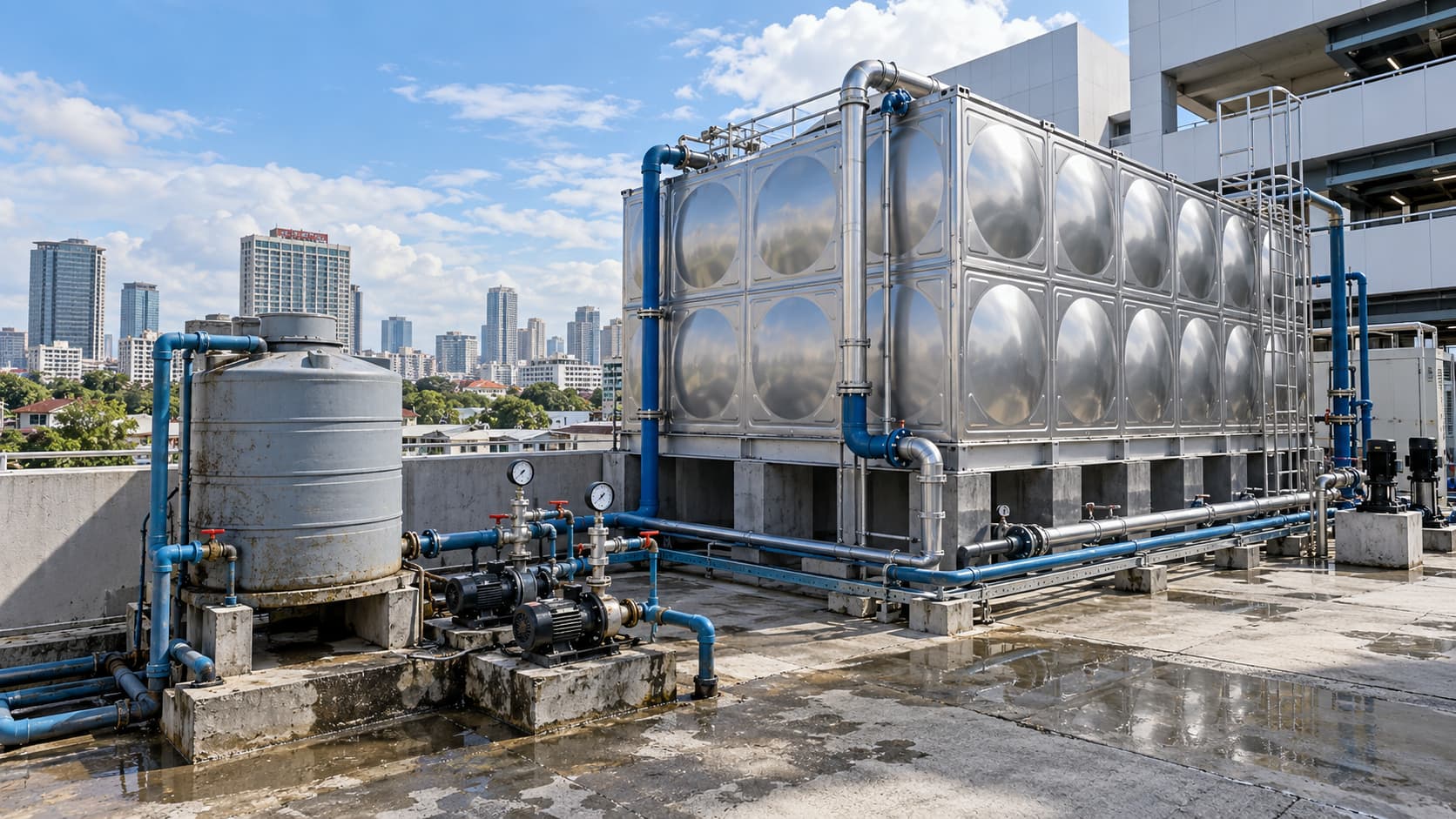
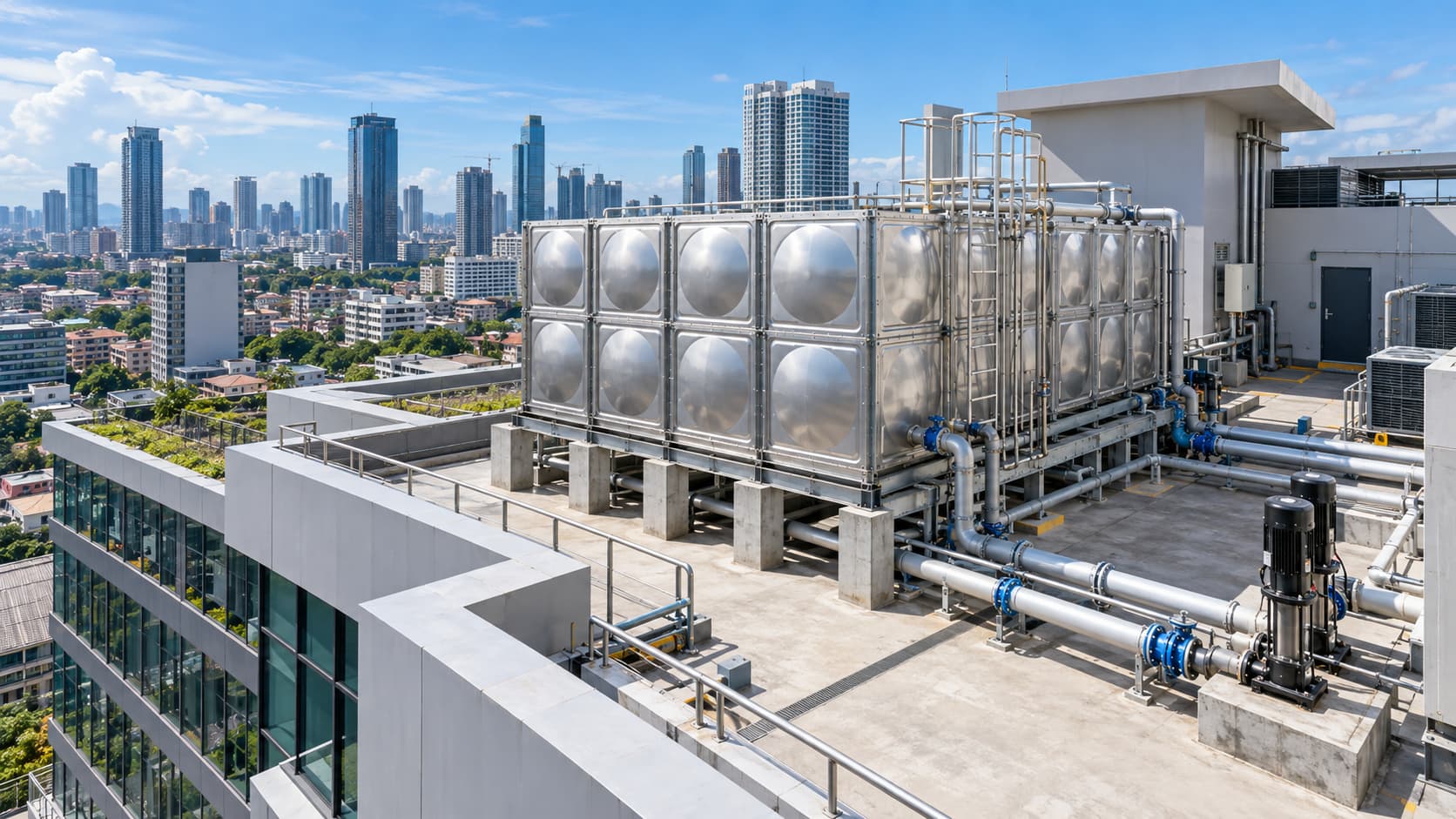
Aqua Cube Tank delivers modular stainless steel water storage systems engineered for maximum operational efficiency. Constructed from precision-fabricated panels, our tanks offer unmatched structural strength, superior corrosion resistance, and seamless scalability to easily expand your capacity as your enterprise grows. Furthermore, this modular design allows for rapid on-site assembly inside tightly constrained areas—such as high-rise commercial basement utility rooms or rooftop footprints—without compromising on structural integrity.
Large-scale civic infrastructure and heavy industrial developments often rely on these setups when they require massive, concealed water infrastructure.
Built entirely below grade, they maximize above-ground space while providing substantial storage capacity, making them ideal for municipal fire reserve systems or master-planned residential communities that require hidden infrastructure beneath parks or parking lots.
However, they require extensive, high-cost initial construction and lack the flexibility needed for future capacity expansions or structural modifications.
To calculate tank volume, planners must match storage capacity with demand and available space.
The Process: Estimate daily water consumption, add reserve needs, and account for future growth. Once the target volume is set, choose tank dimensions that fit your physical space and structural constraints.
This guide to water storage tank dimensions showcases that picking the right tank involves more than simply comparing capacities.
Understanding size and capacity ensures long-term, scalable water storage. Aqua Cube Tank offers high-quality modular storage solutions—including stainless steel, FRP, and custom configurations—tailored for residential, commercial, and industrial needs.
Contact us today to find the perfect tank for your space.
Learn the right approach to planning water storage for multi-building developments:
Find out what happens when your water storage capacity is insufficient and how Aqua
Find out why modular water tanks are becoming standard for new commercial properties