September 24, 2026
The Right Approach to Planning Water Storage for Multi-Building Developments
Learn the right approach to planning water storage for multi-building developments:
Overview
- Choosing between conventional and modular water tanks depends on site accessibility, budget, and future expansion needs.
- While standard tanks offer lower upfront costs for fixed requirements, modular panel systems from providers like Aqua Cube Water Tank provide flexible, on-site assembly and scalable capacity, making them ideal for confined spaces and growing facilities.
Selecting the right system ensures safe, reliable water storage. While conventional tanks are common, modular systems offer superior advantages for expanding facilities or sites with strict access constraints where standard options fall short.
Procurement officers must carefully evaluate the value of water tanks for sale vs. modular systems to understand how each option performs under different conditions. Several factors, such as future capacity requirements and budget considerations, can significantly influence the project’s outcomes.
As a provider of engineered water storage solutions, Aqua Cube Water Tank helps organizations identify the most suitable system for their requirements. Read on to learn more.
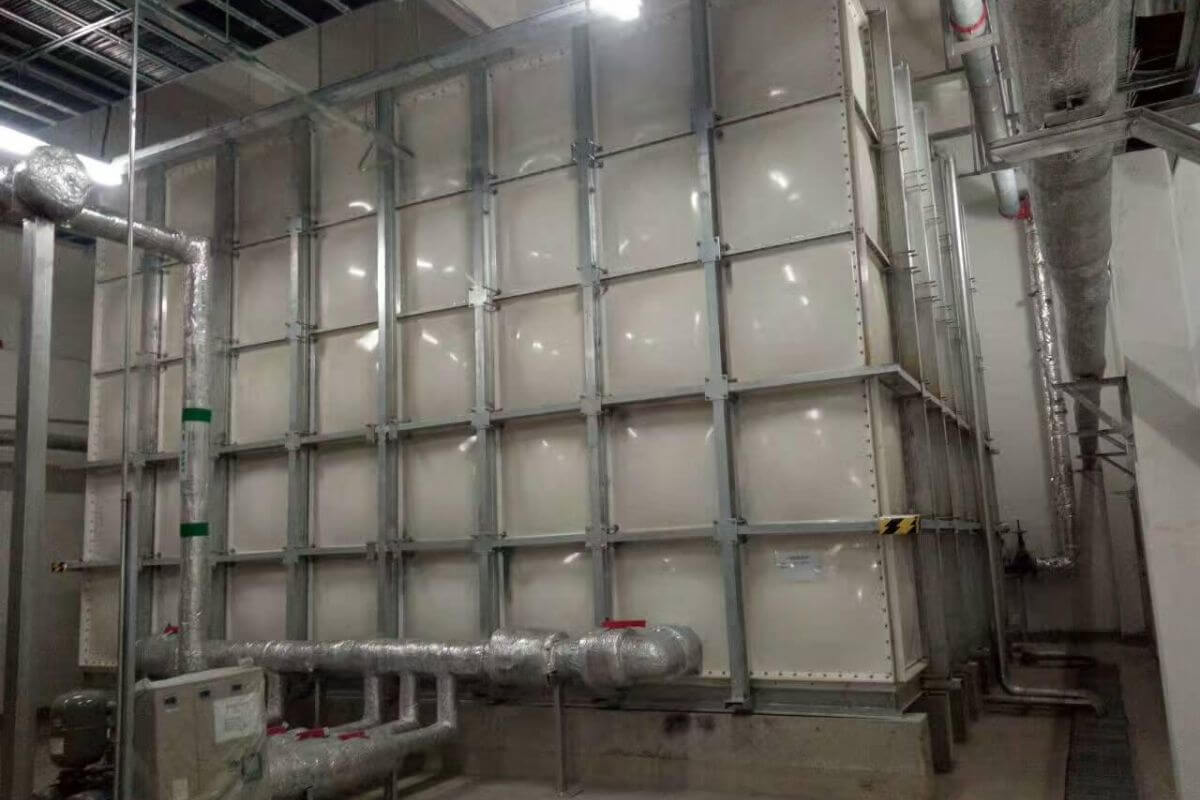
Installation feasibility in water storage systems is determined by the site’s physical access conditions. A standard water tank for sale is delivered as a single prefabricated unit, so installation depends entirely on whether the entry points, transport route, and installation area can fit its fixed size. If there is an access restriction along the route, installation becomes impossible regardless of system suitability.
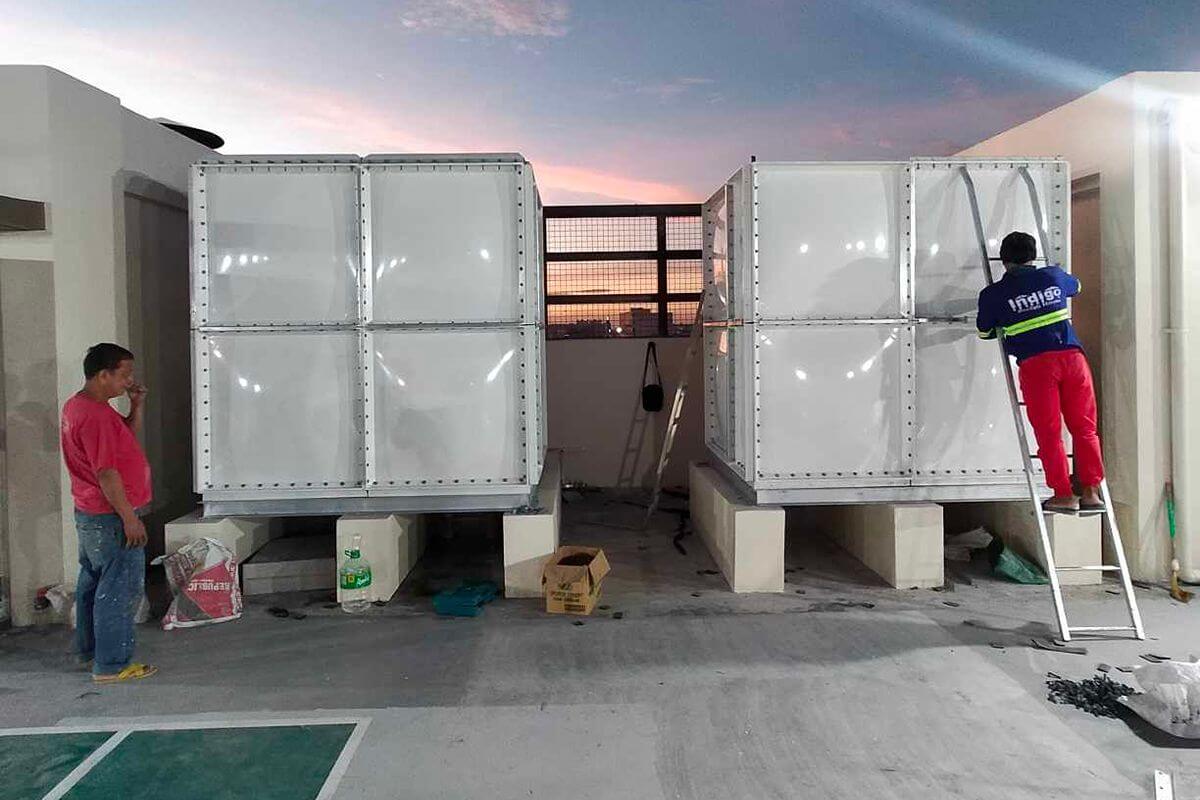
Modular systems eliminate the need for full-unit site access by using segmented construction. Components are delivered individually and assembled on-site, enabling installation in narrow corridors or restricted mechanical spaces where rigid tanks cannot fit. This approach resolves site constraints through flexible assembly configuration rather than limiting system deployment.
Water storage selection is often constrained by the mismatch between required storage volume and the physical space available for installation. In many projects, capacity cannot be increased freely without considering how efficiently that volume can be integrated into the site layout. This makes effective use of space, which is critical when selecting systems.
Modular systems handle space constraints by distributing capacity across configurable, connected sections that adapt to available space. This flexibility allows teams to expand capacity later without altering the initial installation footprint.
Standard tanks have fixed capacities tied to their physical size. Increasing storage requires installing entirely separate units, which expands the overall footprint and complicates layout and piping.
Upfront investment is typically lower in systems built through standardized manufacturing and simpler installation. This works well for projects with fixed requirements that are unlikely to change over time. However, these can incur additional storage expenses, since any increase in capacity usually requires adding new units and repeating parts of the installation.
Higher initial cost is more common in engineered systems that require on-site assembly and configuration. This setup is designed for flexibility, allowing capacity to be expanded by adding additional modules rather than replacing the whole system. Over time, this helps avoid higher replacement costs as operational needs change.
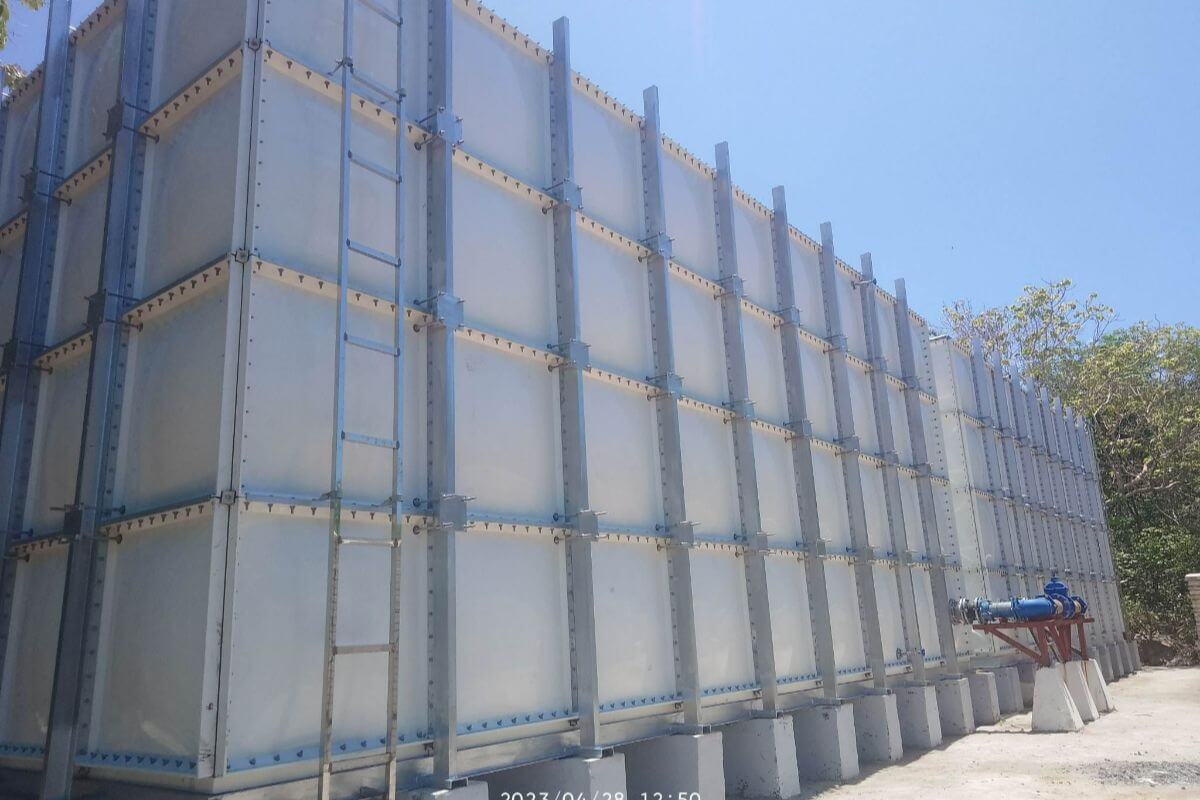
Fixed-capacity systems operate within defined limits set during manufacturing and installation, so storage volume remains consistent throughout their service life. When demand increases, on-site teams can expand by adding units, thereby increasing capacity without modifying the original system.
Meanwhile, modular systems allow storage capacity to be increased by integrating additional panels or connected modules into the existing setup. This enables the storage volume to scale with operational needs without requiring replacement of the installed structure.
At a glance:
| Category | Pre-Fabricated Tanks | Modular Panel Systems |
|---|---|---|
| Application | Homes, small businesses, and simple setups where space and capacity needs are fixed | Commercial buildings, industrial facilities, hospitals, and large rainwater harvesting systems |
| Installation Style | Plug-and-play; they arrive completely assembled and only require basic plumbing connections | Assembled on-site, easy to carry into confined or irregular spaces |
| Limitations | They come in fixed sizes. If you need to upgrade capacity, you need to buy a new tank and link it to the others. | Higher initial upfront investment and requires professional or specialized installation |
| Scalability | Fixed and consistent; requires additional expenses to support growing needs | You can easily add more panels to increase storage volume |
Different modular systems are designed to solve different operational and installation challenges, making it important to align the technology with project requirements.
As a provider of commercial and industrial water storage solutions, Aqua Cube Water Tank offers several modular options that accommodate varying capacities, accessibility requirements, and operational needs. These include:
FRP (Fiberglass Reinforced Plastic) tanks are modular storage systems built from corrosion-resistant panels designed for on-site assembly. Their lightweight structure allows easy installation in complex sites while still maintaining structural strength. This configuration supports flexible sizing, making it suitable for facilities that require scalable capacity without extensive structural modifications.
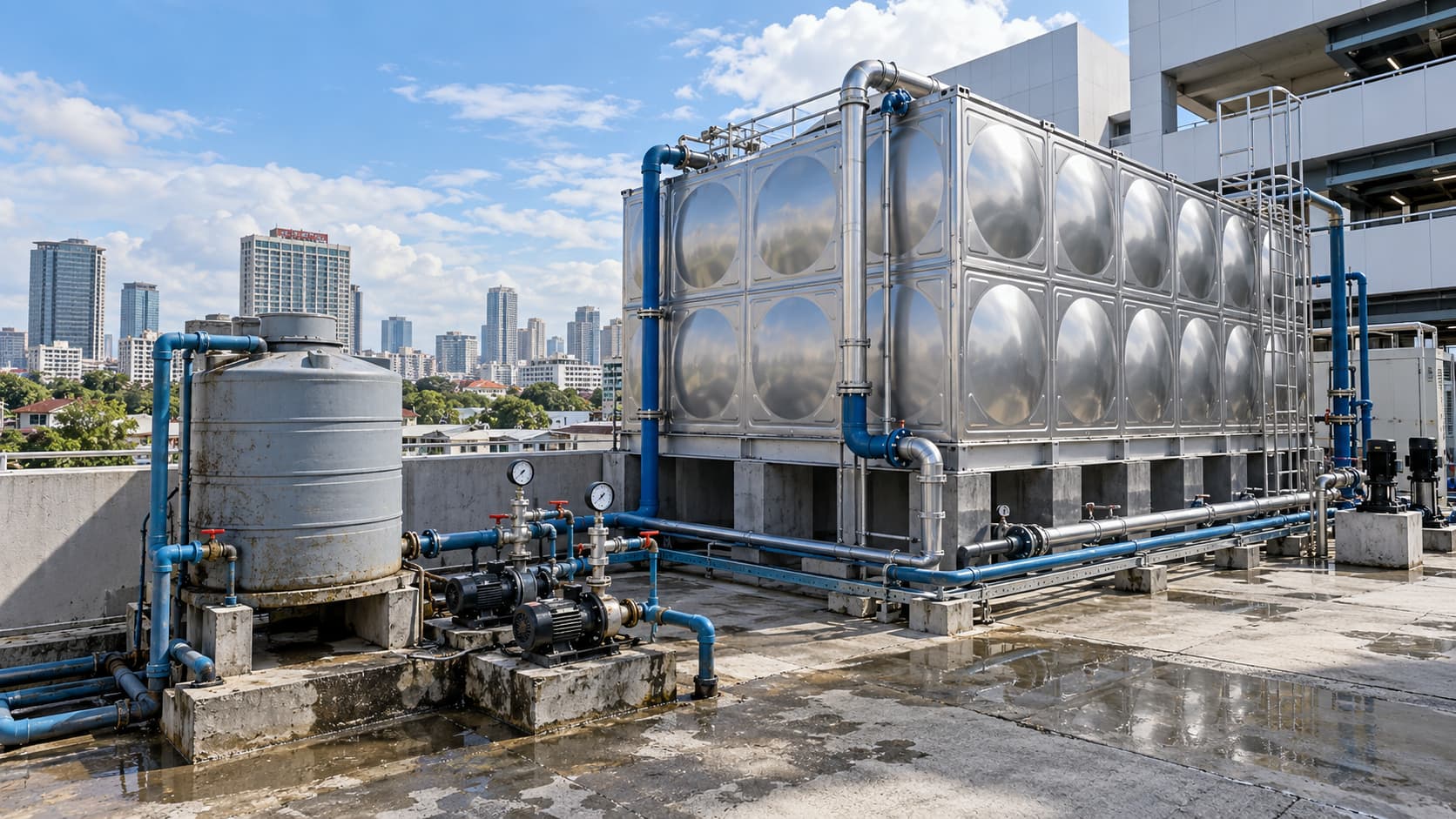
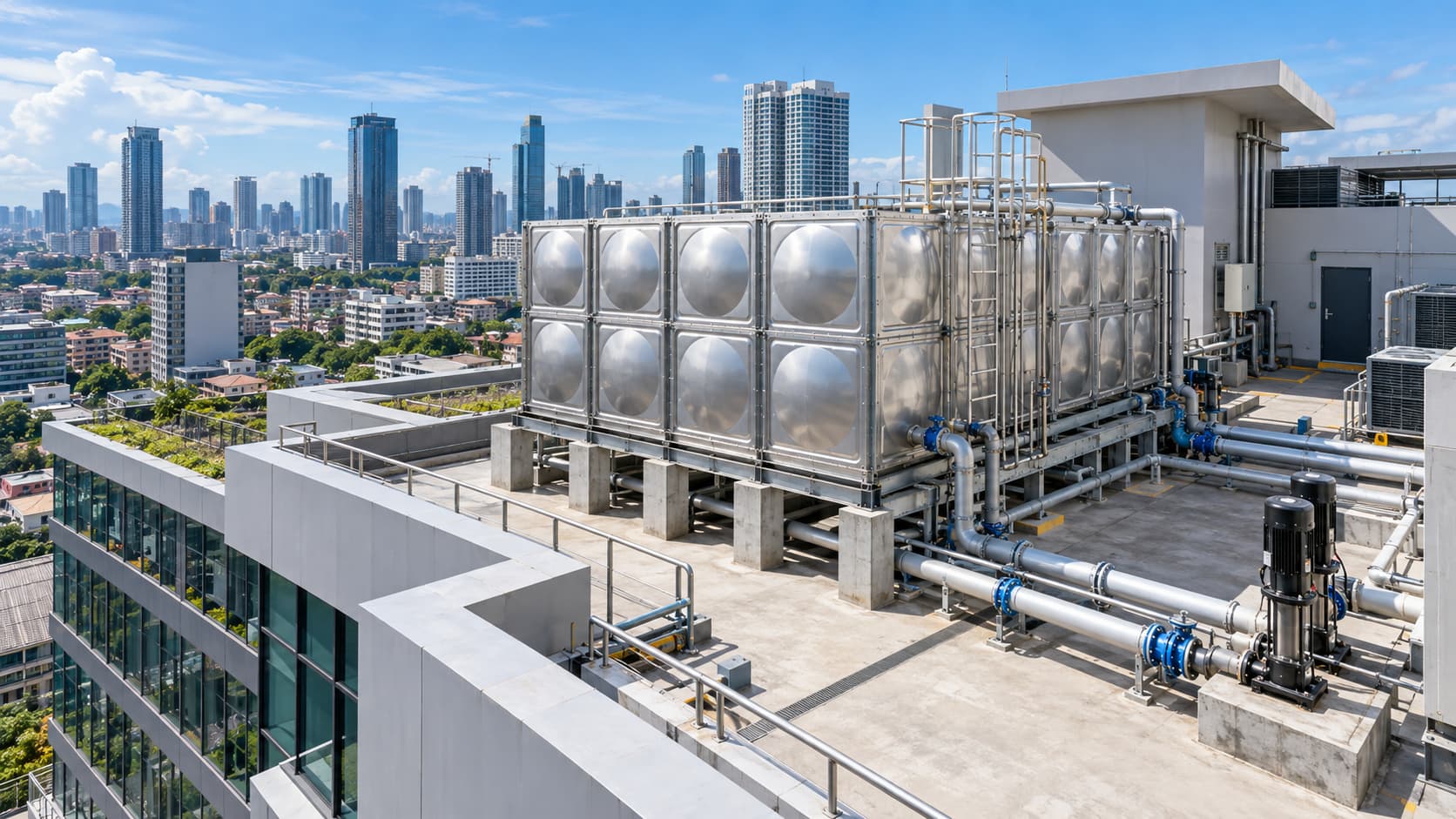
If applications require high durability and strict water control, stainless steel water tanks offer a strong alternative. Their non-corrosive material composition helps maintain water integrity over long service periods, even in environments with varying temperatures or exposure conditions. These systems are commonly used in facilities where hygiene, longevity, and low risk of contamination are primary requirements.
Underground water tanks are designed for installations where surface space is limited or needs to be preserved for other facility operations. Installed below ground level, they optimize land use while maintaining substantial storage capacity for commercial or industrial use. Their concealed placement also helps protect the system from external environmental exposure.
The decision between a water tank for sale vs modular systems ultimately depends on the specific constraints and objectives of the project. Standard tanks provide a reliable and cost-effective solution for many applications, while modular systems address challenges related to long-term flexibility. Understanding where each option performs best allows teams to make decisions that support operational efficiency.
Need reliable systems for your water storage requirements? Aqua Cube Water Tank provides engineered water storage solutions for commercial and industrial facilities. Contact us today to discuss a water storage system engineered to support your water management goals.
Learn the right approach to planning water storage for multi-building developments:
Find out what happens when your water storage capacity is insufficient and how Aqua
Find out why modular water tanks are becoming standard for new commercial properties