September 24, 2026
The Right Approach to Planning Water Storage for Multi-Building Developments
Learn the right approach to planning water storage for multi-building developments:
Overview
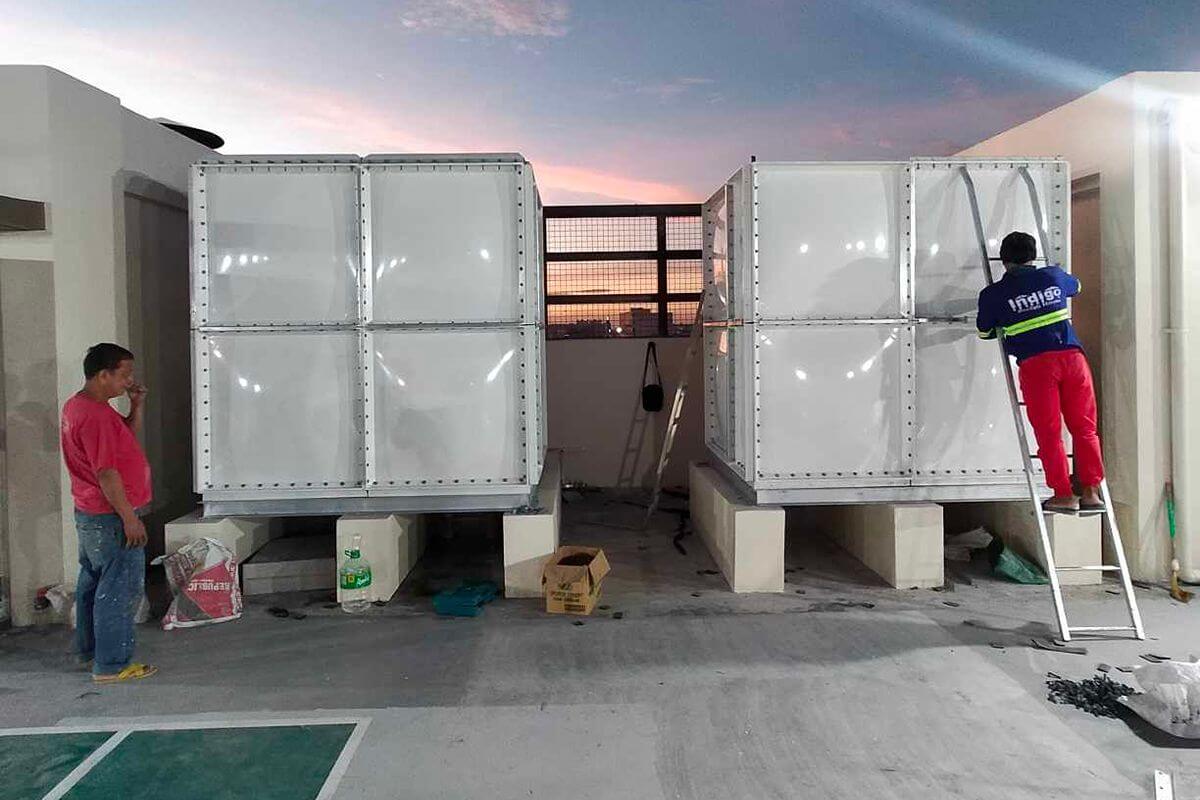
- Modular water tank installation follows a structured, panel-based assembly process that enables efficient deployment in constrained or complex sites such as rooftops, mechanical floors, and remote facilities.
- The process includes foundation validation, sectional panel assembly, structural bracing, accessory integration, and controlled water testing before commissioning.
- Aqua Cube Tank provides engineered systems and professional installation support nationwide, ensuring structural integrity, compliance, and long-term operational reliability.
Water storage infrastructure must be installed with precision to ensure structural integrity, regulatory compliance, and long-term performance. For commercial and industrial facilities, installation errors can lead to leakage, joint failure, or costly operational disruptions.
Understanding what to expect during a modular water tank installation allows project teams to plan effectively, coordinate timelines, and mitigate risk before work begins. Modular water tank systems are engineered to simplify on-site assembly without compromising structural standards, ensuring the system performs as specified from day one.
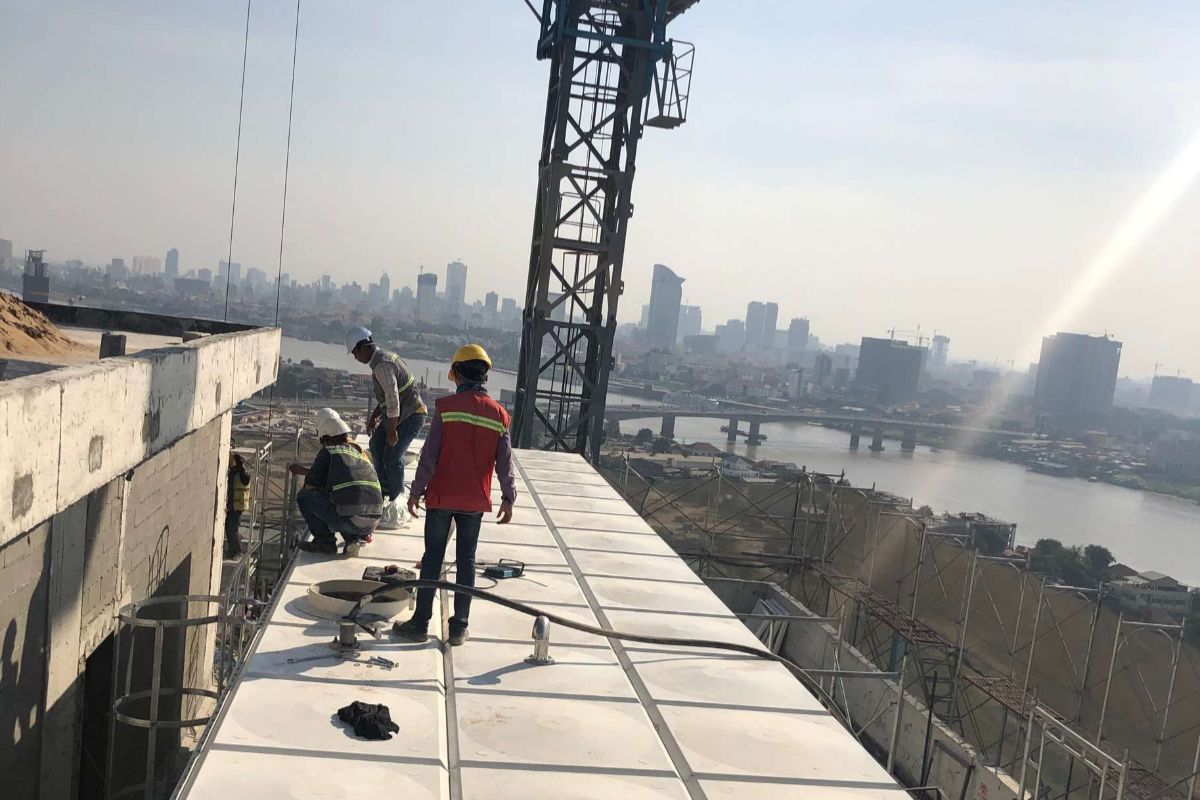
Proper pre-installation planning establishes the structural and operational foundation of the tank system. This phase determines whether the installation proceeds efficiently and whether long-term performance expectations can be met.
Before assembly begins, the installation area must be evaluated for flatness, load-bearing capacity, and access constraints. The concrete foundation should meet specified tolerance limits to prevent uneven load distribution once the tank is filled.
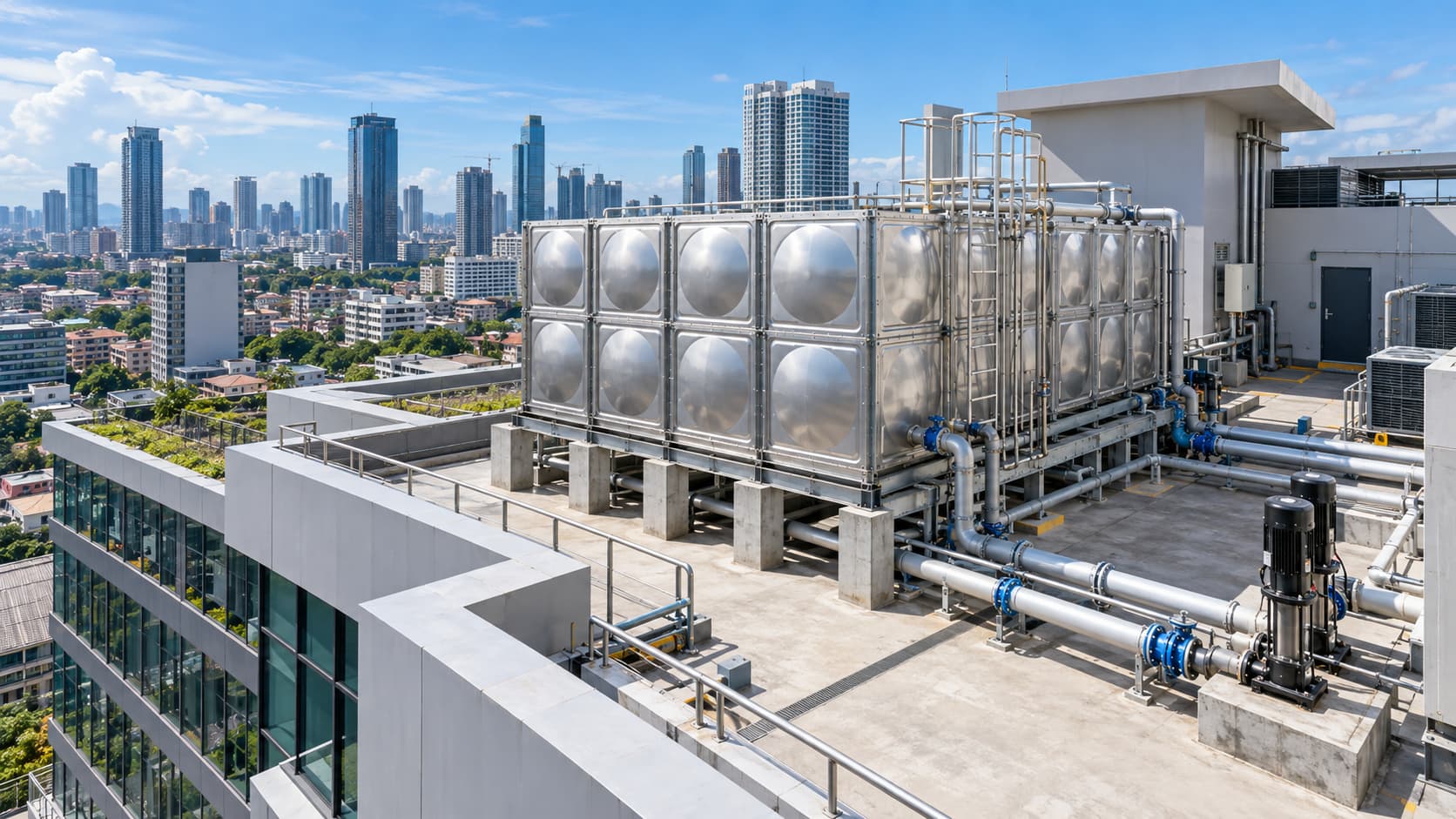
For rooftop installations, structural load verification is required to ensure the building can safely support the tank’s full operational weight. Clearance must also be maintained around the tank (typically ≥500mm) to allow inspection, maintenance, and pipe integration.
Early validation of plumbing layout, drainage provisions, and connection points prevents costly realignment during assembly.
Once the foundation is confirmed compliant, panel assembly proceeds according to the engineered layout drawings. Sectional construction allows controlled alignment, structural reinforcement, and secure sealing at each stage.
The base channel or support system is positioned to distribute hydrostatic load evenly. Wall panels are then sequentially aligned and bolted using high-tensile fasteners, with sealing materials applied between joints to prevent leakage.
Internal bracing is installed to manage hydrostatic pressure and maintain structural rigidity as tank height increases.
Alignment checks and torque control are performed continuously to maintain dimensional accuracy.
Panel installation continues vertically until full wall height is achieved. Each joint is inspected for uniform compression of sealing materials to ensure watertight performance.
Proper fastening prevents structural distortion and ensures load transfer is evenly distributed across the sectional assembly.
Roof panels or structural covers are installed to fully enclose the tank and prevent contamination from debris, insects, or external pollutants.
Secure fastening ensures weather resistance and maintains internal water quality standards, particularly in potable water applications..
Operational components such as access hatches, internal and external ladders, level indicators, inlet/outlet flanges, and overflow fittings are installed during this stage.
Each accessory is positioned according to approved drawings to maintain operational safety and future maintenance accessibility.
For applications requiring additional chemical resistance or specialized containment, internal liners are installed according to manufacturer specifications.
Proper liner placement ensures long-term compatibility with stored liquids and reinforces leak prevention performance.
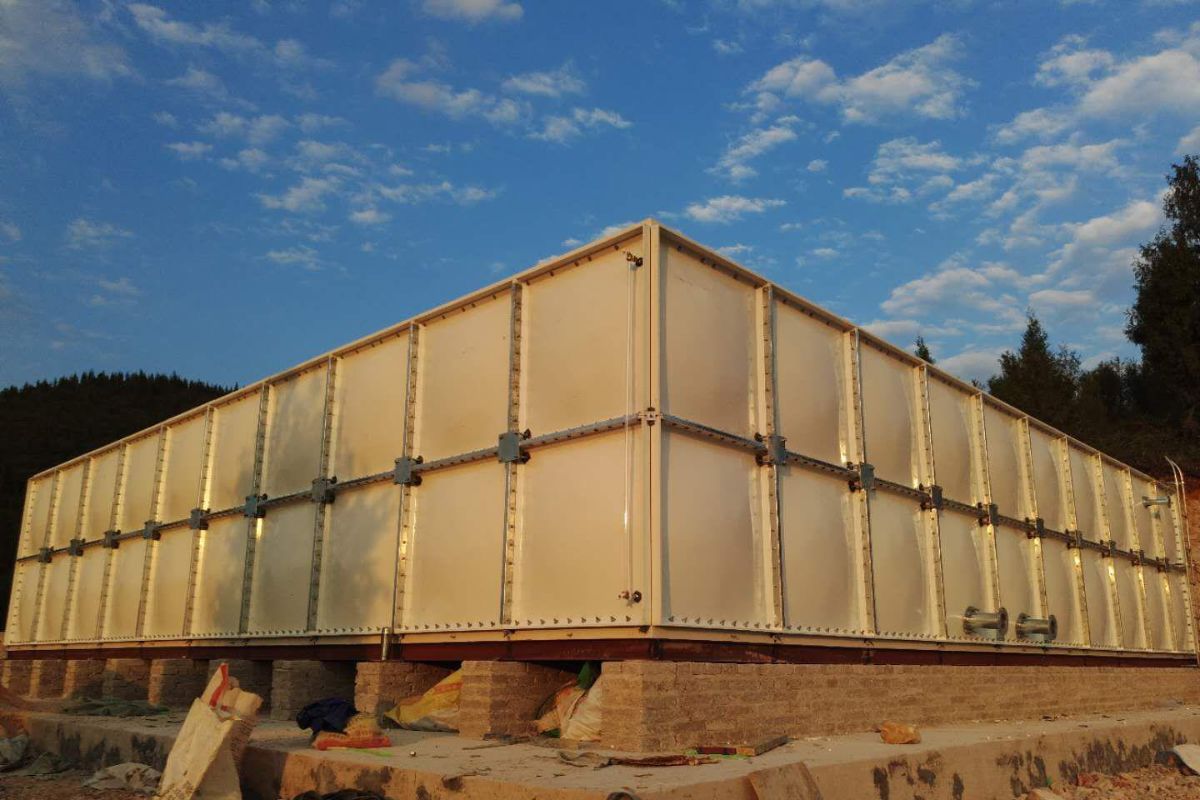
Before commissioning, the assembled system must undergo inspection and performance validation.
The tank is filled progressively and monitored for joint integrity, structural stability, and alignment consistency.
Testing typically includes:
For underground systems, backfilling must be completed in controlled, layered compaction to avoid uneven lateral pressure on tank walls.
Improper backfill practices can cause panel distortion or compromise joint integrity, making this phase critical for long-term structural stability.
Understanding installation timelines and outcomes supports better project coordination.
Small to mid-sized systems typically require 2–5 days. Large-capacity industrial systems may require 1–2 weeks, depending on capacity and site complexity.
Panel-based systems are engineered for sequential assembly, reducing dependency on heavy lifting equipment and simplifying rooftop or confined-space installations.
Materials such as FRP, stainless steel, or galvanized steel are selected according to application requirements and validated through structural and leak testing before handover.
Aqua Cube Tank provides installation oversight, parts availability, and post-installation support across the Philippines, ensuring consistent project execution regardless of location.
A properly executed modular water tank installation ensures structural stability, leak-free performance, and long-term operational reliability. Understanding what to expect during a modular water tank installation helps project teams coordinate foundation validation, panel assembly, and final water testing according to engineering standards. Each phase must be completed with precision to protect your facility’s infrastructure investment and avoid costly rework or operational disruption.
For engineered modular water tank systems in the Philippines, Aqua Cube Tank delivers structured installation support, application-specific configurations, and reliable nationwide service. Contact our team to configure a system aligned with your project requirements.
Learn the right approach to planning water storage for multi-building developments:
Find out what happens when your water storage capacity is insufficient and how Aqua
Find out why modular water tanks are becoming standard for new commercial properties