September 24, 2026
The Right Approach to Planning Water Storage for Multi-Building Developments
Learn the right approach to planning water storage for multi-building developments:
Overview
- Selecting the right FRP tank for Philippine conditions requires careful attention to application, material quality, design, and installation.
- Key considerations include matching the tank to the type and volume of liquid stored, ensuring the fiberglass and resin composition can withstand environmental stress, and choosing modular designs with integrated fittings and UV protection.
- Investing in a high-quality, well-engineered FRP storage from Aqua Cube Tank reduces maintenance, prevents corrosion, and provides decades of reliable performance, making it a strategic choice for long-term operational safety and efficiency.
Infrastructure projects in the Philippines operate under demanding conditions, including high humidity, coastal exposure, and space-constrained installation environments. These factors place increased performance and durability requirements on water storage systems over their full service life.
Selecting the right storage solution is not simply a specification exercise—it directly affects system reliability, safety compliance, and long-term operating costs. Fiberglass reinforced plastic (FRP) tanks have become a widely adopted option due to their corrosion resistance and modular installation advantages, but performance can vary significantly depending on design and manufacturing standards.
This buying guide for FRP tanks outlines the key technical considerations that influence tank selection, helping ensure the system chosen aligns with project requirements and performs reliably under Philippine operating conditions.
Investing in large-scale water storage requires more than comparing prices. Selecting a tank without aligning it to operational and environmental realities can lead to premature failure or costly retrofits.
Selecting the right tank begins with understanding what it will hold and under what conditions. Properly matching the tank to your fluid type, volume, and operating environment ensures safety, reliability, and long-term performance.
Material selection and construction integrity determine how long the tank will last under operational stress. Choosing high-quality fiberglass, resin, and engineering practices prevents failure and costly maintenance.
Tank design influences workflow, installation, and maintenance efficiency. Well-designed tanks reduce risk of leaks, simplify integration, and optimize available space.
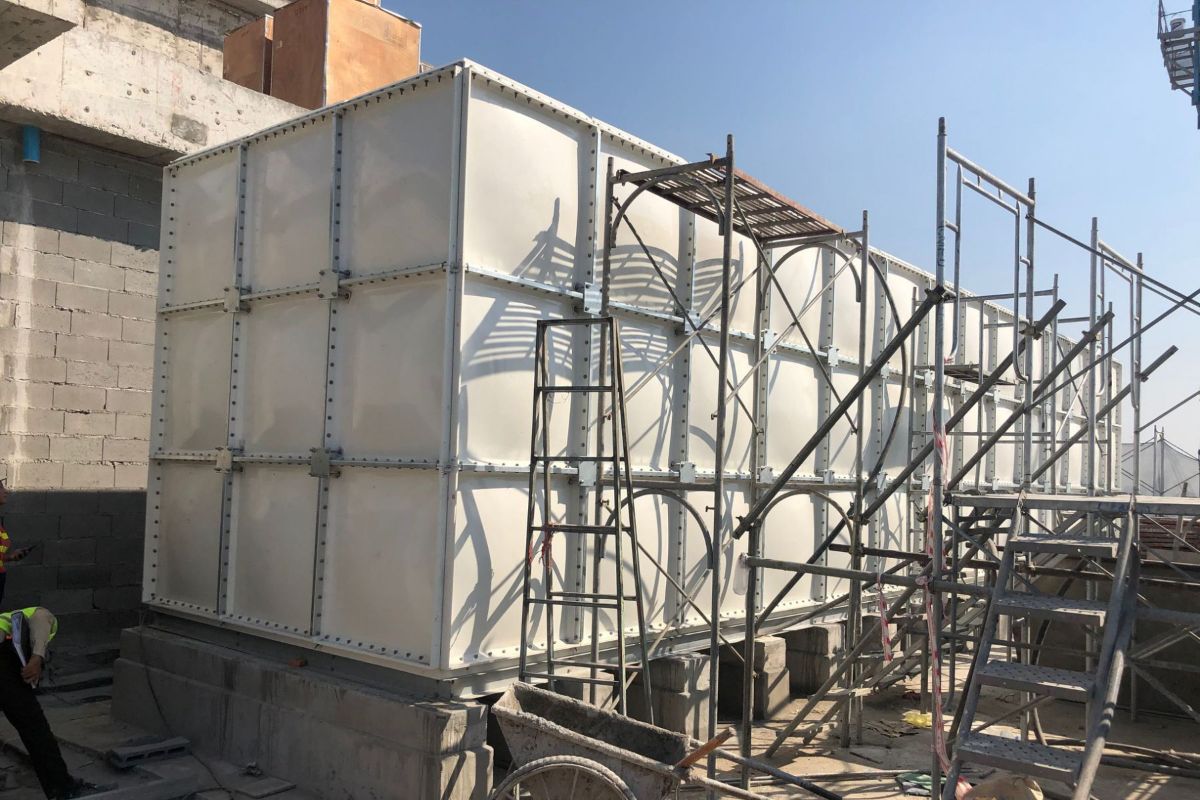
Proper installation is just as critical as tank quality. Ensuring correct base support, assembly, and UV protection prevents structural stress, leaks, and premature degradation.
Upfront price does not always reflect total cost. Investing in high-quality tanks reduces maintenance, downtime, and replacement costs over decades.
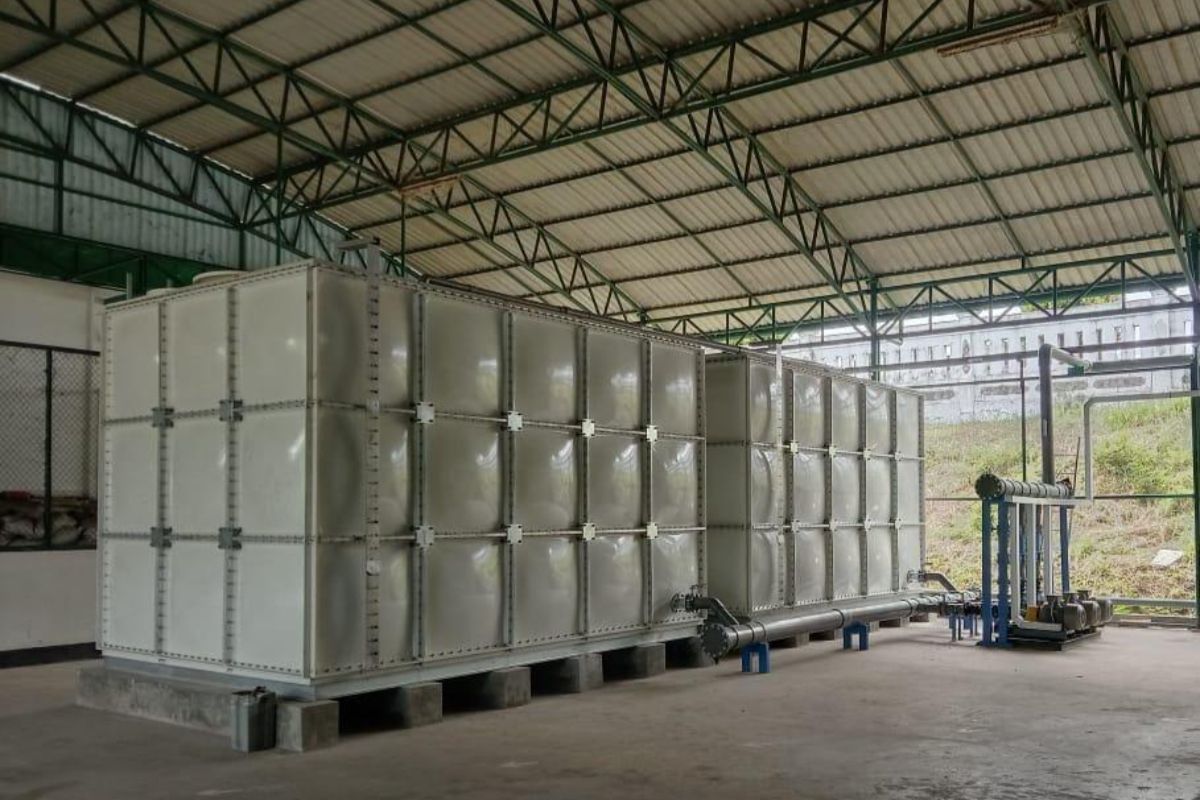
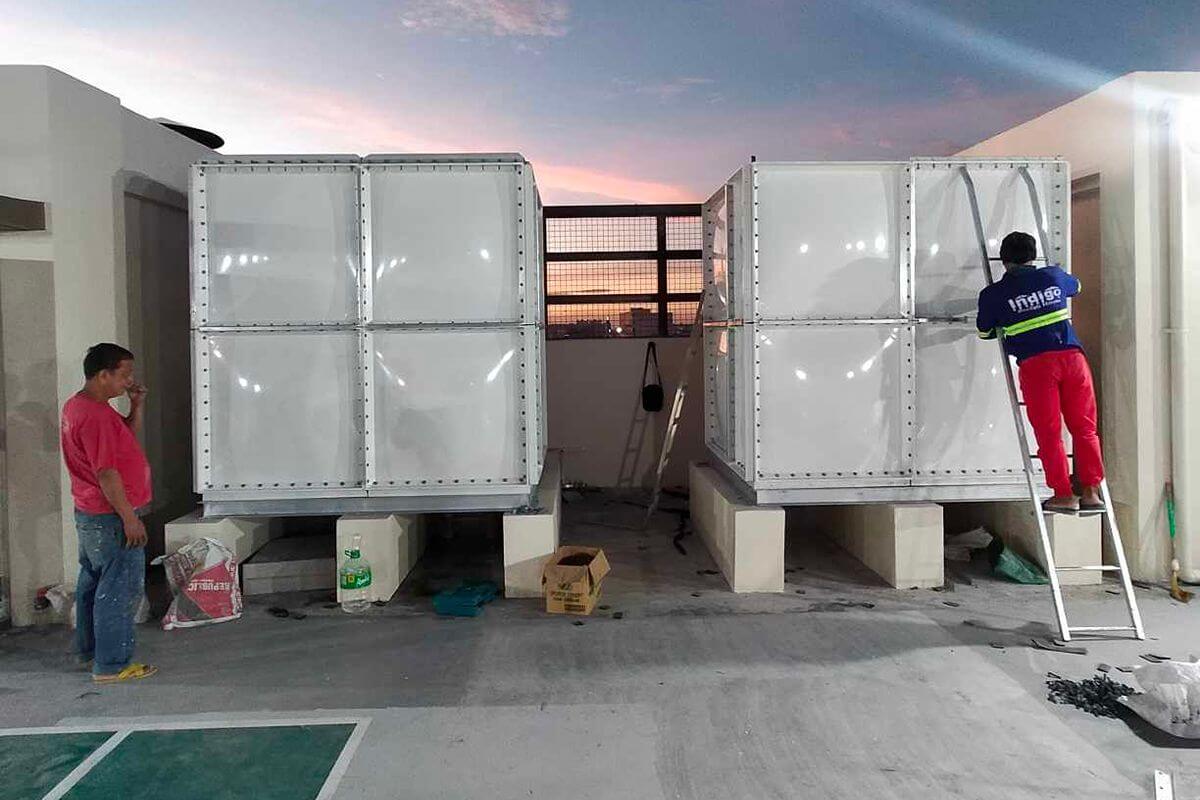
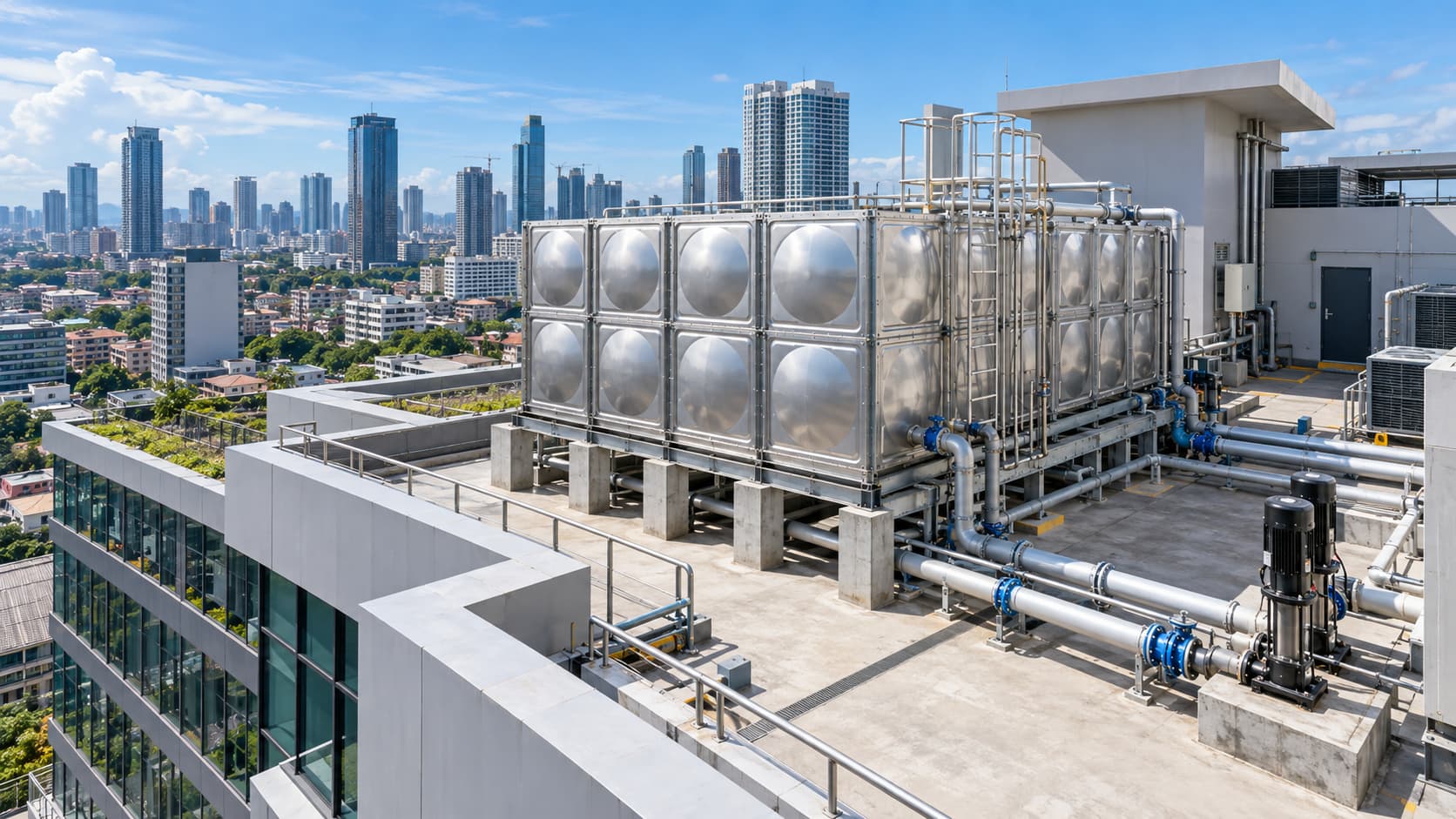
Aqua Cube Tank deliver modular, high-performance water storage designed for real-world operational demands. Our panels can be transported and assembled piece-by-piece—no cranes required—even on rooftops or in confined spaces.
The bolt-connected design with internal reinforcement rods maximizes structural integrity, ensuring a long service life with minimal maintenance. Constructed from food-grade, corrosion-resistant FRP, our tanks prevent algae, rust, and secondary contamination, keeping your water supply clean and safe.
Smooth interiors and a specialized free-draining system reduce sediment buildup, cutting professional cleaning to just once per year. With Aqua Cube, you’re choosing a durable, hygienic storage solution engineered to perform reliably for 20+ years.
A successful infrastructure project hinges on choosing components that thrive in the local environment while minimizing long-term operational headaches. Using this FRP tank buying guide as your benchmark ensures you select a system that balances structural integrity with hygiene and ease of maintenance.
By prioritizing modularity and material grade, you transform your water storage from a simple utility into a resilient, high-performance asset that supports your facility’s goals for decades.
Ready to secure your facility’s future? Contact us at Aqua Cube Tank today to start designing a customized modular water solution that fits your specific project needs.
Learn the right approach to planning water storage for multi-building developments:
Find out what happens when your water storage capacity is insufficient and how Aqua
Find out why modular water tanks are becoming standard for new commercial properties