September 24, 2026
The Right Approach to Planning Water Storage for Multi-Building Developments
Learn the right approach to planning water storage for multi-building developments:
Overview
- Water tank materials vary in performance, lifespan, hygiene standards, and lifecycle cost. Stainless steel delivers superior sanitation for regulated industries, polyethylene offers lightweight and economical storage, galvanized steel supports industrial durability, and concrete provides permanent high-capacity solutions.
- Selecting the right material requires evaluating operating conditions, structural demands, and long-term maintenance implications. Aqua Cube Tank supplies engineered FRP, stainless steel, and galvanized systems tailored to commercial and industrial requirements.
Determining which water tank material is best is not a matter of preference—it is an engineering decision. Storage systems must align with structural loads, water quality requirements, environmental exposure, and operational risk.
Stainless steel, polyethylene (PE), galvanized steel, concrete, and FRP each serve distinct applications. However, their performance differs significantly in terms of corrosion resistance, hygiene control, installation flexibility, and total cost of ownership.
Understanding these differences allows project engineers, operations managers, and procurement teams to select a system that supports long-term reliability—not just initial installation.
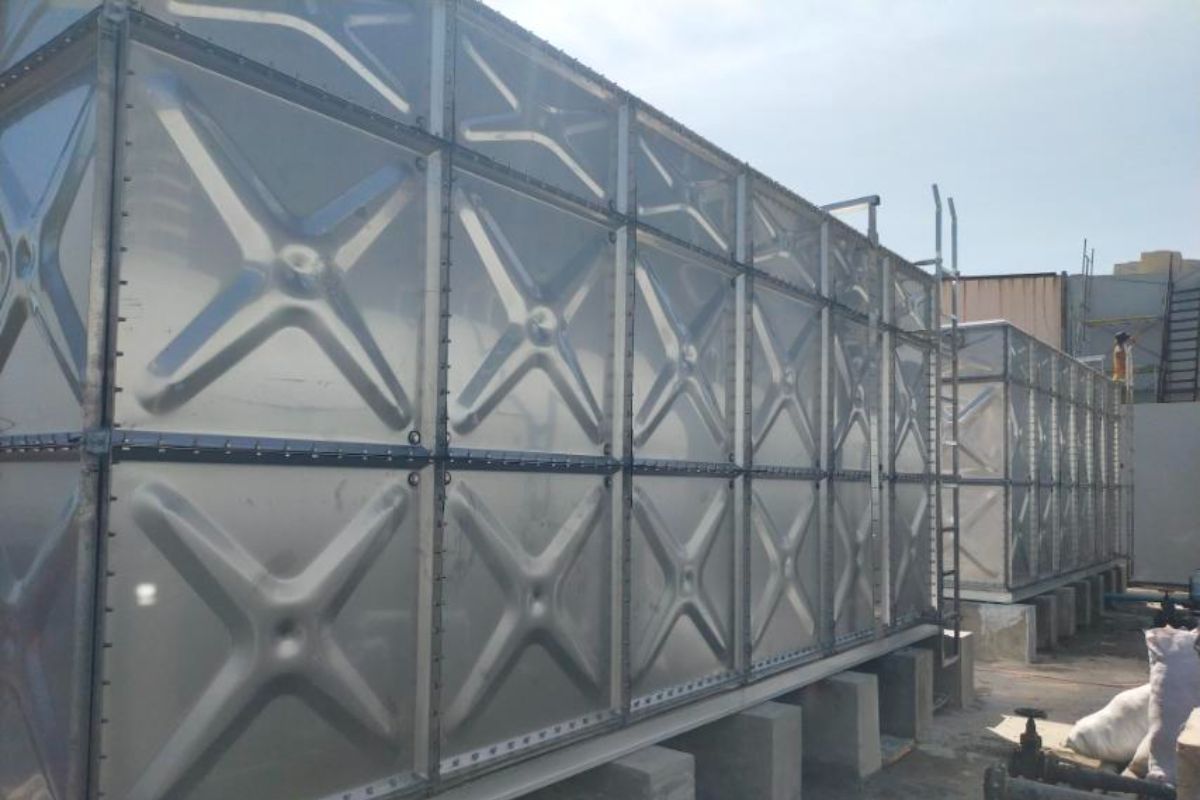
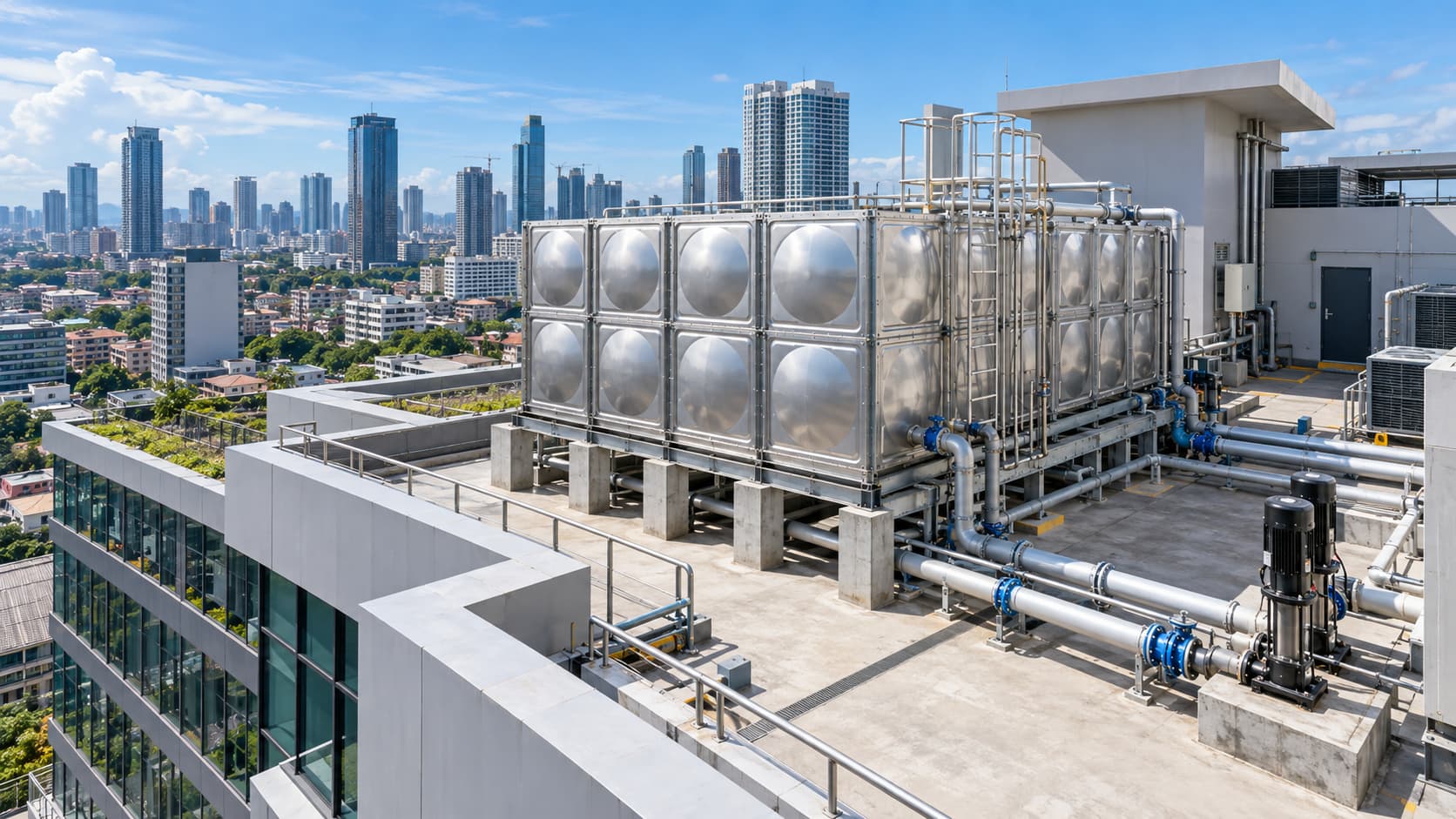
Stainless steel water tank is constructed from high-grade, food-safe metal panels, engineered for seamless strength and corrosion resistance. Its sleek, metallic finish mirrors a durable and hygienic design, with panels assembled either through bolting or welding to form a robust, leak-proof storage system.
Best for: Food and beverage, healthcare, pharmaceuticals, high-rise buildings, industrial processing facilities.
Polyethylene tanks are rotationally molded from high-density plastic. They are typically supplied as one-piece units and are commonly used for small-scale or residential storage.
Best for: Residential supply, agricultural irrigation, rainwater harvesting, small commercial use.
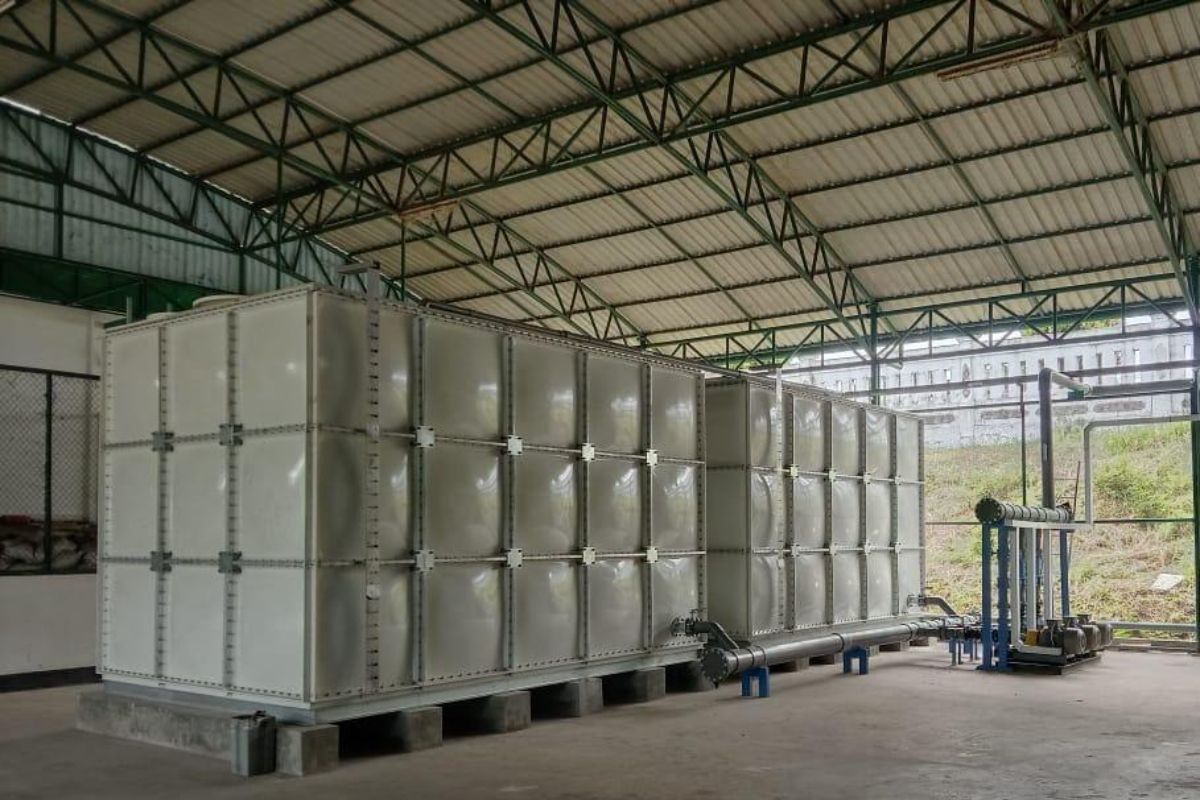
Galvanized tanks are constructed from steel panels coated with zinc for corrosion protection. They are commonly assembled using bolted modular systems and are designed for structural strength.
Best for: Industrial facilities, fire protection storage, construction sites, municipal suppl
Concrete tanks are cast or constructed on-site using reinforced concrete. They are permanent installations designed for large-scale storage.
Best for: Municipal reservoirs, permanent industrial facilities, agricultural bulk storage.
Selecting the best material depends on operating priorities:
For hygiene and water purity
Stainless steel and FRP provide non-porous surfaces that minimize contamination risks.
For budget-sensitive projects
Polyethylene offers a lower upfront cost but may involve earlier replacement.
For high-volume industrial storage
Galvanized steel or reinforced concrete provides structural strength.
For coastal or corrosive environments
FRP and stainless steel offer superior resistance to salt exposure and UV conditions.
Material selection should balance capital investment with lifecycle performance, maintenance demands, and operational risk.
Modern commercial and industrial projects increasingly favor modular systems—particularly FRP, stainless steel, or galvanized panel tanks—because they allow:
This modular advantage becomes critical in urban sites, rooftop installations, or retrofit projects.
Aqua Cube Tank provides FRP, stainless steel, and galvanized modular systems engineered for Philippine operating conditions. Our solutions are designed for durability, hygiene control, and scalable capacity across commercial and industrial sectors.
From material selection guidance to professional installation support, we help ensure your storage system performs reliably under real-world demands.
There is no universal answer to know which water tank material is best—only the best solution for your specific operating conditions. Material performance must align with water quality requirements, environmental exposure, structural constraints, and long-term cost considerations.
Choosing an engineered system from Aqua Cube Tank ensures your facility benefits from corrosion resistance, scalable capacity, and dependable long-term performance. Reach out to us today to secure the right water tank for your project.
Learn the right approach to planning water storage for multi-building developments:
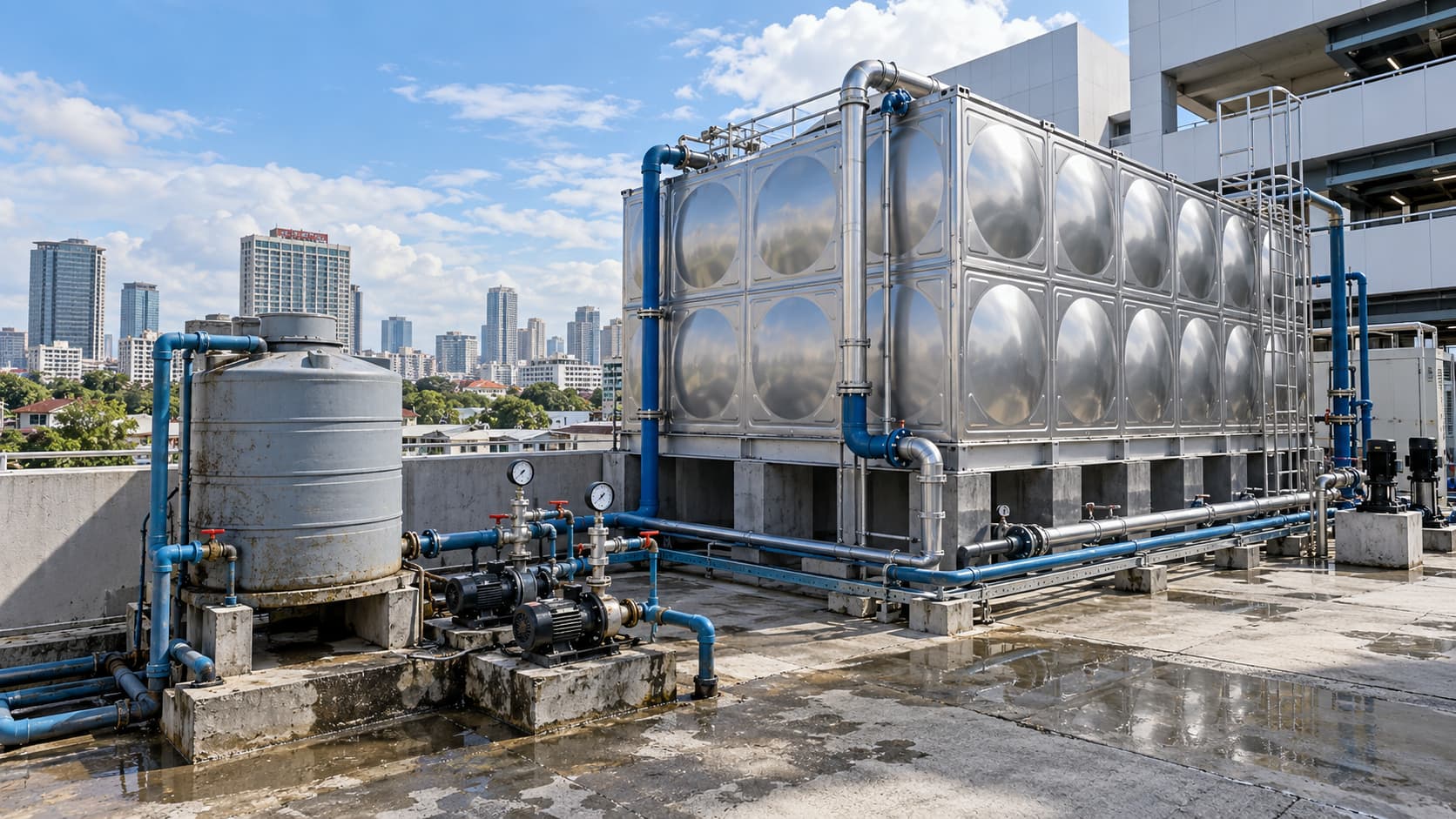
Find out what happens when your water storage capacity is insufficient and how Aqua
Find out why modular water tanks are becoming standard for new commercial properties